
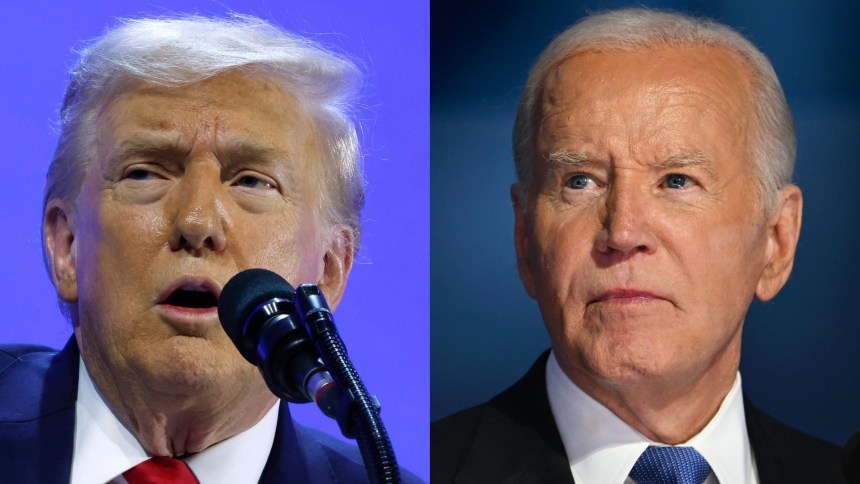
On the anniversary of his second inauguration, Donald Trump held a mind-numbing White House press conference in which he emphasized one of his long-held obsessions: his defeat in the 2020 election.
During a harangue on border policies, the president abruptly switched direction. “It was a rigged election,” he said, referring to one of his go-to conspiracy theories. “Everybody knows that now. And by the way, numbers are coming out that show it even more plainly. We caught them. We caught them.”
As a factual matter, this is delusional. There are no “numbers” coming out. No one has been “caught” having done anything. Everything the Republican said on the matter was entirely made up, his enthusiasm notwithstanding.
A day later, during remarks at the World Economic Forum in Davos, Switzerland, Trump repeated the same nonsense — this time with a fresh element.
After starting to make some comments related to Russia’s war in Ukraine, Trump again shifted his focus. “It was a rigged election,” he began, echoing a familiar lie. “Everybody now knows that, they found out. People will soon be prosecuted for what they did. It’s probably breaking news.”
It’s tempting to wonder why the president would have direct, personal knowledge about who “will soon be prosecuted,” but there’s no point in playing dumb about the White House’s control of the Justice Department.
That said, there’s no reason to assume that Trump was telling the truth. To the contrary, there’s every reason to believe the opposite — in part because he’s the most prolific liar in American public life, and in part because there’s still no evidence that anyone committed any crime connected to the 2020 race (apart from the president and his allies).
But there’s also the larger context to consider. On Tuesday, the president used his social media platform to amplify a Dominion voting machines conspiracy theory related to his failed re-election bid. The same day, he lent credence to a different conspiracy theory about Venezuela and the 2020 election cycle.
A week earlier, he told The New York Times that he regrets not seizing voting machines in the wake of his defeat.
Shortly before that, Trump assured a group of supporters that “truckloads” of evidence would soon be released that proved the 2020 election was stolen. (We’re still waiting.)
Two weeks before that, Trump’s Justice Department filed a lawsuit against Fulton County, Georgia, over records related to the 2020 election.
In November, The Washington Post reported that the president was “dialing up pressure on the Justice Department to freshly scrutinize ballots from the 2020 election,” adding that “in recent private meetings, public comments and social media posts, Trump has renewed demands that members of his administration find fraud in the five-year-old defeat that he never accepted.”
In October, Kurt Olsen, a lawyer who has touted election conspiracy theories, joined the administration as a special government employee with one focus: investigating the 2020 election.
With time running out in the 2024 presidential election and early voting underway across much of the country, then-Sen. JD Vance refused to answer questions about who the rightful winner of the 2020 race was. The Ohio Republican complained at the time that political journalists were “obsessed” with the election from four years earlier.
More than a year later — and roughly five years since Trump lost his re-election bid — someone is obsessed with the 2020 race, and by all appearances that fixation is intensifying.
This post updates our related earlier coverage.





Become a member to join the discussion