UPDATE (March 5, 2026, 1:06 p.m. ET): On Thursday afternoon, House GOP leadership — Speaker Mike Johnson, Majority Leader Steve Scalise, Majority Whip Tom Emmer and Conference Chairwoman Lisa McClain — issued a statement asking Gonzales “to withdraw from his race for re-election.”
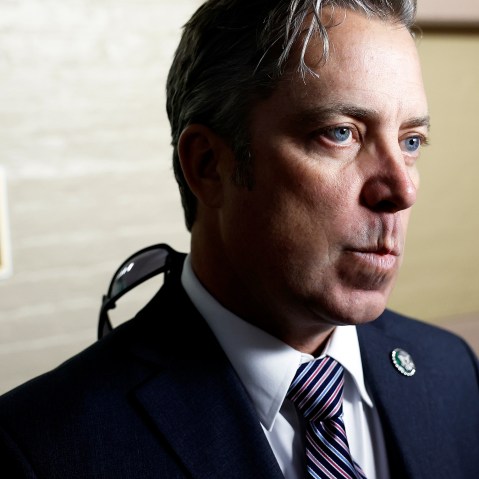
One day after Rep. Tony Gonzales advanced to a May primary runoff, the Texas Republican finally acknowledged what many observers already assumed to be true. The Texas Tribune reported:
U.S. Rep. Tony Gonzales, R-San Antonio, admitted Wednesday to having an affair with a staffer who later died by suicide, after initially denying the allegation.
Speaking on conservative talk show host Joe Pags’ show the day after he was forced into a runoff in his primary, Gonzales called the affair a ‘mistake’ and a ‘lapse in judgment.’
The GOP representative added that he takes “full responsibility for those actions,” despite the fact that he spent months denying responsibility for those actions. Gonzales, a married father of six, went on to say that he’s “reconciled” with his wife.
The admission likely surprised no one. Indeed, the growing body of evidence that the lawmaker had an extramarital affair with Regina Santos-Aviles, a former aide of his who died by suicide last year, painted a rather brutal picture that made his earlier denials almost impossible to believe.
Whether and how the acknowledgement affects Gonzales’ re-election campaign remains to be seen — his primary runoff against far-right internet personality Brandon Herrera is 12 weeks away — but this is not just an electoral story.
On the contrary, the day after the first round of balloting in Texas, the House Ethics Committee announced that it was moving forward with its investigation into Gonzales, specifically scrutinizing whether he “engaged in sexual misconduct towards an individual employed in his congressional office,” which would be a violation of House rules.
Hours later, the Republican came clean and answered the underlying question, while indicating that he intends to “provide all the facts” about “the entire situation” to congressional investigators.
The confession will likely expedite the ethics probe, leading to a related question about what kind of punishment the bipartisan panel might recommend.
In the meantime, Republican Rep. Anna Paulina Luna of Florida, one of a handful of GOP members who have called for Gonzales’ resignation, is also moving forward with plans to formally censure the Texas Republican over his misconduct.
As we wait to see what becomes of his awful fiasco, it’s worth taking a stroll down memory lane.
Twenty years ago, there was a Republican-led Congress working with a Republican president in his second term, just like now. At the time, the GOP suffered through a difficult “culture of corruption” era, featuring an astonishing number of Republican lawmakers who were caught up in ugly scandals. Names like Tom DeLay, Duke Cunningham, Bob Ney and Mark Foley became nationally notorious for a reason — and in the 2006 midterms, the party lost its majority.
Four years later, after Republicans retook the House majority, GOP leaders went out of their way to make clear that they wouldn’t allow a replay of their earlier troubles. The new Republican majority, House GOP leaders said, would embrace a “zero-tolerance policy” for members caught up in embarrassing controversies that reflected poorly on the party.
For a while, they even seemed to mean it. In 2010, then-Rep. Mark Souder of Indiana acknowledged that he’d had an affair with a congressional staffer. GOP leaders urged him to resign, and he did. Less than a year later, then-Rep. Chris Lee of New York was caught trying to meet women through the personals section of Craigslist. GOP leaders urged him to resign, and he did.
In 2014, then-Rep. Vance McAllister of Louisiana was filmed kissing a staffer who was not his wife. GOP leaders urged him to resign, and though he refused, at least they made the effort. (McAllister lost his re-election bid soon after.)
In each of these instances, House Republican leaders didn’t simply leave matters to voters. They didn’t care that the members hadn’t been formally charged with any crimes. They didn’t punt concerns to the Ethics Committee. For all of their faults — and there were many — GOP leaders set standards and enforced them when members were caught up in humiliating scandals.
Years later, the questions for House Speaker Mike Johnson and his team are obvious: Do congressional Republicans still care about these standards? If not, why not?
This post updates our related earlier coverage.