

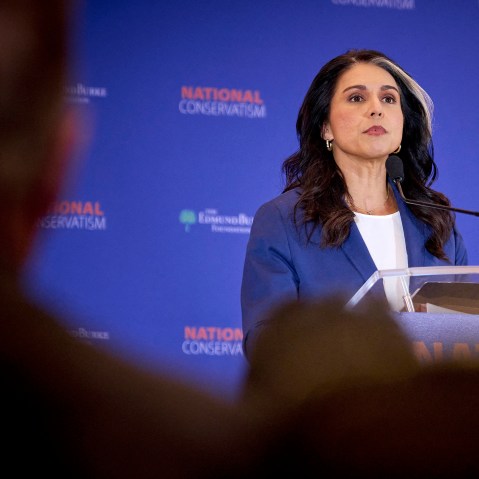
Director of National Intelligence Tulsi Gabbard’s troubles managed to get worse early last week when The Wall Street Journal reported that an unnamed U.S. intelligence official accused the DNI of wrongdoing in a highly sensitive whistleblower complaint that was supposed to be shared with Congress.
The details, not surprisingly, were murky, but according to the available information, a complaint was filed in May, and Gabbard was legally required to share it with key lawmakers within 21 days. But it wasn’t until last week that members finally gained access to the allegations, roughly eight months after they were first levied.
This week, the story advanced in an unexpected way: U.S. intelligence agencies reportedly learned about a sensitive phone conversation between two foreign nationals involving someone close to Trump. According to Andrew Bakaj, the whistleblower’s attorney, Gabbard then took that information directly to White House chief of staff Susie Wiles, while restricting access among the nation’s spy agencies.
In other words, the unnamed whistleblower effectively accused the DNI of participating in something resembling a cover-up.
On Thursday, one of the core details of the story also came to the fore. The Wall Street Journal reported:
The highly classified whistleblower complaint against Director of National Intelligence Tulsi Gabbard is related to a conversation intercepted last spring in which two foreign nationals discussed Jared Kushner, according to U.S. officials familiar with the matter.
It couldn’t be determined which country the foreign nationals are from or what they discussed about Kushner. But the connection to Kushner sheds further light on the top-secret whistleblower complaint that bureaucratically stalled within Gabbard’s agency for eight months and was kept locked in a safe until it reached Congress in heavily redacted form last week.
The New York Times published a similar report with the same information, and MS NOW has confirmed the reporting.
To be sure, there are all kinds of denials. The administration continues to insist that Gabbard did nothing wrong, and while a senior U.S. official conceded to MS NOW that an intelligence agency intercepted a conversation between two foreign nationals talking about the president’s son-in-law, the same official said the intercepted comments were little more than “gossip.”
Perhaps. But we’re still talking about a story in which at least one U.S. intelligence official believed the intercepted communication was important enough to be circulated, only to learn that Gabbard brought the information to the White House instead of other agencies.
And when that same official filed a complaint that was supposed to be shared with Congress, Gabbard apparently chose a different path.
There are still other unanswered questions — we don’t know what country the foreign nationals were from or what they had to say about Kushner — but the latest revelations should probably renew the broader conversation about the president’s son-in-law and his role in the administration.
In Trump’s first term, Kushner had an almost comically broad policy portfolio, but in the wake of Trump’s defeat in 2020, his son-in-law shifted his focus away from domestic policymaking and toward international business, launching a private equity firm and picking up $2 billion from Saudi Arabia’s sovereign wealth fund.
In the president’s second term, he’s nevertheless brought Kushner back into the fold, tapping his son-in-law to serve as a special envoy, representing the White House in Russia and the Middle East — despite concerns about Kushner’s experience, skill set, potential conflicts of interest and role in the private sector.



Become a member to join the discussion