A top lawyer and art world official have resigned from their posts following their appearances in the latest batch of the Epstein files.
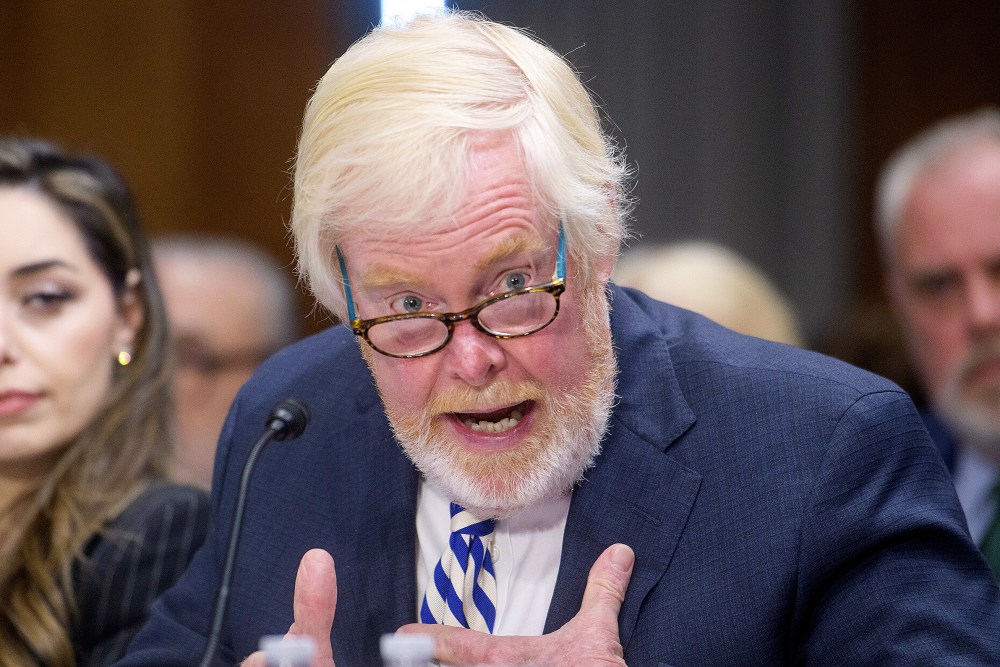
Brad Karp, longtime chair of major law firm Paul, Weiss, and David Ross, department chair at the School of Visual Arts in New York City and former director of the Whitney Museum of American Art, announced their resignations this week after their email correspondences with convicted sex offender Jeffrey Epstein became public last Friday under the Epstein Files Transparency Act.
Karp’s resignation as chair comes as a significant shake-up for the law firm, which has represented giant corporations including Amazon, JP Morgan Chase and ExxonMobil. The firm also made headlines last year when it agreed to provide $40 million in legal services to the White House after being targeted by President Donald Trump in an executive order.
Karp’s correspondence with Epstein appears to have begun in 2015, when he thanked the late financier for “including me in an evening I’ll never forget.”
“You are always welcome,” Epstein replied. “You will be invited often.”
In another, Karp told Epstein he sent a letter to the editor to several contacts at The New York Times. A letter to the editor was printed a couple of days later in which several of Epstein’s prior criminal defense attorneys — including former Solicitor General Ken Starr — defended the deal they struck on Epstein’s behalf more than a decade prior.
(Federal prosecutors agreed at the time not to file charges against Epstein in exchange for his pleading guilty to prostitution-related charges in a state court.) In the Times letter, Epstein’s attorneys argued that instead of facing new charges, Epstein was “entitled to finality like any other defendant.”
Just a day after sending the draft letter to the editor to contacts at the Times, Karp also seemed to weigh in on a draft “friend of the court” brief that Epstein’s advisers wanted to see filed in ongoing litigation brought by certain Epstein survivors.
In early 2019, a group of Epstein victims obtained a federal court judgment that the Justice Department’s negotiation and execution of Epstein’s plea deal without their knowledge violated their rights under a crime victims law. In determining what to do to address that, the judge invited input from all involved.
Deeming the draft he reviewed to be “overwhelmingly persuasive,” Karp further commented, “I particularly liked the argument that the ‘victims’ lied in wait and sat on their rights for their strategic advantage, knowing you were in prison, before they came forward.”
It does not appear that brief was ever filed.
Paul, Weiss has stated that neither Karp nor anyone else at the firm represented him. But over their years of email correspondence, the files indicate, Karp may have shared other clients’ confidences with Epstein.
For example, in a 2018 email, Epstein asked Karp to forward him an unspecified stock sale agreement, and Karp agreed, but only after clarifying that he obtained it from a person or company he referred to as “M.” Karp then pleaded, “Please don’t let him know that I shared it. It is supposed to be strictly confidential.”
Following the release of the emails, Karp said he regretted his interactions with Epstein.
In a separate statement Wednesday night announcing he was stepping down as chair, Karp blamed “recent reporting” that “has created a distraction and has placed a focus on me that is not in the best interests of the firm.”
Karp will stay on as an attorney, however, giving “his full-time attention to client service,” the firm said in its news release.
Ross ran the prestigious Whitney for most of the 1990s, when the museum was just a few blocks from Epstein’s seven-story townhouse on Manhattan’s Upper East Side.
“I knew him as a wealthy patron and a collector, and it was part of my job to befriend people who had the capacity and interest in supporting the museum,” Ross told the Times this week.
Ross resigned this week from his job directing a master’s program at the School of Visual Arts after the latest document dump showed him corresponding with Epstein for years across dozens of emails.
In one email Ross sent in July 2009, he asked Epstein, “Are you finished with the special sleep-away camp yet?” referring to Epstein’s 13-month stint in a Florida jail. Less than two weeks later, Ross congratulated him on his release, writing, “glad the nightmare is over, Jeffrey… it was an undeserved punishment foisted upon you by jealous creeps.”
In October of that year, Epstein wrote to Ross proposing an idea for an exhibit he wanted to call “Statutory,” featuring teenage girls and boys “where they look nothing like their true ages.”
Ross replied indicating he was on board: “You are incredible,” he wrote. In a follow-up response, he added, “yes… this should be a web-based exhibition — totally global, and totally open as a 2.0 platform for the ranting of everyone.”
Ross, who previously served as director of the San Francisco Museum of Modern Art and the Institute of Contemporary Art in Boston, told the Times he remains “deeply concerned” for Epstein’s victims.
“I continue to be appalled by his crimes,” he said.
Epstein died by suicide in a Manhattan jail cell in August 2019, a month after being arrested on federal charges related to sex trafficking of minors. His co-conspirator, Ghislaine Maxwell, was sentenced to 20 years in prison, which she is serving at a minimum-security facility in Texas.
MS NOW is reviewing the documents released by the Justice Department in collaboration with journalists from NBC, AP, CNBC and CBS. Journalists from each newsroom worked together to examine the documents and share information about what is in them. Each outlet is responsible for its own independent news coverage of the documents.