A federal judge weighing the legality of the Pentagon’s new policy restricting journalists’ access and challenging press freedom said Friday that the government owes the American public “openness and transparency” — especially now, with the U.S. at war with Iran.
U.S. District Court Judge Paul Friedman expressed serious reservations about the Pentagon’s new policy that prohibits credentialed journalists from reporting on information not authorized by the government.
“A lot of things need to be held tightly and secure, but openness and transparency allows members of the public to know what their government is doing,” said Friedman of the U.S. District Court of the District of Columbia, who could rule by early next week on whether the Trump administration’s policy violates the First Amendment.
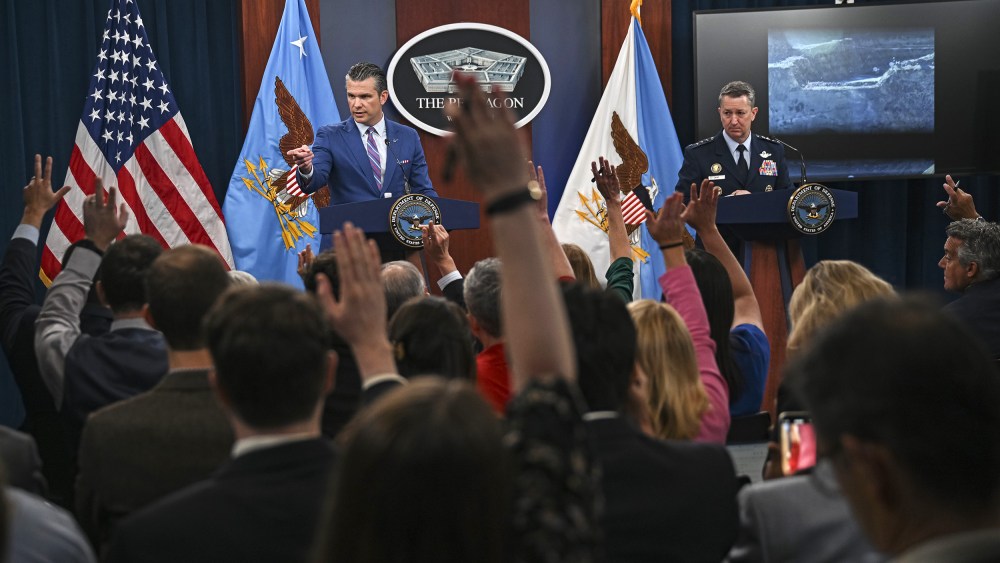
The restrictions, which give the Department of Defense discretion to suspend or revoke the press credentials of reporters deemed to violate the policy, prompted nearly the entire Pentagon press corps to turn in their credentials — rather than agree to the restrictive terms. No major news organization has had journalists reporting from inside the Pentagon since October.
The New York Times, which brought the lawsuit, asked the court to block the Pentagon’s “unconstitutional” limits on freedom of the press. The Times argued that the mandate issued by Trump’s Secretary of Defense Pete Hegseth last October violates the First Amendment.

“You are not allowed to ask about anything that is not approved by the Pentagon,” Times attorney Theodore Boutrous Jr. said Friday. “That would be how authoritarian governments stay in power.”
The Times also argued that the Pentagon’s rules against reporters’ soliciting tips and making inquiries to government officials are unlawful.
A lawyer for the Department of Defense, which the Trump administration has rebranded the Department of War, argued that reporters should get their information at press conferences from “people with stars on their shoulders” who are “authorized” to give information.
The government’s lawyer, Michael Burns, also claimed that soliciting unauthorized information is not protected First Amendment activity.
“Why not? Why not?” Judge Friedman asked, raising his voice.
When Burns didn’t answer the judge’s question, Friedman said reporters must be able to ask questions. If a government official cannot answer that question, “all you have to do is say, ‘I can’t answer that for national security reasons,’” said Friedman, who was nominated by President Bill Clinton.

This case has always been an important test for the First Amendment, but it has gained more significance since the U.S. entered war with Iran last week.
Burns said the current war in Iran enhances the need for press restrictions to “protect national security information” and that the Pentagon “should be able to put policies in place that protect that.”
Friedman appeared stunned by the government response. “I don’t understand,” he said.
When Burns reiterated his statement, Friedman said, “Isn’t it more important than ever, now that we’re at war, that the public have information?” The judge said Americans have a right to decide for themselves whether to protest or support the U.S. war with Iran — and how to vote in the next election.
“A lot of things need to be held tightly and secure,” Friedman conceded. But he said “transparency” is critical for the public to understand what’s going on. “This is what the First Amendment is all about.”