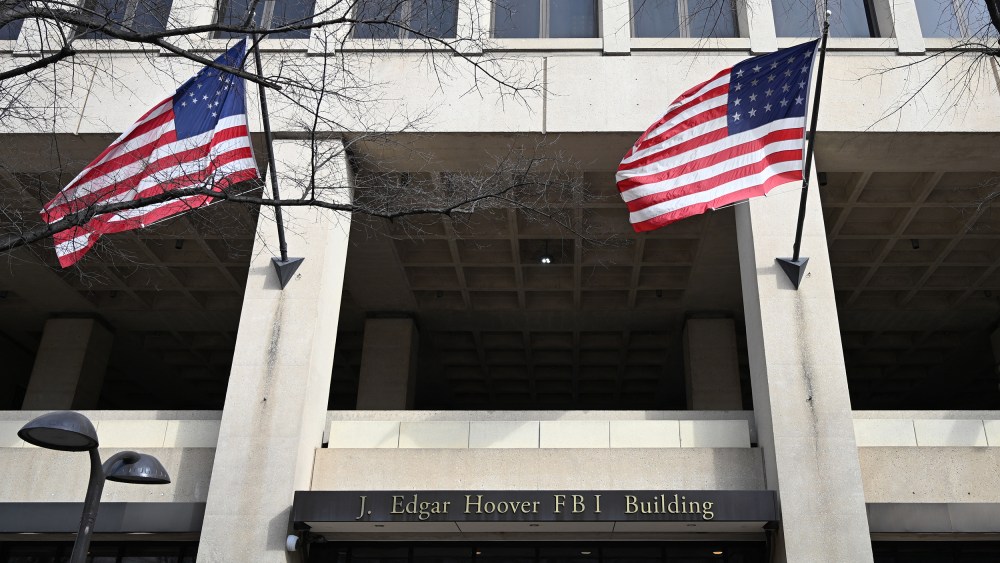
The FBI’s use of debunked conspiracy theories to obtain a court order allowing the seizure of ballots in Atlanta crosses a new line, more than a dozen current and former FBI and Justice Department officials tell MS NOW, with one senior official noting, “It’s deeply concerning.”
For months, the Trump administration has used the Justice Department and the FBI to investigate its perceived political enemies in a way that hasn’t happened since Watergate. But until now, the independent judiciary has served as a check, including tossing out charges against former FBI Director James Comey and former New York Attorney General Letitia James.
The department’s investigation of alleged election irregularities in Fulton County, Georgia, including the bureau’s seizure in January of more than 700 boxes of ballots — has set a new precedent. First, as MS NOW previously reported, the FBI’s special agent in charge in Atlanta was forced out over his refusal to go along with the ballot seizure.
Then the FBI managed to persuade an independent magistrate judge to grant a court order allowing agents to forcibly seize the 2020 ballots. When the justification for the warrant was unsealed, legal and election experts said it was full of allegations that had long ago been addressed by local election officials after three recounts of the Georgia ballots.
And they said the FBI failed to meet the “probable cause” standard required by law, because it failed to show evidence of a crime.
“It’s alarming how a flawed affidavit like this could get approval,” said an FBI official who, like others interviewed for this article, spoke to MS NOW on condition of anonymity to protect their position.
“It also highlights the risks of biased or rushed decision-making, especially with high-stakes, politically charged cases.”
In order to grant the FBI a search-and-seizure warrant, a judge must find that there is information that would lead a reasonable person to believe a crime had been committed and that evidence of that crime is contained in the materials targeted for search.
“I laughed out loud when I finished reading it,” said David Becker, a former Justice Department election law expert who directs the nonpartisan, nonprofit Center for Election Innovation & Research.
“The affidavit is made up entirely of previous debunked conspiracy theories from people whose testimony has been found noncredible in previous reviews. I don’t think they came close to meeting the probable cause standard.”
Becker added, “There was no allegation of intent to commit a crime, which is a necessary element.”
The affidavit says the investigation began after a criminal referral from former Trump campaign lawyer and prominent election denier Kurt Olsen. He is now the White House official in charge of monitoring election integrity.
The warrant says the FBI also relied on Clay Parikh, a White House employee who told Talking Points Memo this week that a shadowy “deep state” cabal has ensured that “we haven’t had an honest election in decades.”
The FBI agent who signed the affidavit, Hugh Evans, stated that he joined the bureau five years ago and was a practicing attorney with four years’ experience before that. He cited a series of alleged irregularities involving ballot images and tabulator tapes, and then added, “If these deficiencies were the result of intentional action, it would be a violation of federal law.”
He cited no evidence to suggest the alleged deficiencies — which are hotly disputed by election experts — were the result of intentional action.
“That’s not what probable cause is,” a former senior FBI official said.
And experts say the allegations are unsubstantiated.
“The simple fact is, Georgia had paper ballots,” Becker said. “And those ballots were recounted three different times, once by hand. The tabulation tapes aren’t the ballots. The ballot images aren’t the ballots.”
The magistrate in the Northern District of Georgia who approved the warrant is Catherine Salinas, a former public defender who worked for a decade as a commercial litigator before becoming a judge. She did not respond to a phone message left in her chambers.
Current and former Justice Department and FBI officials say they are extremely concerned that the judge accepted what they say is flawed information presented by the FBI.
“No one understands how the magistrate did not push back,” one current official said. “That never would have happened in D.C. or EDVA,” the official said, referring to the Eastern District of Virginia.
Even before it got to the judge, several current and former FBI officials told MS NOW the investigation moved forward because the bureau was strong-armed by the White House through Director Kash Patel.
The FBI declined to comment to MS NOW.
“I don’t think the people in the FBI had a choice,” said one former agent who speaks to those still inside the bureau. “It’s what I’ve been worried about. If Patel says he wants it done, then the environment they’ve created is do it, or get fired.”
One current FBI official expressed concern about the bureau being asked to carry out similar investigative steps around upcoming elections.
Fulton County is challenging the warrant, and a judge has set an evidentiary hearing for the end of the month. The judge may question FBI officials about the claims in the warrant.
“We’ve got to hope that a deeper investigation will reveal the facts and that the system will uphold its commitment to due process,” the second FBI official said.
“When questionable evidence gets through, especially in politically sensitive cases, it can undermine public trust in the system as a whole,” the official added.
“That’s the last thing we need, especially in agencies like the FBI and DOJ, which are supposed to remain above the political fray.”




Become a member to join the discussion