Amid the revelations of the Epstein files, the president’s threats to “nationalize” the midterm elections and the ongoing immigration crackdown, the announcement that the Kennedy Center will close might seem like a minor story.
Earlier this week, the Trump administration said the Washington, D.C., cultural institution would shut down after the Fourth of July for what it describes as “renovations.”
Given the president’s destruction of the East Wing of the White House last fall, this set off alarm bells among architectural historians and others concerned about his long record of damaging beautiful old buildings.
But the problem goes even deeper than that. In shutting down a vital center of the arts in the nation’s capital, Trump is showing his desire to control American culture, echoing similar moves by autocrats around the world.
For more than five decades, the Kennedy Center has stood as a symbol of American cultural excellence, intentionally insulated from partisan politics.
Presidents of both parties respected that separation because they understood something fundamental: Art does not belong to the presidency.
Presidents of both parties respected that separation because they understood something fundamental: Art does not belong to the presidency, and culture cannot be governed by loyalty tests. The legitimacy of cultural institutions depends on their independence, not their usefulness to whoever holds power.
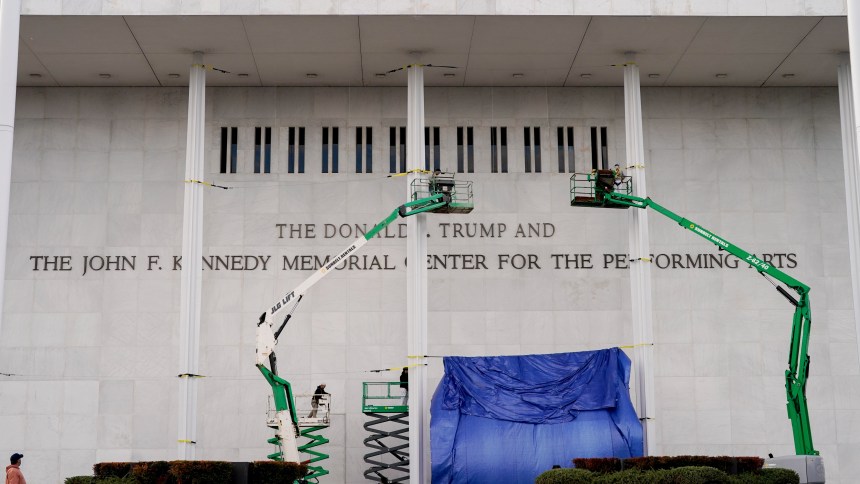
Trump has dismantled that norm. Since forcing his way onto the Kennedy Center board, he has pushed the boundaries of presidential influence over the institution, going so far as to put his own name on the building, which can only legally be done by an act of Congress.
He then installed loyalists in leadership roles and turned what was once a celebration of artistic achievement into a referendum on political allegiance.
Artists balked, canceling their Kennedy Center appearances in droves. Performers who once viewed the venue as the pinnacle of American cultural life refused to associate themselves with the MAGA-fied center.
Rather than back down, Trump shut the whole place down, like a petulant child going home with his toys.
Trump’s frustration goes deeper than a canceled showing of “Hamilton,” though. Like other authoritarian leaders who could not earn cultural legitimacy through democratic means, he is attempting to manufacture it by capturing the institutions that confer it.
In Turkey, Recep Tayyip Erdogan reshaped national cultural bodies to position himself as the symbolic center of Turkish identity, sidelining artists who refused to conform. In Hungary, Viktor Orban built state-funded cultural institutions to promote his brand of nationalism, excluding those who resisted. Control of culture became a substitute for consent.

Trump’s decision to close the Kennedy Center rather than accept that rejection exposes the fragility of his cultural project. When participation is no longer voluntary, when he cannot command respect, he responds the way authoritarians always do. He retaliates.
The “renovations” explanation is a fig leaf. Trump is not improving the Kennedy Center. He is punishing it.
Some will dismiss this as symbolic, arguing that stages and ceremonies matter less than legislation and courts. That argument misunderstands how authoritarian consolidation works. Cultural capture comes first. Once a leader decides who gets platforms, who receives honors and which voices are elevated or erased, democratic resistance becomes harder everywhere else.
The Kennedy Center closure is not an isolated event. It fits a broader pattern of Trump inserting himself into cultural spaces, from sporting events to social media to awards ceremonies, seeking the legitimacy he has not earned through governance or democratic consent. When those spaces resist, his response is not persuasion; it is punishment.
That is the message this closure sends to museums, theaters, arts organizations and cultural institutions across the country. Cooperate, or face consequences. It tells artists that access now comes with conditions. And it tells the public what happens when institutions refuse to bend.
The Kennedy Center is not just a building. It is a test case. If a president can shutter one of the nation’s most prestigious cultural institutions for failing to serve his political needs, no institution should assume it is immune.
The July 4 closure date is no accident. On the day Americans celebrate independence, one of our democratic norms is quietly suspended: the independence of culture from political control.
This is the moment that demands vigilance. Cultural institutions cannot wait until they are targeted to decide whether independence matters. Artists cannot afford to treat this as someone else’s fight. And the public cannot dismiss cultural capture as a sideshow to “real” politics.
Democracy does not collapse all at once. It erodes when institutions are isolated, pressured and punished one by one while everyone else looks away. The Kennedy Center is the first step. What happens next is not accidental.
Don’t forget to subscribe to “MS NOW Presents: Clock It,” Symone Sanders-Townsend‘s new podcast series with Eugene Daniels on the latest political news, the catchiest cultural moments and how they converge. The first episode will be available across podcast platforms and YouTube on Thursday, Feb. 12, with new episodes dropping weekly. Listen to the trailer here.