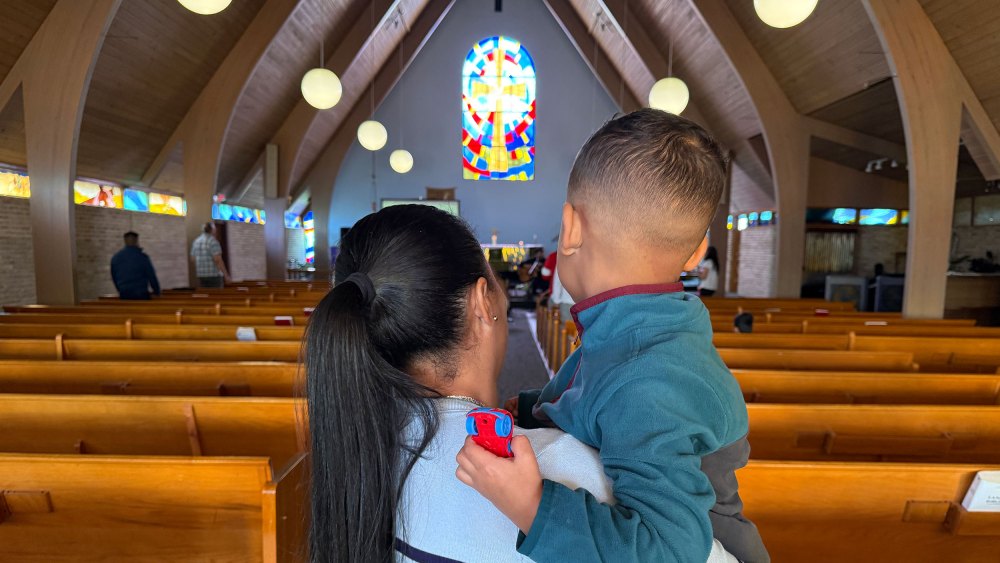
DILLEY, Texas — Nightmares, worms in food and psychological torment: That’s how “Maria,” a single Venezuelan mother in her 30s, described life inside a federal family detention center in South Texas, the same facility where 5-year-old Liam Ramos and his father were held after their arrest in Minneapolis last month.
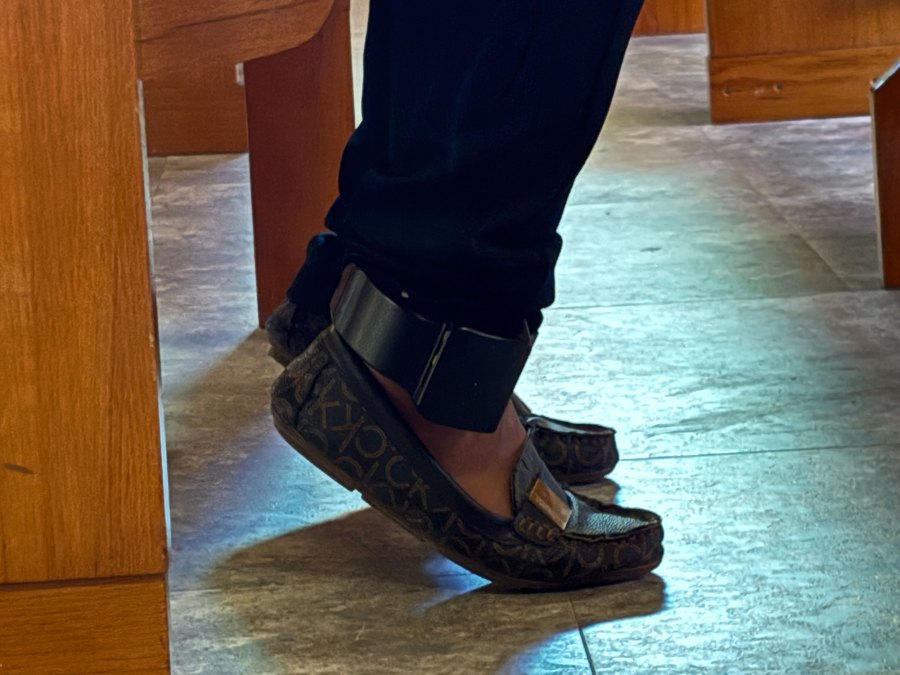
“I’m scared to be on the street; I’m scared that they’ll put me back into that place,” she told MS NOW. Her eyes filled with tears and her voice trembled. An ankle monitor under her jeans tracked her every move.
She and her toddler son, both seeking asylum, were detained in November during their third Immigration and Customs Enforcement appointment in San Antonio — a periodic requirement that’s part of the immigration process. They had entered the U.S. through the southern border in 2023, seeking safety.
At one point during their two months in detention, they stopped eating fresh vegetables after Maria saw worms in the broccoli served to detainees, she said. Her son lost weight. During the day, the desperation of more than 1,000 other detainees could be felt in the halls, she said. At night, the lights, which are on 24/7, only fueled the racing thoughts that kept her awake.
“I wanted to get out of there,” said Maria, who asked not to be identified by her real name for fear of retribution.
As part of its aggressive immigration crackdown, the Trump administration has sought to deport everyone caught in the wide net cast by ICE’s nationwide enforcement efforts. As of Jan. 7, almost 69,000 individuals were in immigration detention, according to ICE data.
But in recent weeks, as the Department of Homeland Security faced widespread criticism for the often brutal tactics it employs against civilians, the Trump administration appears to have quietly shifted its immigration policy in Texas. The government released hundreds of detainees who were held at the South Texas Family Residential Center, a federal detention facility in Dilley about 70 miles southwest of San Antonio, MS NOW has learned.
Maria said she was offered $5,000 by the federal government in mid-January in exchange for leaving the country. After she declined the offer, she was put on a bus with her son and sent to Laredo, on the U.S.-Mexico border, strapped with an electronic ankle monitor and dropped off at a community shelter, she said.
For several weeks now, the Trump administration has released up to 100 detainees per day from the family detention facility in Dilley to Laredo, according to Democratic Rep. Henry Cuellar of Texas. All of those released — including Maria and her son — were put under strict government supervision. Not all of them call Texas home — Cuellar said they include people arrested in the interior of the country and recent border crossers.
The releases are reminiscent of so-called “catch-and-release” policies, under which migrants were detained and then released back into the U.S. pending their immigration cases. Trump criticized the Biden administration for them and claimed last year that he’d banned them. DHS didn’t respond directly to an MS NOW question about whether Trump’s policy shift signals a return of catch-and-release.
Trump has been taking a victory lap for his hard-line immigration policies, saying to a crowd in Iowa last Tuesday, “our border is closed, totally closed.” During a recent cabinet meeting, he claimed, “we had zero illegal aliens being admitted into our country for the last eight months.” Data on Customs and Border Protection’s website shows migrant encounters at the U.S. southern border are down, but not to zero: Border Patrol agents encountered 7,989 in October, 7,348 in November and 6,478 in December.
The timing of the Trump administration’s new release policy comes as ICE’s enforcement tactics come under intense scrutiny. In recent weeks, federal agents killed two U.S. citizen protesters in Minneapolis; the photo of 5-year-old Liam Ramos being held by a federal agent while wearing a blue bunny hat made national headlines; the death of a man in detention in Texas was ruled a homicide; and Trump’s approval rating over his handling of immigration plummeted. The latest Reuters/Ipsos poll shows that 53% of Americans disapprove of his handling of immigration.
The White House did not respond to a request for comment. DHS didn’t respond to all of MS NOW’s questions, but in a statement, agency spokesperson Tricia McLaughlin defended the federal government’s treatment of families at the Dilley detention center.
“This is the best healthcare many of these individuals have received in their entire lives,” McLaughlin said. “All detainees are provided with three meals a day, clean water, clothing, bedding, showers, soap, and toiletries. Inmates also have access to phones to communicate with their family members and lawyers. Certified dieticians [sic] evaluate meals.”
‘Horrific conditions’
Maria’s account of conditions inside the detention center is corroborated by reports filed in federal court by the legal team representing all children in federal detention under the Flores Settlement — the 1997 agreement that established standards for the humane care of detained children.
“In addition, in recent weeks, conditions and treatment appear to have worsened with families reporting horrific concerns, such as denial of critical medical care, worms and mold in their food resulting in children becoming ill, and threats of family separation by officers and staff,” wrote Leecia Welch, chief legal counsel at Children’s Rights in a court filing dated Dec. 8, 2025.
The Trump administration’s apparent softening of its immigration policies has raised suspicion among released detainees, advocacy organizations and Democratic lawmakers.
Jason Houser, a former chief of staff at ICE and a former CBP counterterrorism official, suggested to MS NOW that the Trump administration isn’t focused on arresting people convicted of violent crimes, and that its latest policy change shows the limits of Trump’s mass deportation campaign.
“Detaining families, children is extremely expensive, time intensive and staff intensive,” Houser said. Deporting people, he added, is slower and takes more paperwork than arresting them.
Houser suggested that the Trump administration likely conducted a legal review of the potential consequences of violating the Flores Settlement, which limits the length of detention of children to 20 days. The administration chose to release families rather than risk noncompliance and future restrictions on its effort to expand family detention facilities across the country, he said.
McLaughlin called the Flores Settlement “a tool of the left to promote an open borders agenda” in a statement to MS NOW.
‘A church in a war zone’
“Pastoring a church in a war zone” — that’s what faith ministry in Trump’s second term feels like for Dianne Garcia, the pastor of San Antonio’s Roca de Refugio church, which Maria belongs to.
About 18 people in Garcia’s 80-member congregation have been arrested by federal agents in recent months, including 14 adults and 4 children, Garcia said. About half of those arrested were detained during an ICE check-in appointment. Others were stopped by police for minor things like a broken taillight or were accused of a crime but later had the chargesce dropped, she said.
“It feels like a natural disaster in slow motion,” Garcia said. “People just randomly disappearing, and you never know who’s going to be next.”
Maria, who was described by other congregants as a pillar of her church community and beloved by everyone, especially the children, was the first single mom from the congregation to be arrested with her child, Garcia said. She remembers breaking down in tears during the first church service after Maria’s detention, as all of the children kneeled and prayed for Maria and her son to be freed.
“It was just so heartbreaking to see these children praying with all that they had, that she could be returned to them,” Garcia said.
Maria, her son and one other member of Garcia’s church have since been allowed to leave detention. Both adults were released with ankle monitors, an “alternative to detention” tool that’s been used by both Democratic and Republican administrations.
There are currently about 180,000 people in various forms of alternative to detention, including almost 38,000 on ankle monitors and about 140,000 on SmartLINK, an application on a smartphone that uses facial recognition and GPS to verify their identity and location, according to ICE data from January. The data shows that the top three areas with the most people using these tools are San Francisco (20,550), Chicago (18,901) and Los Angeles (18,319). The number of enrollees has remained at about 180,000 since fiscal year 2024, according to ICE data.
The Trump administration’s shift to the more lenient alternative-to-detention policy might appear humane, but it comes with a hidden risk that has mothers like Maria terrified. The terms of her release include a requirement that she subject herself to periodic check-ins with ICE, just as she did in November when she was arrested and her nightmare in detention started.
“Every time I think about that place, I want to cry,” Maria said. “I look at my son’s face, and I feel the sadness in his eyes.”
Maria, her son and all of the families who have been released from the Dilley detention center are effectively part of a pool of vulnerable people, created by the Trump administration, who will have to make a difficult choice in the coming months: walk into an ICE office willingly and risk getting detained, or disappear into the shadows.
“For a moment I doubted that doing the right thing had value,” Maria said. “But I have to keep doing the right thing.”