
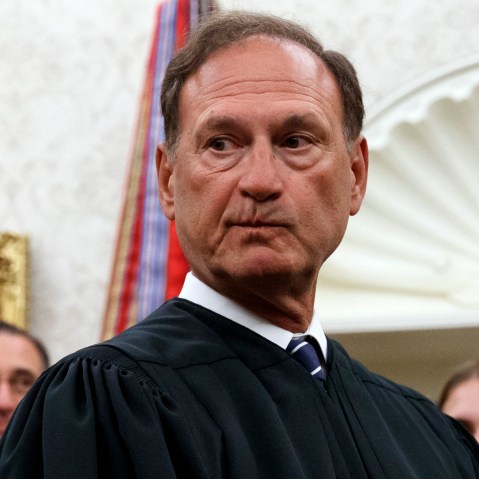
By a vote of 8-0, the U.S. Supreme Court on Monday rejected a challenge brought by conservative voters to the principle of “one person, one vote.” […]“As history, precedent and practice demonstrate, it is plainly permissible for jurisdictions to measure equalization by the total population of state and local legislative districts,” wrote Justice Ruth Bader Ginsburg for the court. Ginsburg’s opinion was joined by Justices John Roberts, Elena Kagan, Sonia Sotomayor, Stephen Breyer and Anthony Kennedy. Justices Clarence Thomas and Samuel Alito each wrote separate concurring opinions.
You read that right: in one of the term’s most important cases, the Supreme Court’s justices were actually unanimous. The full ruling in Evenwel v. Abbott is online here.
Some high-court cases can be tough to navigate, but this one’s pretty straightforward. As we discussed last May, under the status quo, legislative districts are based on total populations. The Census Bureau counts the number of people and lines are drawn accordingly, with roughly equal numbers of people in each district.
For some conservatives, however, this is a flawed and unfair model. Counting everyone, they argue, ends up including people who can’t vote — non-citizens, ex-felons, minors, etc. — which has the effect of diluting the voting power of those who live in districts with more voter-eligible citizens. When drawing district lines, the right has argued, it’s better to look exclusively at the number of eligible and/or registered voters. The counter to this argument is that elected officials represent the needs and interests of an area, without regard for whether the people in that area are voter-eligible citizens or not.
There is, of course, a reason conservatives have been excited about this case, and it has nothing to do with democratic principles. As we talked about in December, if legislative districts are drawn based on the number of eligible voters, instead of the number of people, it has the practical effect of shifting political power away from cities (which tend to be more progressive and more diverse areas) and towards rural areas (which tend to be more conservative and less diverse).
In other words, this is about boosting the voting power of Republicans. No one on the Supreme Court was willing to play along.
Postscript: I’d be remiss if I neglected to mention one of the more colorful angles to this case: the plaintiffs. Mother Jones reported several months ago that one of the people responsible for the lawsuit is a Texas tea party activist who has promoted a conspiratorial film suggesting President Barack Obama’s real father was accused communist propagandist Frank Marshall Davis. The other plaintiff is a “religious fundamentalist who believes the Earth doesn’t revolve around the sun and that unicorns were real.”
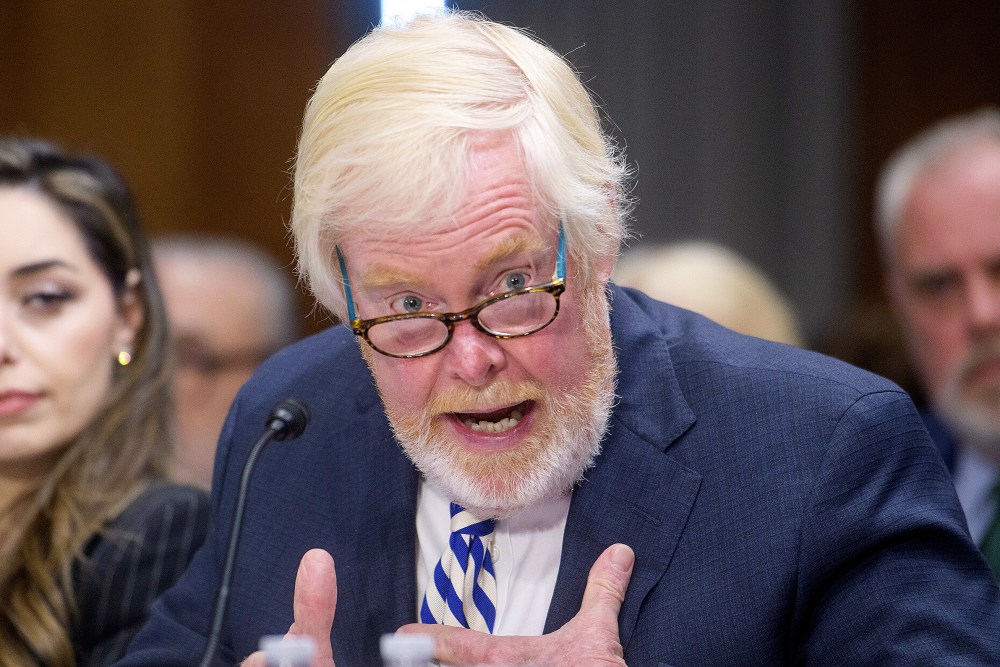
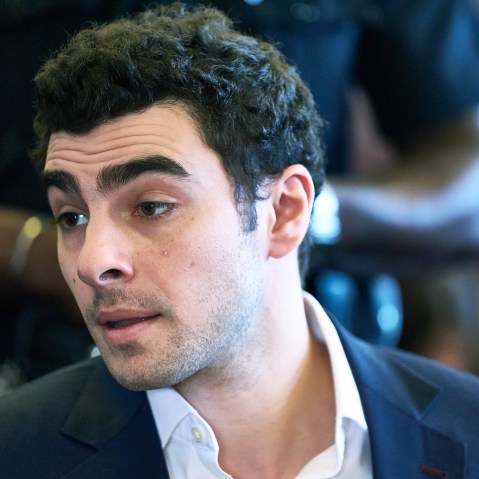
The plaintiffs were reportedly recruited by Edward Blum, the director of the Project on Fair Representation, a non-profit group funded by “secretive conservative donors,” which has spearheaded the litigation. If Blum’s name sounds familiar, it’s because he played a role in the court fight against the Voting Rights Act case from two years ago.




Become a member to join the discussion