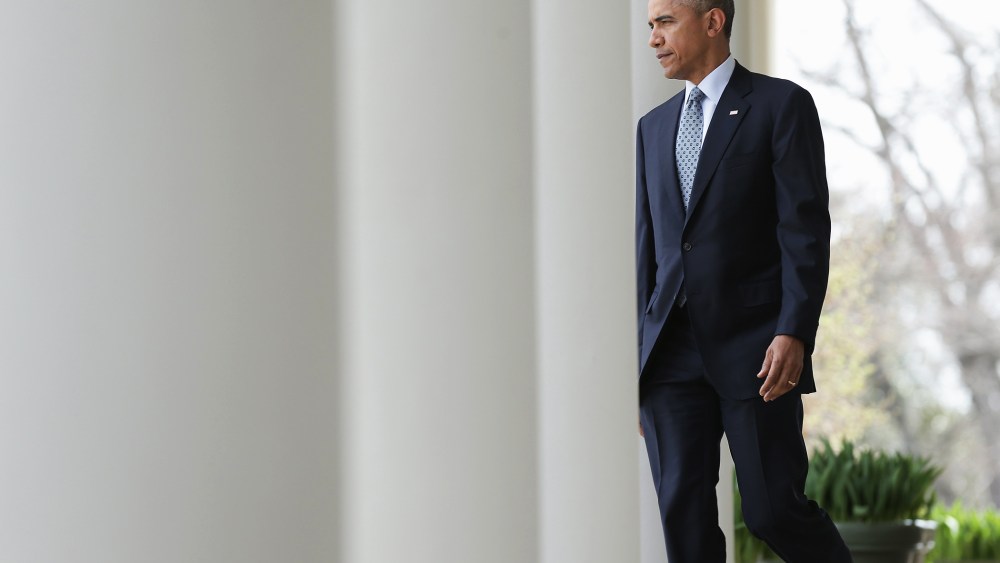
It’s easy to forget that since 1979, the United States and Iran barely spoke, at all, in any capacity. Before 2013, the two nations’ heads of state hadn’t directly communicated with one another at all. Indeed, just a decade ago, U.S. foreign policy dictated that Iran was part of an “axis of evil.”
But today is a new, very different day. President Obama, Secretary of State John Kerry, leading U.S. allies, and international negotiating partners were able to overcome decades of history, animosity, and distrust to announce a provisional nuclear agreement.
President Obama on Thursday announced a “historic understanding” with Iran that he said would prevent that country from obtaining a nuclear weapon. Moments before the president spoke from the White House, top diplomatic officials in Lausanne, Switzerland, announced the framework for a final agreement on the future of the Iranian nuclear program.“It is a good deal,” Obama said, adding, “If this framework leads to a final comprehensive deal, it will make our country, our allies and our world safer.”
The agreement is not yet complete. What the negotiators agreed to is a framework — a blueprint of sorts — that will serve as the basis for additional talks in which participants will hammer out details. The P5+1 process, led by negotiators from the United States, the United Kingdom, France, Germany, China, Russia, and Iran, will continue for an additional three months.
But don’t mistake this for a routine or unimportant development. On the contrary, today’s announcement is a historic diplomatic breakthrough, which could have fallen apart any number of times, and which faced long odds from the start.
And yet, here we are.
What made the preliminary deal possible was the fact that both sides had something to offer and something they wanted in return. Iran, brought to the negotiating table after Obama imposed tough sanctions that crippled Iran’s economy, wanted to improve its economic conditions in exchange for curtailing its nuclear ambitions.
The United States and its negotiating partners saw that as the basis for a conversation, all of which led to today.
All kinds of important details remain unresolved, but the msnbc report included some additional elements to keep in mind.
Iran and six world powers, including the United States, have been negotiating since March 26 on the nuclear program, which Iran insists is peaceful. The six nations want see limits on the program, while Iran in exchange wants punishing economic sanctions to be lifted.International monitors will have “unprecedented access” to Iran’s nuclear facilities, Obama said. In exchange for Iran’s cooperation and adherence to a final agreement, the international community will lift some sanctions, the president added.
“If Iran cheats, the world will know it,” Obama said. “If we see something suspicious, we will inspect it.”
For more, the White House has also published a detailed fact-sheet.
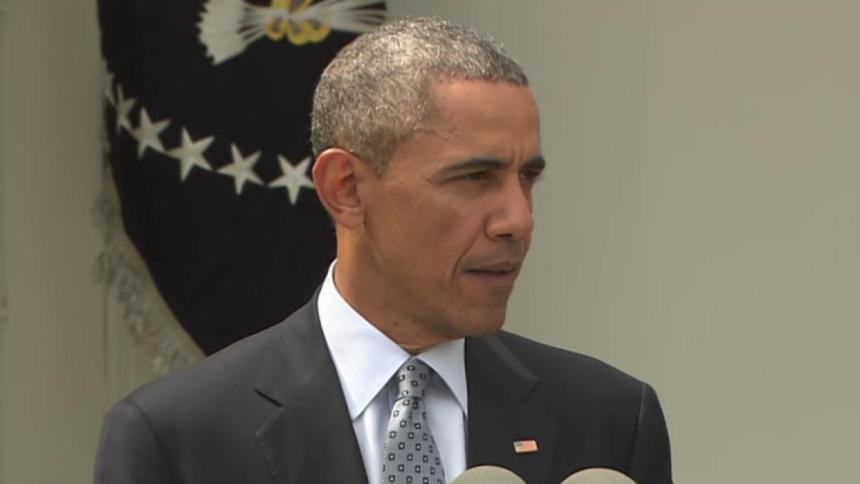
Obama’s remarks, delivered this afternoon at the White House, are worth watching in full. Note, for example, the frequency with which he anticipates critics’ concerns, and preemptively debunks the talking points.






Become a member to join the discussion