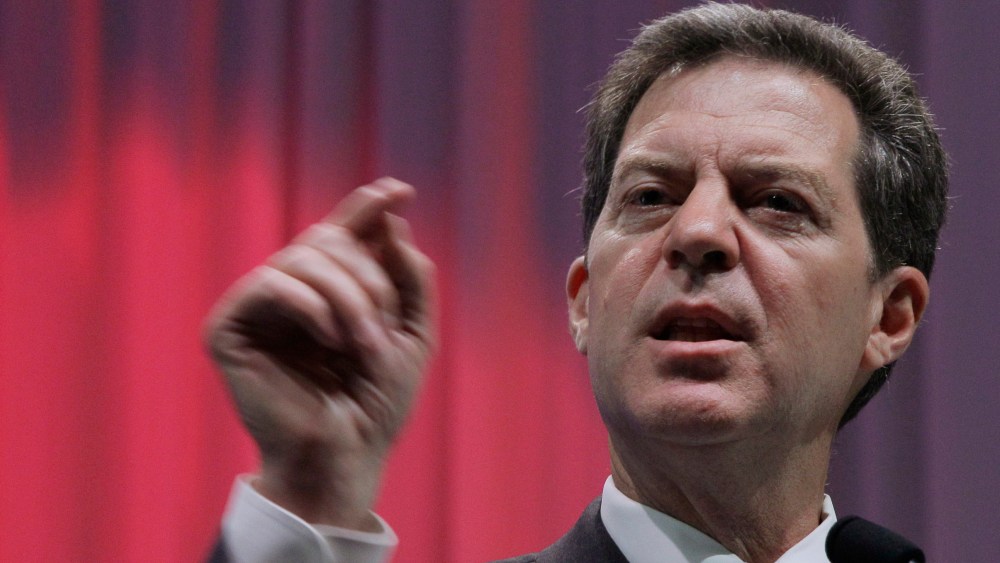
Controversial Republican economist Arthur Laffer was recently asked about his handiwork in Kansas. It was Laffer who crafted Gov. Sam Brownback’s (R) radical — and radically unsuccessful — economic experiment, which has failed to deliver on its promises and which has ruined Kansas’ finances.
“Kansas,” Laffer said two weeks ago, “is doing fine.”
“Fine” is a subjective word, though when a state finds that some of its schools don’t have enough money to keep the doors open, it’s safe to say everything isn’t “fine.”
Six school districts in Kansas will close early this year, following budget cuts signed in March by Republican Gov. Sam Brownback.Two school districts, Concordia Unified School District and Twin Valley Unified School District, announced earlier this month that they would end the year early because they lacked the funds to keep the schools open. This week, four more districts confirmed they would also shorten their calendars, according to the Topeka Capital-Journal.
One superintendent told the Topeka Capital-Journal he doesn’t want to permanently change the school calendar, but at least for this year, budget concerns made it necessary to wrap up early.
If the news sounds familiar, we learned earlier this month about two school districts that couldn’t afford to stay open for the full academic year. That number has evidently grown to six.
And as we joked a few weeks ago, nothing says “21st-century super power” like American schools closing early because a state can’t afford to keep the lights on.
Brownback’s office has argued that he’s not directly responsible for the problem, but local reporting noted that school districts are “losing $51 million they expected to receive for the current school year after Gov. Sam Brownback signed a school funding overhaul bill in March.”
With the latest projections painting an even uglier financial picture for Kansas, the Republican-run state government is eyeing possible tax hikes, most of which are regressive ideas that would burden the poor more than the wealthy.