
During a White House event on Monday afternoon, Donald Trump took a moment to celebrate low crime rates in Washington, D.C. (while conveniently overlooking the fact that rates had sharply improved before he deployed National Guard troops onto civilian streets). The president said that as far as he’s concerned, the reason the city is safer is because “we have very big, strong, good-looking soldiers standing around, and I think they make the place look better.”
It was an odd comment. Crime is down in a major American city because the troops, whom Trump finds attractive, make the community “look better”?
A few days earlier, the president said he had chosen Interior Secretary Doug Burgum to serve in his Cabinet because he found Burgum’s wife pretty. At the same Oval Office gathering, Trump elaborated on why he chose Kevin Warsh as his nominee to lead the Federal Reserve.
“He’s very smart, very good, strong, young,” the president said, describing Warsh’s attributes. He added, “He was the central casting guy. … Looks don’t mean anything, but he’s got the look.” Hours earlier, when announcing his selection, Trump also said Warsh is “central casting.”
The comments reminded me of a Washington Post report published in October:
As President Donald Trump was addressing the Israeli Knesset on Monday, he pointed at Israel Defense Forces Chief Eyal Zamir and said, ‘You know, the guy’s central casting. Let’s put him in a movie. Look at him.’
A few minutes later, he was reminiscing with the Israeli lawmakers about meeting Gen. Dan Caine, now the U.S. chairman of the Joint Chiefs of Staff, and other military leaders. ‘Everybody was like central casting,’ Trump said.
Everyone has certain words and phrases they use as part of their everyday vocabulary, but Trump’s fixation on “central casting” seems more than a rhetorical tic — it’s a reflection of how he assesses those around him.
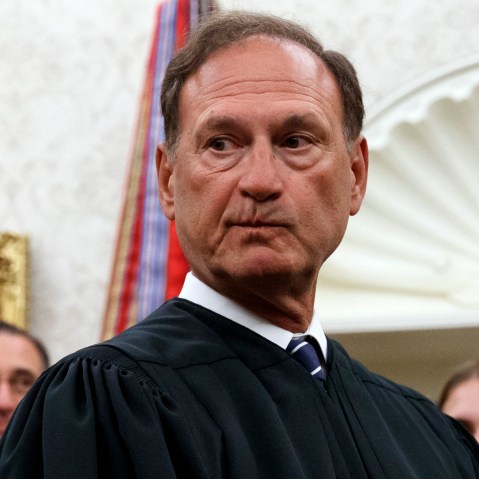
In 2018, for example, when Trump had to choose his second Supreme Court nominee, Politico quoted a White House insider who said, “Beyond the qualifications, what really matters is, does this nominee fit a central casting image for a Supreme Court nominee, as well as his or her spouse. That’s a big deal. Do they fit the role?”
A few months earlier, Trump nominated Ronny Jackson, the then-White House physician, to oversee the Department of Veterans Affairs, in part because of the future congressman’s guise.
“He’s like central casting,” Trump told donors at a fundraiser, “like a Hollywood star.”
He can’t seem to help himself. Then-Vice President Mike Pence? “Central casting.” Then-Defense Secretary James Mattis? “This is central casting.” Then-Secretary of State Rex Tillerson? “Central casting.”
The Washington Post’s Karen Tumulty told MS NOW after the 2016 election that “central casting” is “actually a phrase [Trump] uses quite a bit behind the scenes.”
A decade later, his preoccupation with how people present themselves has, if anything, intensified. It’s as if the president sees himself as the executive producer of an elaborate show — because, to a very real extent, that’s exactly how he perceives his role.
This post updates our related earlier coverage.




Become a member to join the discussion