One of the most common talking points among Trump administration officials is that they’re focused on “restoring trust and public confidence” in assorted federal agencies and departments. Indeed, it comes up all of the time.
Why is the White House politicizing the Justice Department? Because, the story goes, Attorney General Pam Bondi and her colleagues want to “restore trust” in federal law enforcement. Why is the White House trying to seize greater control over monetary policy? Because the Federal Reserve has “lost the trust” of the public. Why are Republicans trying to make it more difficult to register to vote and cast ballots? Because the party thinks it’s necessary to improve voters’ “trust in our federal elections.”
Why is Team Trump taking a radical approach to vaccines and the nation’s public-health infrastructure? Because Republican officials are determined to “re-establish trust in public health.”
At the heart of the problem is the broken premise. In fact, the whole pitch is fatally flawed for reasons that should be obvious:
- Republicans wage a concerted effort to undermine public confidence in U.S. institutions with a campaign filled with dubious claims and conspiracy theories.
- Many Americans fall for the Republican misinformation campaign.
- Republicans respond, “See? Public confidence has waned, which means Republicans need to advance a far-right agenda to turn things around.”
But this isn’t just an argument that looks like a snake eating its own tail. The whole pitch further collapses when one realizes that Donald Trump and his team aren’t restoring trust and public confidence at all. Take the latest national survey conducted by KFF:
The latest KFF Tracking Poll on Health Information and Trust finds that the public’s trust in the CDC remains at its lowest level since the beginning of the COVID-19 pandemic. Fewer than half (47%) of the public says they have a ‘great deal’ or ‘fair amount’ of trust in the CDC to provide reliable information about vaccines.
The slide has been especially pronounced among Democratic voters — with whom confidence in the CDC has slid more than 30 points since 2023 — but an even larger percentage of Republican voters lack confidence in the CDC.
The same national poll found that less than half of Americans have confidence in federal health agencies to make recommendations for childhood vaccines, and less than half of Americans are confident that federal health agencies are making decisions based on science.
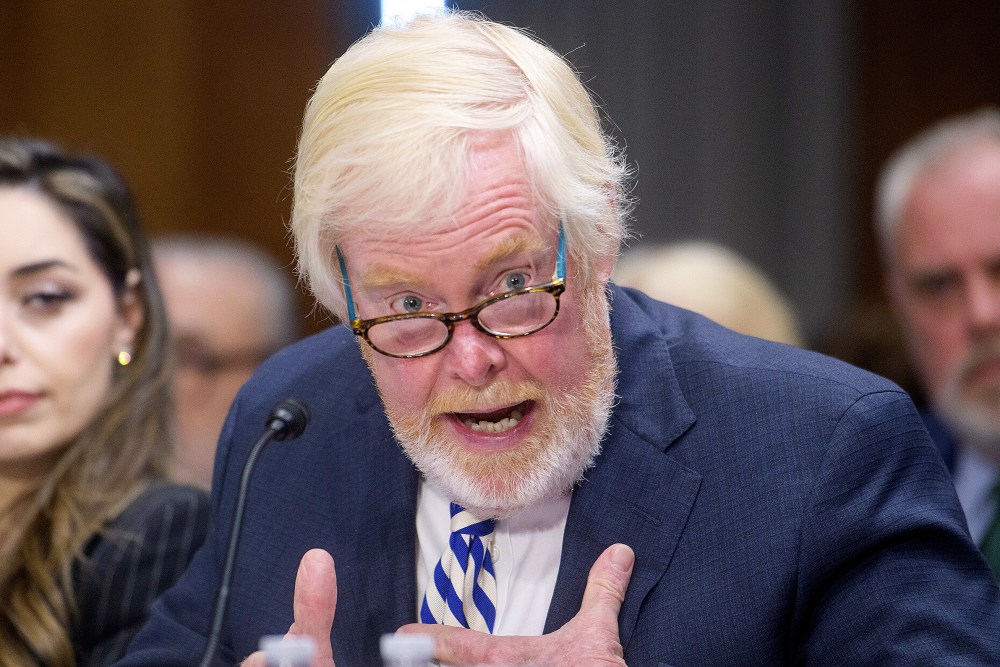
Dr. Jay Bhattacharya, Trump’s controversial director of the National Institutes of Health, argued during Senate testimony last week that the administration is trying to “re-establish trust in public health.” The follow-up question I was looking for went unasked: How’s that working out?