Just a couple of days before South Carolina’s Democratic presidential primary, Clemson University released a poll showing Hillary Clinton leading Bernie Sanders by 50 points. Almost immediately, the results were dismissed as an outlier — most surveys put Clinton’s advantage at around 20 points, a lead that had steadily shrunk in recent months as the Democratic race grew more competitive.
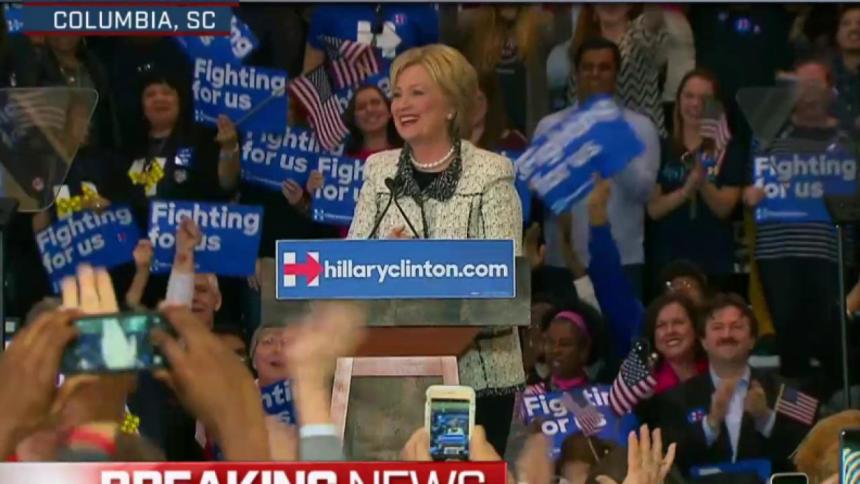
While the win was no surprise, it was still one of the best nights of Clinton’s second attempt at the presidency thus far because it proved the basic electoral theory of her campaign: that a strong advantage among minority voters would carry her to her party’s nomination – and potentially all the way to the White House. […]Sanders made a real effort to compete here, hiring more than 200 paid canvassers and devoting his own precious time to visit the state on numerous occasions. But for African-Americans, who have known and liked the Clinton family for more than 25 years, Sanders’ effort was too little, too late — or perhaps doomed from the start.
The point about Sanders’ genuine efforts is an important one. In plenty of primaries, a candidate will expect to do poorly in a specific state, he or she will focus resources elsewhere, and when the results come in, he or she will respond, “We really weren’t trying there anyway.”
In South Carolina, Team Sanders has no such luxury. The senator’s campaign took this primary seriously, seeing the state as an excellent opportunity to break through Clinton’s “firewall,” demonstrate Sanders’ broad appeal to diverse Democratic constituencies, and change the entire trajectory of the race for the nomination.
As the dust settles on his 48-point loss, those plans obviously didn’t work out well. Worse, it was the second consecutive missed opportunity: Sanders had nearly identical hopes in advance of the Nevada caucuses, which he also lost.
With Super Tuesday just a couple of days away, Sanders will have another opportunity to gain ground, but if the next round of contests looks anything like South Carolina, the Vermont independent is in trouble. Sanders’s recipe for success is based largely on increased turnout, peeling off support from minority communities, and winning over low-income voters.
At least for now, Sanders isn’t reaching any of these goals.