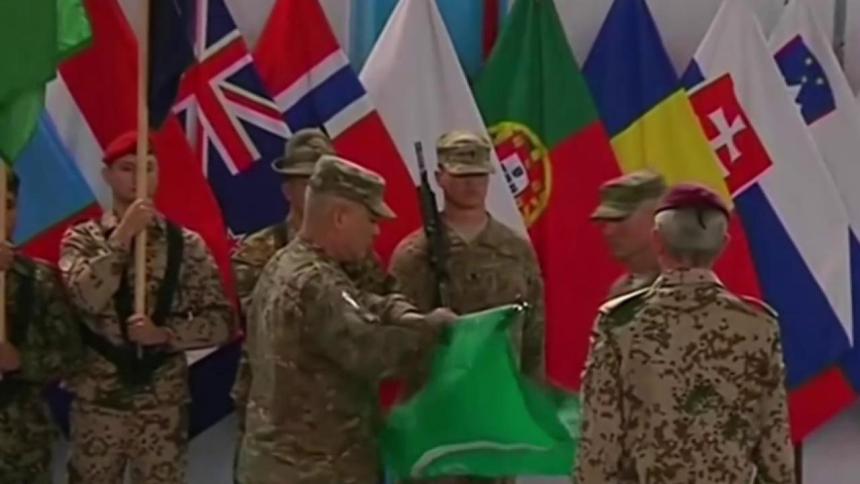
The U.S. war in Afghanistan began in October 2001 and it became the longest war in American history several years ago. In at least one way, that conflict ended yesterday, and President Obama marked the occasion with a statement heralding the war’s “responsible conclusion.”
“For more than 13 years, ever since nearly 3,000 innocent lives were taken from us on 9/11, our nation has been at war in Afghanistan,” Obama said in a statement that came hours after the United States and NATO formally ended the war with a ceremony Sunday at a military headquarters in Kabul.Obama said the ceremony marked a milestone for the nation and thanked U.S. troops and intelligence personnel for their “extraordinary sacrifices.” Approximately 2,200 American troops were killed in Afghanistan in a war that cost the U.S. $1 trillion since the initial invasion in 2001.
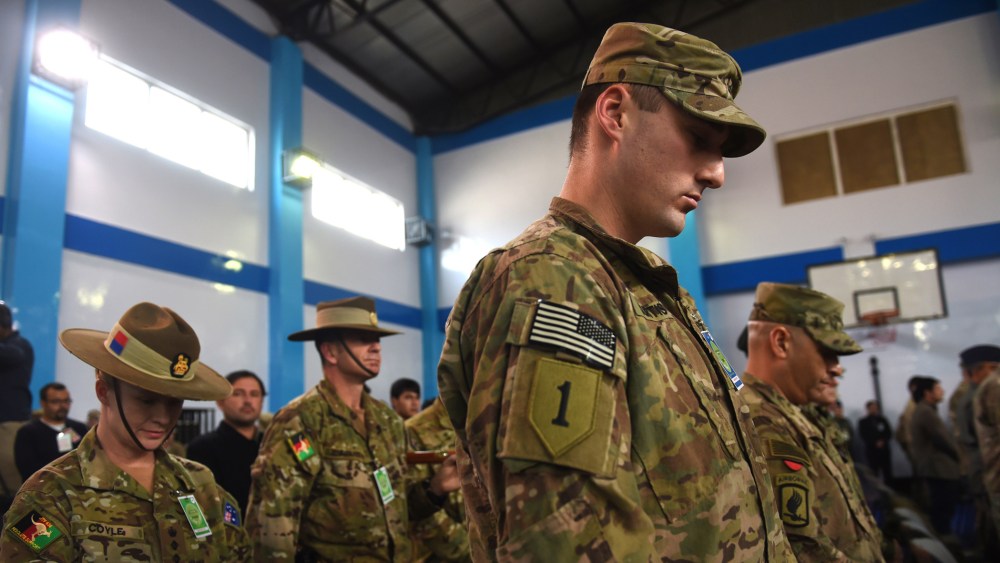
The Associated Press’ report noted that there was “a quiet flag-lowering ceremony in Kabul” yesterday “in front of a small, hand-picked audience at the headquarters of the NATO mission.” If this sounds familiar, a similar ceremony was held a few weeks ago when American and NATO troops closed their operational command center, marking the formal end of the “combat mission.”
But note the language President Obama added to his statement: “Compared to the nearly 180,000 American troops in Iraq and Afghanistan when I took office, we now have fewer than 15,000 in those countries. Some 90 percent of our troops are home.”
It’s that remaining 10 percent that serves as an important caveat — and suggests the end of the war isn’t really the end of the war.
In a technical, literal sense, “Operation Enduring Freedom” has ended, and “Operation Resolute Support” has begun. The former is what we’ve come to know as the war that started over 13 years ago; the latter is the result of a security agreement negotiated by U.S. and Afghan officials that leaves over 10,000 American troops in Afghanistan.
The U.S. servicemen and women are supposed to be training and supporting Afghanistan’s military from this point forward, but Americans in uniform will still conduct counter-terrorism missions. In other words, the end of combat operations will still likely include plenty of combat.
And when are these American troops scheduled to return home? The security agreement is effectively open-ended — our ongoing role in Afghanistan is indefinite.