If democracy dies in darkness, sometimes greatness can die in plain sight.
I spent almost a decade as The Washington Post’s diplomatic correspondent — one of the key national security beats at any news organization. But many of my biggest scoops couldn’t have been written without the assistance of Post foreign correspondents on the ground, journalists with their own sources and expertise. When I jaunted around the globe with the U.S. secretary of state, trips often included a stop in a capital where a Post correspondent was based.
Resources and ambition to report news far and wide, without fear or favor, helped make The Washington Post a great news organization. Until Wednesday.
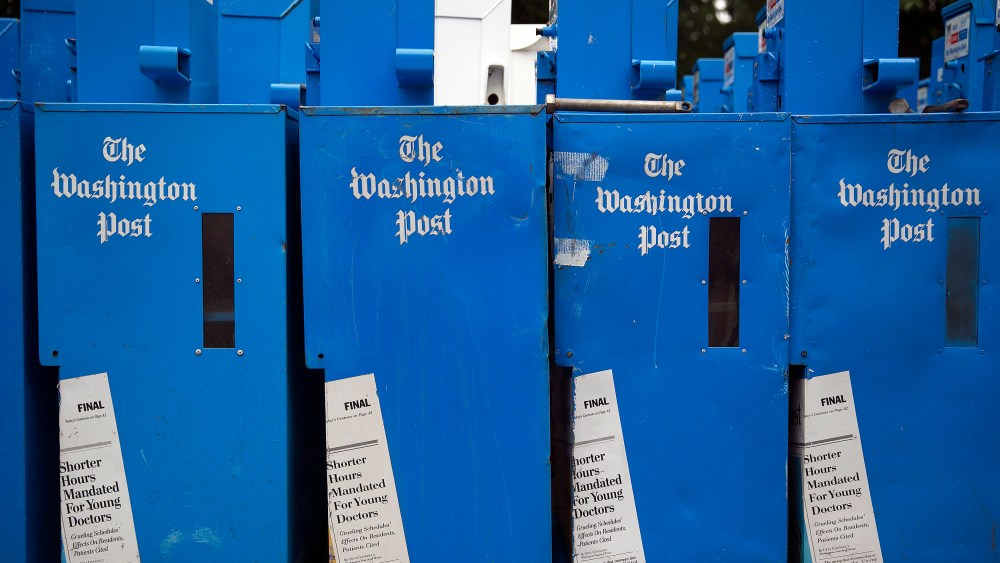
That combination of resources and ambition to report news far and wide, without fear or favor, helped make The Washington Post a great news organization, until Wednesday, when Post leadership announced cutbacks so severe and strategy changes so shortsighted that not just the Post but American journalism — and democracy — will be left diminished.
Under orders from the Post’s mega-billionaire owner, Jeff Bezos, one-third of the staff was laid off. Some entire newsroom departments — sports, books, audio — were eliminated. The metro staff, already decimated by reductions around the time of publisher Will Lewis’ arrival in 2024, was slashed even further. The foreign staff was also cut dramatically, with every correspondent based in the Middle East (Jerusalem, Cairo and Istanbul) laid off. The Post’s Ukraine correspondent was ditched in a war zone.
As notifications went out, executive editor Matt Murray announced that “for the immediate future, we will concentrate on areas that demonstrate authority, distinctiveness, and impact and that resonate with readers: politics, national affairs, people, power and trends; national security in DC and abroad” and “forces shaping the future.”
These are the words of someone with no sense of strategy or journalistic purpose. Apparently Murray imagines some sort of narrowly tailored product, a la Politico or Axios, with some added features (he also mentioned “advice” and “wellness”). Why should anyone pay for the Post if they can get the same or similar content elsewhere? This is a recipe for journalistic irrelevance.
The Post was a major metropolitan newspaper — located in the most important city in the world.
The Washington Post became a force in American journalism with a distinctive voice and profile. The Post was a major metropolitan newspaper — located in the most important city in the world. The Watergate affair that toppled a president started as a local story about a break-in. As a diplomatic correspondent, I could ask for an interview with any president or prime minister because they knew my reports were read by the president of the United States, Congress and the ambassadors and other diplomats littered across Washington.
Because of that standing, the Post could go toe-to-toe with the bigger New York Times, especially on political and national security coverage. It broke news with deep, revelatory investigations. For four years straight — 2015 to 2018 — the Post won the Pulitzer Prize for national reporting. But the Post didn’t take itself as seriously as the Times did and operated as a “writer’s paper,” allowing reporters’ voice and attitude to shape stories. The Post also nurtured a collaborative culture, where people supported one another to get the best possible story, compared with the Times’ famously more cutthroat newsroom.
The crew running the Post the past two years — Murray, Lewis and a few others hailing mainly from The Wall Street Journal — appear to have little respect for the paper’s storied history. Worse, they seem determined to erase any vestiges of the past. They even laid off Marty Weil, a six-decade newsroom veteran with a broad smile and sonorous voice who first heard the police scanner report that became the Watergate blockbuster and was, until Wednesday, still manning his desk.

In a period of rapid technological change, I’ll be the first to agree that news organizations need to adapt in order to thrive. The old metro daily is a relic, like a department store. People get information from a variety of sources — specialized publications, Substack newsletters, TikTok and the like — just as they buy clothes directly from a range of merchants on the internet.
Bezos built a fortune offering a digital superstore’s worth of items. When thinking about the Post cutbacks, ask yourself: Who would go to a department store that has limited its products to a particular niche — say, only sportswear? Consumers who want sportswear might as well go directly to Dick’s Sporting Goods. Consumers in search of specific news are likely to do the same, unless compelled by a quality brand with information they can’t find anywhere else.
Sadly, the Post is opting to no longer be that news outlet.

Not so long ago, during President Donald Trump’s first term, The New York Times and The Washington Post had about the same number of digital subscribers. But, wisely, the Times invested in expanding its offerings with acquisitions; readers could consume top-tier reporting or a range of other fare such as Wordle and The Athletic. Meanwhile, the Post cut back and shrank.
Now, the Post has roughly two million digital subscribers — maybe fewer — and the Times has 12 million. The Post’s travails were exacerbated by some Bezos decisions in recent years, such as canceling the paper’s planned endorsement of Kamala Harris just 11 days before the 2024 election — a move that led more than 250,000 subscribers to cancel. A few months later, Bezos announced the opinion section would focus on “personal liberties and free markets,” a turn to the right also intended to curry favor with Trump.

For decades after its Watergate fame, the Post had what I called the “Avis problem” — being No. 2 in relation to the Times, a genuinely national newspaper. But being No. 2 actually gave the Post freedom to experiment.
There were notable successes. The Washington Post revolutionized journalism in 1969 by transforming the Women’s Pages, for instance, into the Style section — which became a showcase for great writing (Wil Haygood, Robin Givhan, Sally Quinn) and sharp profiles of powerful people. In more recent times, it launched The Fact Checker, which I ran for 15 years — helping spur a global movement in political fact-checking.
Mainstream media outlets have to evolve, but with people increasingly discerning about what information sources they pay for, it will become harder to attract more subscribers with a much diminished staff. The Post not only reported the news, but it also explained the significance of events at home and abroad. How did the world learn that Trump was dismantling the East Wing of the White House? The Post reported it. The Post’s home-field advantage proved invaluable last year when Trump began dismantling the federal government. Hundreds of government employees provided tips to what they considered their local newspaper.
Would such an outpouring of information come to the mini-Post? I doubt it. The number of substantial news outlets in this country has already dwindled to a handful, and Bezos has eliminated the attributes that made the Post so influential. The net result is that American journalism will be diminished — and too many revelatory stories and exposés now will never be written.