The first time Kaouther Ben Hania heard Hind Rajab speak, something inside her changed. “When you hear her voice,” she told me, “you can’t go on with your daily life.” That wasn’t metaphor. It was a statement of fact.
I felt it too.
Sitting at Film Forum in New York City after a recent screening of “The Voice of Hind Rajab,” that feeling lingered — the sense that whatever distance we think exists between our lives and Gaza is an illusion we actively maintain.
Hind Rajab was 5 years old in January 2024, when she and her Palestinian family were trapped in a car in Gaza, calling for help as Israeli gunfire closed in.
Ben Hania’s film collapses that distance. It seizes our attention. And it refuses to let us return to normal after watching.
Hind Rajab was 5 years old in January 2024, when she and her Palestinian family were trapped in a car in Gaza, calling for help as Israeli gunfire closed in. Her voice was recorded by the Palestine Red Crescent dispatchers trying to rescue her.
Her pleas were real. She did not survive. “The Voice of Hind Rajab” confronts our collective failure to respond.
In a recent interview, Ben Hania spoke candidly to me about her decision to take Hind’s story out of the news cycle and put it on the big screen. There were risks, she understood. Turning trauma into art could become exploitative. There was “no legitimacy without the blessing of her family — especially her mother,” Ben Hania said. That blessing grounded the docudrama in responsibility.

Still, there were other ethical questions. How do you tell this story — which combines real-life recordings with actors’ portrayals — without reproducing the violence the film documents? “To show the car, to film Hind in the car — it becomes a war movie,” Ben Hania told me. “And it was out of the question to film a child dying.”
So she made an important choice.
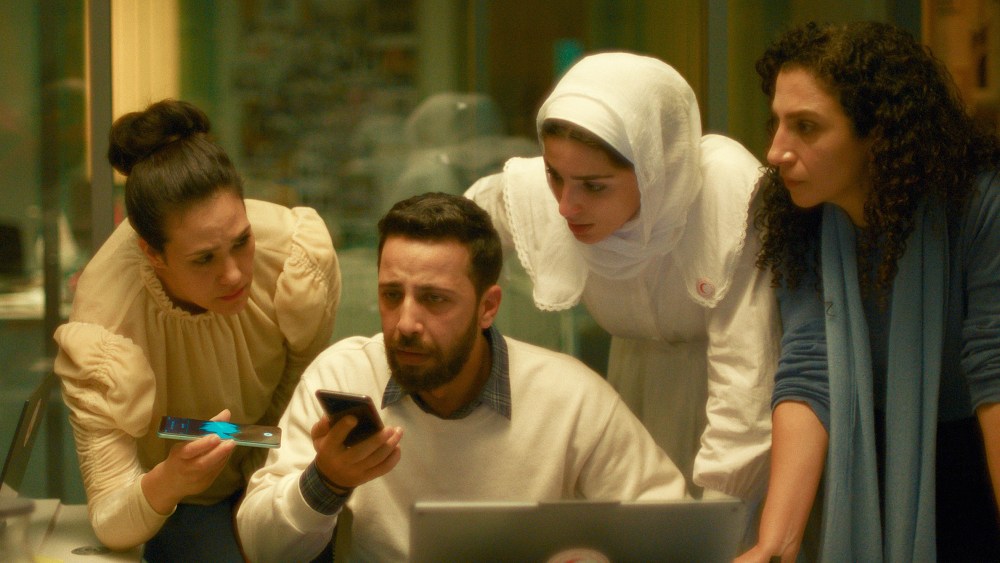
Instead of placing the camera on Hind, the film conveys the perspective of many of its viewers: listening — helplessly — from far away. The story unfolds largely from the offices of the Palestine Red Crescent in Ramallah, hundreds of miles from Gaza. The dispatchers hear Hind’s voice. They coordinate. They wait. They negotiate. They hope. And, ultimately, they fail — not because they didn’t try but because Israeli permission to reach her never came.
“That distance,” Ben Hania explained, “represents our situation as the audience.” We are listening. We are powerless. We hear Gaza ask for help. Two Red Crescent workers who attempted that rescue were killed. The film honors not only Hind but also those who tried to save her.

This decision to choose the right perspective with the right distance gives the film its devastating power. There is no reenactment of violence, no false catharsis. Instead, there is waiting. Bureaucracy. Human debate. And a ticking clock that never stops.
At one point in the film, tension rises among the ambulance workers: Should they risk their lives and possibly others to save Hind, or preserve the lives they have?
Watching, I couldn’t help but think about how familiar that argument sounds. In our conversation, I said as much to Ben Hania — that the exchange reflects a broader debate within Palestinian society: preserve what remains despite the anguish, or take a risk and fight for something better, potentially at unimaginable cost.
Looming over that debate is an uncomfortable truth the film makes impossible to ignore: Hind’s survival was never truly within Palestinian control.
Looming over that debate is an uncomfortable truth the film makes impossible to ignore: Hind’s survival was never truly within Palestinian control. Permission to live was in Israeli hands. The ambulances waited for clearance to go into Gaza. Calls were made. Coordinates were given. The answer never came.
Ben Hania told me some financiers urged her to wait. “Make this film in 10 years,” they said. Let history settle. Let distance soften the edges. But how do you wait when a genocide is unfolding? How do you delay testimony when accountability is still being denied?
“Cinema can do better than explaining,” she said. “We are done explaining.”
For decades, Palestinians have been asked to explain themselves — over and over again — to justify their grief, their very right to exist. This film rejects that demand. It does not explain. It makes you feel. And that, Ben Hania believes, is cinema’s highest function: empathy. To transport viewers into the shoes of others. To experience the helplessness of a child begging to be saved.

Ben Hania made another point that has stayed with me. Cinema, she said, can be a place where people truly hear Hind’s voice — not “in between posts while scrolling,” sandwiched between ads and distractions, but in a sphere that demands presence and attention. This film is not for multitasking or half-watching. Hind’s voice demands your full attention.
And yet, despite its artistry and urgency, the film’s subject matter means it faces an all-too-familiar barrier: distribution. Despite winning prestigious awards and having Hollywood affiliations, there is no major U.S. distributor attached. No wide release.
Let’s be honest about why. If this child were not Palestinian, this film would have secured distribution early on, and millions of Americans would have heard of it and possibly already seen it.
“The Voice of Hind Rajab” is not asking for sympathy but for accountability and justice. Ben Hania told me she hopes viewers will do something — anything — after watching, rather than absorb it as just another tragic Palestinian story. Justice begins with refusal: refusal to forget and refusal to look away from the killing of Palestinians, which has too often been normalized in American media and entertainment.
At the end of our conversation, Ben Hania said she hopes audiences remember one thing: the name Hind Rajab.
Because once you hear her voice, you can’t go on with your daily life.
CORRECTION (Jan. 9, 2026, 12:54 p.m. ET): A previous version of this article misstated the age of Hind Rajab when she died in Gaza. She was 5 years old.