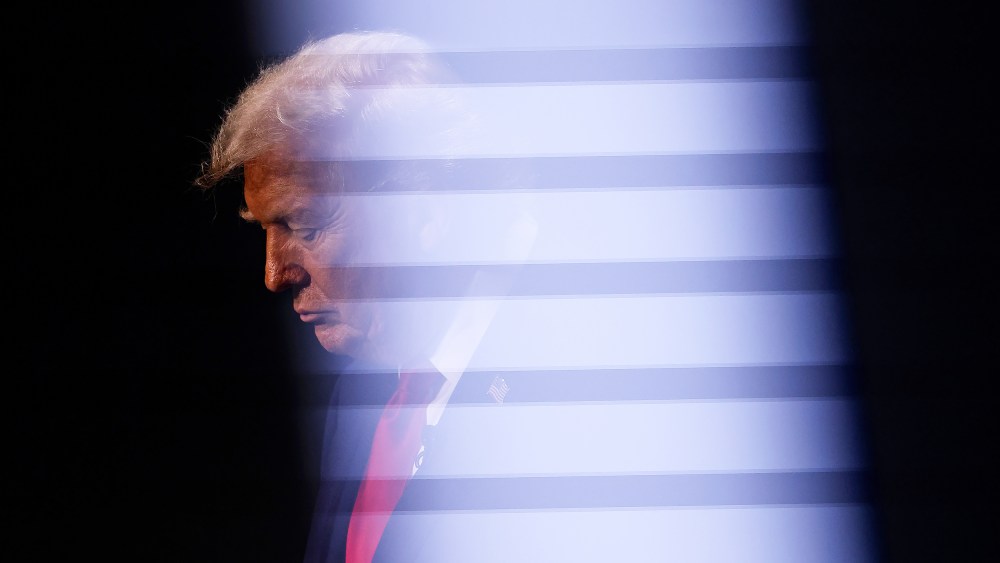
President Donald Trump’s second term has been marked by a lot of loud moments that seemed like they might be the beginning of something consequential, only to peter out amid political pushback, court decisions and bureaucratic inertia.
- His invocation of the 18th century Alien Enemies Act to deport migrants without due process was paused by the Supreme Court, though it might yet come back.
- Elon Musk’s Department of Government Efficiency did a lot of damage, but it ended without cutting the trillions of dollars the billionaire federal contractor once promised.
- Trump’s attempts to use the legal system to punish perceived enemies such as former FBI Director James Comey has faltered due to poor lawyering, though the Justice Department keeps pressing on.
These moments may yet prove to be pivotal. The Trump administration is still trying to deport immigrants with a minimum of due process. Hundreds of thousands of people have already died as a result of DOGE’s cuts to foreign aid. And even a failed criminal charge takes a financial and emotional toll on those targeted for retribution.
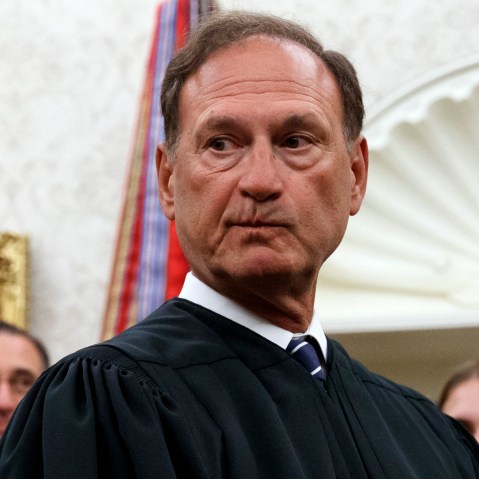
But a moment on Monday may prove to be Trump’s most lasting legacy: The Supreme Court heard arguments in Trump v. Slaughter, a case that could redefine presidential powers and destroy the very concept of an independent federal agency. The end result may be nothing less than a rollback of the features that underpinned American strength and stability in the 20th century.
The case is about whether Trump can fire a Democratic commissioner from the Federal Trade Commission without cause. In order to ensure stability and independence, Congress deliberately provided for the board to be overseen by five appointees with staggered seven-year terms and a limit of three members from the same political party.
The same basic structure undergirds a panoply of federal agencies: the Federal Reserve, the Securities and Exchange Commission, the Federal Communications Commission, the National Labor Relations Board, the Federal Deposit Insurance Corporation, the Commodity Futures Trading Commission, the Consumer Product Safety Commission, the Nuclear Regulatory Commission and the National Transportation Safety Board. (It should be noted it’s also the same basic structure of the Supreme Court itself.)
These are the agencies that write the rules that determine how much mortgages cost, ensure roads are safe, keep businesses from ripping off consumers, verify that nuclear power plants are running safely, protect workers from being fired for discussing unsafe conditions on the job with co-workers, and guarantee depositors get their savings back if the bank fails.
Since President Grover Cleveland created the Interstate Commerce Commission in 1887, agencies like these have been designed to be protected from political influence. To be sure, any individual president can make their mark through Senate-confirmed appointments, but the boards of these agencies are largely immune to pressure from the White House or Congress to make decisions that would benefit a political ally or punish a political opponent.
If, however, the conservative majority on the Supreme Court agrees with Trump, the theory underpinning the independence of these agencies would be demolished. In its place would be the “unitary executive theory,” which grants the president the power to reshape federal policy on a whim.
Even without such powers, Trump has egregiously expanded the authority of the president. He’s already using his influence over the Justice Department to investigate his political opponents and his sway over the FCC to pressure ABC to fire late-night host Jimmy Kimmel. He’s been pressuring the Federal Reserve to lower interest rates — though there are indications the Supreme Court may make a policy exception for the Fed, to preserve its independence.
Broadening the powers of the presidency could allow Trump to take this personalization of national policy to even more damaging levels — and it would keep those powers in place for presidents to come.
That includes successors he may have little in common with.
Suppose a new Democratic president decided to push agencies to the left as aggressively as Trump has attempted to push them to the right, firing and replacing board members who won’t do their bidding. A revamped FCC, say, breaks up local TV conglomerates; an empowered SEC targets fraud in cryptocurrency markets; an aggressive National Labor Relations Board intervenes on behalf of striking workers; and perhaps a supercharged Consumer Product Safety Commission aggressively targets Amazon and other online marketplaces.
Depending on your political leanings, this sounds like a dream — or a nightmare. Either way, after four or eight years, the country would have a rude awakening, as the next Republican administration presumably then would replace every board member at those agencies with staunch conservatives and began aggressively undoing every one of those policies and implementing their polar opposite.
The result would be wild swings between presidencies in basic issues of how the government runs, and hollow partisan victories that never last. It would be more like the “spoils system” of the 19th century than the stable government and professional civil service honed in the 20th. Any gains one side made would be temporary at best, and every presidential election would have enormous stakes for basic governance.
The American system of government is frustrating and slow-moving. It takes too long to pass much-needed reforms or address growing crises. It’s tempting to imagine your preferred president sweeping the pieces off the board and rewriting the rules of the game. But that means your least favorite president could also do the same.
In the end, the specific policies might not even last long enough to make a difference. But the uncertainty and instability would endure, no matter who gets elected.
Trump’s time as president has been marked by chaos. His ultimate legacy may be to ensure that’s the case for future presidents too.
This is a preview of MS NOW’s Project 47 Newsletter. As President Trump continues implementing his ambitious agenda, get expert analysis on the administration’s latest actions and how others are pushing back sent straight to your inbox every Tuesday. Sign up now.