In a famous 1978 study, Harvard University psychologist Ellen Langer had volunteers try to cut into a long line to use a copy machine.
Some just asked if they could go first. Some added that they were in a rush. And some asked if they could cut because they needed to “make some copies.”
On its face, that last line is ridiculous; everyone is in line to make copies, after all. But it sounded enough like a reason that most people let those volunteers go before them.
What happened here is a simple rhetorical feint, one long used by advertisers to convince distracted consumers that their product is worth buying. President Donald Trump has also relied on the same trick to get out of a jam.
In fact, Trump so predictably deploys this strategy that back in November, I correctly predicted what Trump would say when the Epstein files were eventually released. If he followed the playbook of his responses to the investigation into Russian election interference, I wrote, “the next argument is clear: pretend he was exonerated.”
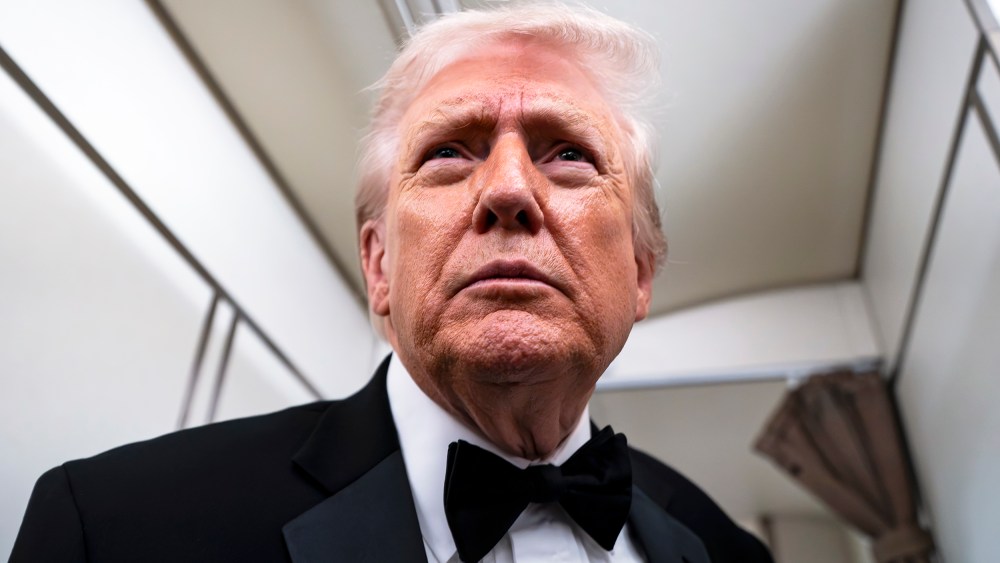
On Saturday, Trump was asked about the latest release of files.
“I was told by some very important people that not only does it absolve me, it’s the opposite of what people were hoping, you know, the radical left,” he said.
Reader, he was not absolved. According to a New York Times review of the millions of documents using a proprietary search tool, more than 5,300 files contain more than 38,000 references to “Trump, his wife, his Mar-a-Lago club in Florida and other related words and phrases.” Previous releases included a separate 130 files with Trump-related references, the Times found.
To be fair, the documents do not indict Trump either. But they indicate a yearslong and wide-ranging relationship with Jeffrey Epstein, a financier who was convicted of procuring a child for prostitution and soliciting a prostitute as part of a controversial 2008 plea deal by Alexander Acosta, who would later become a Trump Cabinet official. (The documents released so far do not contain any direct communication between Epstein and Trump, although they do include Epstein and a number of Trump associates.)
To those of us paying attention, the documents are damning enough that some of the people named in them should, at a minimum, be drummed out of polite society. Certainly, anyone with a political career should slink off into retirement for even being associated with this man.
In response to all this, Trump’s rhetoric has shifted wildly. As I noted before, he’s contradicted himself, arguing that the Epstein documents are “pretty boring stuff,” trying to pin them on his political opponents and even claiming that a bawdy birthday letter with a drawing of a naked female figure that Trump reportedly wrote to Epstein was “a fake thing.” (Trump filed a $10 billion lawsuit against The Wall Street Journal for reporting on the alleged letter.)
But amid all his public claims, Trump relies on the fact that many of us aren’t paying close attention. Like the harried people waiting to use a copier, most of us don’t engage our reasoning skills to pick apart the president’s latest comments. We hear the word “because” or “absolved” in passing on TV or the radio while we’re busy doing something else. We see a quote on social media and keep scrolling mindlessly.
I’m not passing judgment here. We’re all guilty of this at some point or another. Spending all day picking apart arguments like a jury foreperson overseeing a murder case would be exhausting. Our poor overworked brains rely on these cheat codes because they are just trying to lighten their load.
But while the copier experiment helps explain why Trump’s flimsy arguments keep working, it also shows why they will fail eventually.
In the first version of the test, Langer had her volunteers ask to cut in line so they could make five copies. These relatively low stakes meant most people didn’t think that hard about the argument presented to them. But when her volunteers asked to cut in line to make 20 copies, the share of people who allowed them to cut without a good reason dropped dramatically.
As it turns out, making the personal stakes even a little bit higher led many people to use their reasoning skills and reject the flimsy argument.
For controversies such as the Russia investigation or even Trump’s first impeachment, the personal stakes were low for most voters. But the more serious Trump’s problems become — whether that’s inflation, immigration agents pepper-spraying or shooting bystanders, attacks on voting or the president’s history of palling around with a sex trafficker — the more likely it is that the average voter stops filtering out arguments on autopilot and starts to truly listen.
Trump will keep using these tricks, but the magic is wearing off.