In America today, almost every benefit you have is tied to your job.
If you have health insurance, you probably get it through your employer, your spouse’s employer or a parent’s employer. If you have a retirement account, it’s probably a 401(k) plan from your job or maybe a rollover IRA from your old job. You might even have life insurance or a health savings account thanks to your boss.
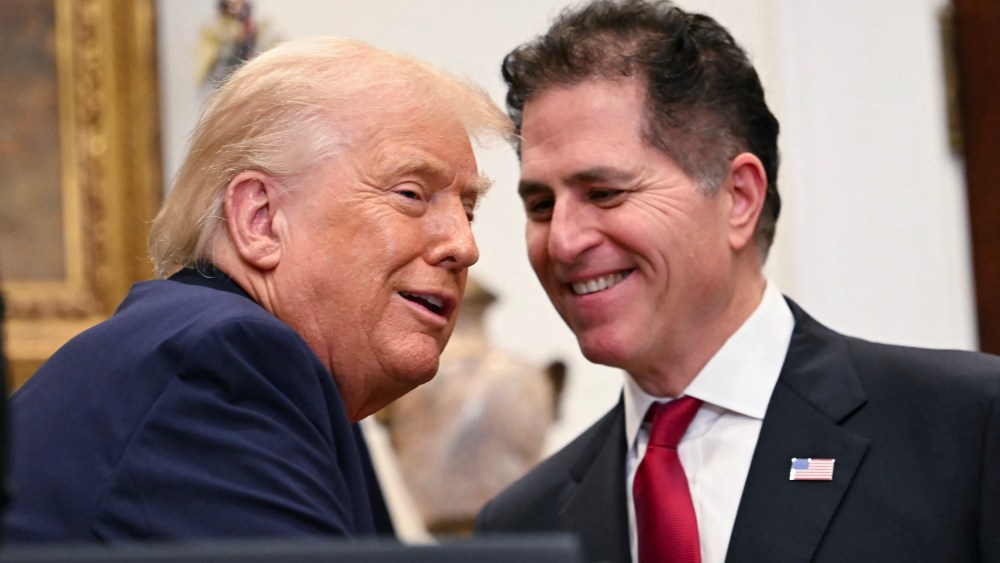
That’s one reason President Donald Trump’s new investment accounts for children under 18 have so much potential, especially with the announcement this week that billionaires Michael and Susan Dell will donate $6.25 billion to help seed the accounts with $250 for children in lower-income areas. The fact that these accounts are not tied to a job means a lot more people will sign up for them, which could help increase the number of Americans saving for retirement.
The idea is to start saving money early for those big life expenses.
Credit where it’s due: The Trump administration is onto something smart here. Every child younger than 18 who has a Social Security number can have a low-fee (or maybe even no-fee) retirement account. The idea is to start saving money early for those big life expenses, whether that’s getting a college degree, starting a business, buying a first home, dealing with an emergency or just retiring. In theory, this could one day help reduce the wealth gap with a universal program that should be fairly cheap for the government to run.
The Trump administration is also smartly nudging lower-income families to open an account by putting in $1,000 for every child born during Trump’s second term, while the Dells’ contributions will go to children ages 10 and younger born before last January who live in a ZIP code with a median income of $150,000 or less.
Not only that, but Dell Technologies will also contribute $1,000 for its own employees with newborn children.
This is all a good start. Nearly half the private-sector workforce, or about 56 million workers, don’t get retirement benefits through their job, according to a Pew survey from earlier this year. While the vast majority said they want to build wealth, many said they also weren’t sure what the best savings and investment options were.
These accounts could help smooth the path for the next generation of workers to have an investment option that’s not tied to their job and that even comes with a little seed money. Once the account is set up, parents can add to it, contributing up to $5,000 per year until their child is 18, and their employers can even kick in an additional $2,500 a year.
After 18 years, your child could have $195,000 in their Trump account.
That can add up to real money. If you started with $1,000, put in the maximum each year and got an employer contribution, after 18 years, your child could have $195,000 in their Trump account, assuming a 4% rate of return. That’s enough to pay for college, start a business or just get a huge head start on retirement savings.
But let’s be realistic. Most Americans are not going to be able to do that.
A Bankrate report in November found that only 46% of U.S. adults have enough emergency savings to cover three months of expenses. Only 14% of Americans contribute the maximum to their own 401(k), according to a 2024 Vanguard report, even though that can dramatically reduce their income taxes. And a 2024 study by Edward Jones found a third of Americans who are saving for their child’s college education don’t know what a 529 savings plan is, even though using such accounts would reduce their state income taxes.
If those families have an extra $400 a month to spare, they should be putting it in a high-interest savings account, their 401(k) or a 529 college savings plan before they start thinking about adding to a Trump account because of the tax benefits and greater flexibility.
Even if you’re doing all that, you may still find it better to put that extra cash in a custodial Roth IRA, a retirement savings account for your child that you manage until they turn 18 (or 21 in some areas). That’s because any money put into a Trump account can’t be withdrawn until the child turns 18. If you think you might need access to that money in the event of an emergency, putting it somewhere more accessible is likely a better option.
But if you’re even weighing these options, chances are you’re already doing fine. You have thousands of dollars to put into an investment account for your child. That’s great. You have flexibility to decide on the right one for your family.
Not everyone is in that position, of course. The promise of the Trump accounts is that they will get more people setting aside money for the future who don’t have those options. The $1,000 payments from the federal government — which are set to expire in 2029, just as Trump leaves office, by the way — can give all children a boost but the well-to-do families putting in the full $7,500 a year are going to emerge exponentially better off. And the Dells’ $250 contribution, as generous as it is, will not go very far even with compound interest.
The greatest potential here lies in others following the Dells’ lead.
The law that created Trump accounts makes it fairly easy for family and friends, employers, philanthropists, charitable organizations and even state or tribal governments to contribute to them. That makes them a great way to administer a “baby bonds”-type program to set aside money for children from lower-income families without much overhead. A future presidential administration could refine the program to do more for families that need the help.
Like the people they’re for, the Trump accounts are still in their infancy. The contribution from the Dells is a baby step toward them growing into something much bigger.