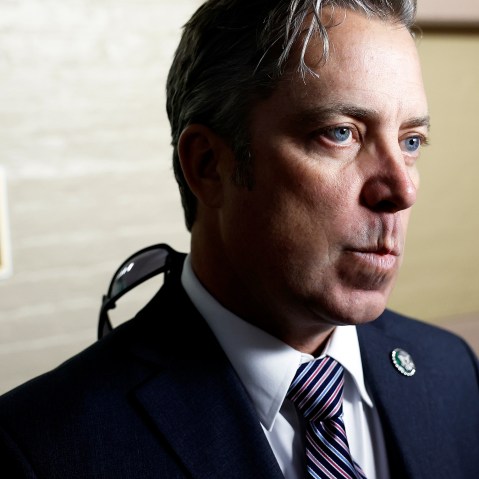
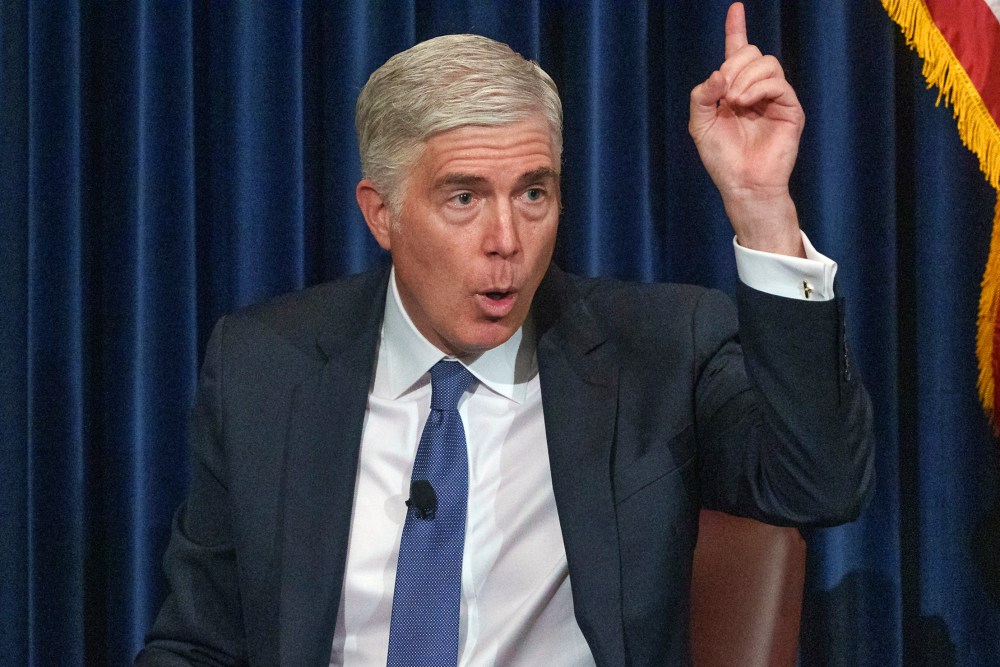
The U.S. Department of Health and Human Services held a press conference Thursday morning to announce a new proposed administrative rule that would bar hospitals and other medical providers from receiving funds from Medicare and Medicaid if that facility provides gender affirming care to trans youth.
The proposed rule, which now must endure a mandatory 60-day public comment period before the process of finalization can begin, would make the future for trans kids in this country look very bleak if it’s approved as currently written. Teenagers currently on treatment will likely see their provider close up shop, ripping them suddenly into a natal puberty neither they or their parents want. Younger kids who haven’t hit puberty yet but who have been certain about their trans identity for years will suddenly see a future in which the wrong-sexed body is forced upon them.
U.S. Deputy Secretary of Health and Human Services Jim O’Neill, who is not a doctor nor has he ever worked clinically with any trans people, began his comments at Thursday’s press conference not with an introduction of himself but by beginning with a political statement. “Men are not women,” he began. “Men can never become women. Women are women. Women can never become men.”
The proposed rule would make the future for trans kids in this country look very bleak if it’s approved as currently written.
Trump’s HHS has already made several attempts at arguments against this care, producing a paper earlier this year questioning the strength of the existing study of the internationally accepted standard for treating gender dysphoria in youth. Notably, the paper suggested instead that trans youth be subject to talk therapy to try to get them to accept their natal sex, a treatment with a thinner evidence profile than the affirming care they’re trying to ban now.
This rule is not driven by a legitimate medical issue with gender affirming care, no matter how often conservative politicians and The New York Times say so. It’s purely political. Finalizing the rule would mean major hospitals will likely abandon their youth gender clinics, pushing trans youth to increasingly darker sources for their life saving medicine.
It’s a playbook we’ve seen before, only then it was run against abortion providers. Government limits on federal funds going to abortion providers drove that care out of hospitals and into smaller clinics. Even medical schools eventually stopped teaching new doctors how to perform abortion care. From there, governments slowly began introducing more and more onerous regulations (called TRAP laws) on these small clinics.
I visited a small abortion clinic in Philadelphia in 2019, and a director explained that Pennsylvania’s then-red legislature had required the clinic to install an extremely expensive and unnecessary surgical ventilation system that required lots of permitting and close work with the clinic’s landlord. With good luck, the clinic was barely able to obtain the funding and permitting needed for the installation, staving off permanent closure.

But eventually Republicans were able to overturn Roe v. Wade, opening the door to draconian bans on abortion care across red state America and putting greater strain on resources in places where it’s still legal.Relatedly, the Supreme Court has already allowed state level bans on youth gender affirming care..
But that is not enough for the GOP, which insists on interfering in the care provided in blue states, as well. Going forward, youth gender affirming care in blue states is likely to look a lot like that Philadelphia abortion clinic I visited that day years ago — struggling to remain functional while forced to leap a barrage of unnecessary hurdles.
But there still is a little glimmer of hope here. These rules take a long time to implement, and can be undone by any Democrat elected to the White House with the will to undo this move. That means, at least in the short term, we have a chance to run out the clock on this rule’s implementation. The more public comments HHS receives about this rule, the longer it will take to finalize. The more lawsuits filed against it, the longer it will take to get to the Supreme Court for validation.
The real risk is what happens if another anti-trans Republican takes the White House back? Are we going to do this same old song and dance every four or eight years? Seeing this care flipped back and forth will just as readily drive providers of this care out the business as a funding ban would.
It’ll take an act of Congress, one way or the other, to finally settle this matter and avoid a looming disaster for transgender health care in the U.S.. In the meantime, trans youth will suffer and trans adults could very well be the Trump administration’s next target.