“Sean Combs: The Reckoning,” a four-part Netflix docuseries produced by Curtis “50 Cent” Jackson, badly misses the mark in that it doesn’t tell us anything we didn’t already know about the 56-year-old mogul who was convicted of two counts of transportation to engage in prostitution in July and sentenced to 50 months in federal prison in October. And because Jackson is a longtime nemesis and disser of Combs, the people who watch it will have legitimate questions about his motivation in making the documentary.
If there are any bright spots in the project, it’s hearing a former business partner of Combs’ express his regret that he stayed silent when, he says, he witnessed Combs abusing a long-ago romantic partner, and being reminded that Combs was never embraced by hip-hop fans as much as he and the rest of the country may have thought he was.
Combs was never embraced by hip-hop fans as much as he and the rest of the country may have thought he was.
As for the motivations of the filmmaker, Jackson has had beef with Combs since at least 2006, when he recorded a dis track called “The Bomb” that accused the Bad Boy Records founder of having something to do with the murder of his most popular artist, the Notorious B.I.G. Combs has always denied that accusation. Jackson also relentlessly mocked Combs on social media as his case proceeded through court. For example, after Combs and some of his loved ones wrote letters asking for leniency from the judge who’d be sentencing him, Jackson parodied them with a letter to the judge he posted to X. If the judge were to free Combs, Jackson wrote, “Diddy’s only going to return to hiring more male sex workers and keeping most of the baby oil away from the general public. And babies need it! My Netflix doc on this scandalous subject is coming soon.”
Given the history between the two, there never should have been any expectation that Jackson was going to bring an objective point of view to this project. Promotional material from Netflix, however, presents the documentary, directed by Alexandria Stapleton, not as a work produced by one of his antagonists but simply as “a staggering examination of the media mogul, music legend, and convicted offender.” There’s a good amount of footage of Combs in the days leading up to his Sept. 16, 2024, arrest, and as Stapleton explains, “It came to us, we obtained the footage legally and have the necessary rights. One thing about Sean Combs is that he’s always filming himself, and it’s been an obsession throughout the decades.”
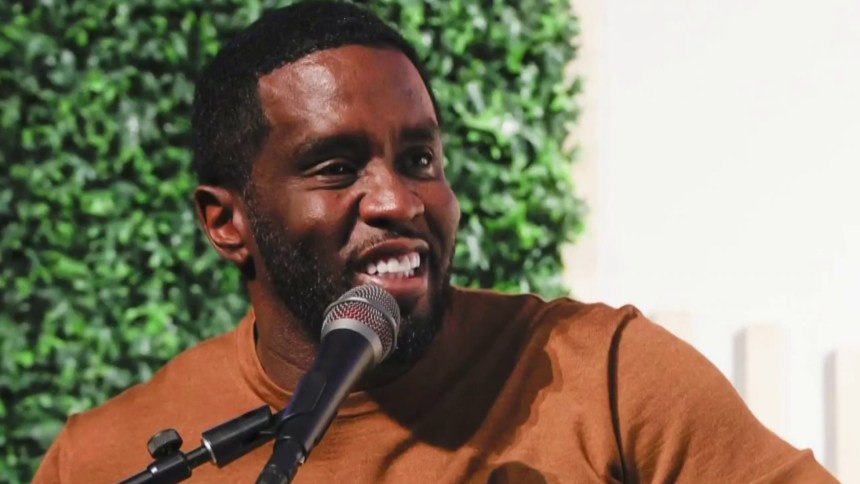
Jackson has said he was motivated by something other than spite, telling GQ.com’s Frazier Tharpe that he made “The Reckoning” for “the culture”; that is, to show that the allegations against Combs of sexual abuse, drugging women and rape do not reflect hip-hop as a whole. “If someone’s not saying something, then you would assume that everybody in hip-hop is okay with what’s going on,” he said. Claiming that other stars in hip-hop had chosen to mind their business, Jackson, with no shortage of ego, said, “Without me saying that I will do it, there’s nobody there.”
Jackson has shown that his genius is his ability to locate and tell informative and engrossing stories. As a rapper and an author, he captured the public’s attention through his personal narrative of selling drugs, getting shot nine times and surviving his beef with popular drug crew the Supreme Team. Through G-Unit Films and Television, he has seen tremendous success with shows including “Power” and “BMF,” the story of notorious drug crew Black Mafia Family, “50 Ways to Catch a Killer” and the podcast “Surviving El Chapo: The Twins Who Brought Down a Drug Lord.”
But even though Jackson has had great success as a storyteller, neither hip-hop culture nor the larger world needed a four-hour film, or really a film at all, about the alleged physical and sexual abuse against women that ultimately resulted in Combs being acquitted of one count of racketeering and two counts of sex trafficking and convicted of the transportation to engage in prostitution counts.
There’s a scene in the film, recorded slightly before Combs’ arrest, that suggests he wasn’t embraced by the hip-hop culture Jackson says his film is meant to defend. We see Combs strolling through Harlem, and though a few people approach him for pictures, he’s not bombarded by the legion of fans one might think a celebrity of his status would warrant. Even if we allow for the fact that some people may have stayed away because the allegations against him were so awful, I wonder if those folks didn’t feel the same way I’ve always felt about Combs: that he’s inauthentic and phony. We may have loved the artists he signed — Biggie, Faith Evans, Mase, The Lox — but we only tolerated him.
He may not have been enthusiastically embraced by Harlem, but he did have a standing in mainstream popular culture. Writing for Vulture, Fran Hoepfner says “the worst parts” of the documentary “are the most anodyne: clips of Combs on talk shows (Ellen, Rosie), in commercials, or at awards shows, feigning a kind of amiability that many of those closest to him never experienced beyond their initial meeting.” She says it’s “harrowing” to see how he “was enmeshed in just about every facet of culture in a way that made it increasingly difficult to hold him responsible.”
Though Jackson has had great success as a storyteller, neither hip-hop nor the larger world needed a four-hour film about the alleged abuse that ultimately resulted in Combs being convicted of transportation to engage in prostitution.
Kirk Burrowes, co-founder of Bad Boy Records, expresses regret that he didn’t say anything after he says he saw Combs physically assault Misa Hylton, his former girlfriend and mother to his son, Justin Dior Combs. Hylton is not interviewed in the documentary. Last year, when video footage of Combs assaulting Casandra “Cassie” Ventura in a hotel hallway was released, Hylton posted on Instagram, “I am heartbroken that Cassie must relive the horror of her abuse, and my heart goes out to her. I know exactly how she feels, and through my empathy, it has triggered my own trauma.” She later deleted that post.
While it was refreshing to hear Burrowes express regret about staying silent, there were many others — bodyguards, musical collaborators, personal assistants and the male sex workers Combs hired for his infamous “freak-offs” — who presumably saw some of these activities and could have said something but, like Burrowes, stayed quiet.

“The Reckoning” begins with a video recorded the day before Combs was arrested. He refers to the allegations related to the investigation against him as “propaganda.” Willie Lesane, cousin of the late Tupac Shakur, said during the film, “Diddy has never asked himself: ‘How did I get myself into this?’ His only concern has been making this disappear.”
But it didn’t disappear. Ventura, a former Bad Boy artist and Combs’ on-and-off girlfriend of 10 years, who said he physically and sexually abused her, was one of the people who testified against him in court and helped secure his conviction.
Jackson may or may not have had honest intentions with his release of “The Reckoning,” but, like the indifferent Harlem pedestrians we see largely ignoring Combs, it’s unlikely that many people are clamoring to watch a four-hour film about Diddy.