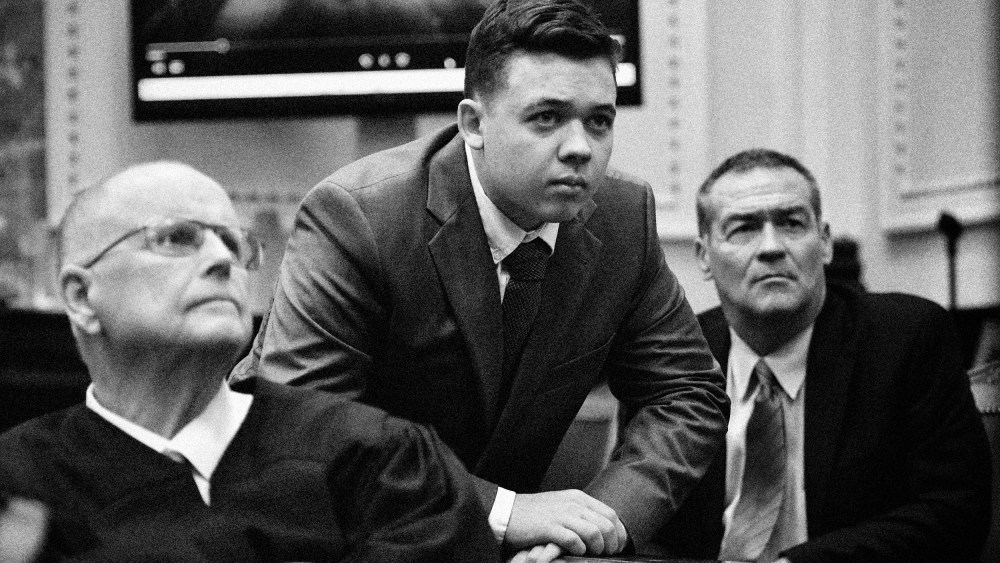
After Kyle Rittenhouse was found not guilty on all charges, questions will swirl about whether the trial was fair and whether Judge Bruce Schroeder, the Wisconsin trial judge who presided over the case, put his thumb on the scale in favor of Rittenhouse.
The bigger problem is this case is being asked to stand for and solve more than any criminal case can.
If you listen to some of the criticisms of Schroeder, you might conclude he is an embarrassment to the legal profession, not fit to serve on the bench and in some instances even acting like he’s a member of the defense team. But if we look at his rulings and comments in a larger context, the picture becomes less clear. The bigger problem is this case is being asked to stand for and solve more than any criminal case can.
Rittenhouse of course stood trial for, among other things, homicide for the deaths of Anthony Huber and Joseph Rosenbaum and attempted homicide for injuries to Gaige Grosskreutz. Armed with an assault-style rifle, he traveled to Kenosha, Wisconsin, allegedly to protect people and property from those protesting the police shooting of Jacob Blake, a Black man shot by a white police officer.
While Schroeder’s courtroom demeanor may have left much to be desired, it is important to separate his actions during this trial that made us cringe from actions that could have undermined this criminal trial. Yes, Schroeder has made missteps, but not as many or as damaging as some people in the social media universe would have us believe. These missteps should undoubtedly be examined, but they should not take on greater importance than the reasons we followed this trial in the first place.

(The judge also banned MSNBC from the courtroom Thursday after claims that a freelance journalist hired by NBC News was following the jury bus. The journalist says he was not following the bus, and an NBC News spokesperson stated that he “never contacted or intended to contact the jurors during deliberations, and never photographed or intended to photograph them.”)
Schroeder, the longest-serving circuit judge in the state, first raised eyebrows when he ruled that the people Rittenhouse shot (including the two who died) could not be referred to as “victims.” On a gut level, this may seem preposterous. There is no dispute that Rittenhouse shot and killed Huber and Rosenbaum and that he shot and injured Grosskreutz.
But referring to Huber, Rosenbaum and Grosskreutz as victims could have indicated to the jury that Rittenhouse committed a crime, which is exactly what the prosecution had to prove, based on the facts as they apply to Wisconsin law. Put another way, Schroeder’s ruling was based on his determination that using the word “victim” would unfairly prejudice the jury and deprive Rittenhouse of a fair trial in which the very question was whether Rittenhouse acted in self-defense.
The question in a criminal trial isn’t whether the judge makes indefensibly bad or even at times ignorant or insensitive jokes. The question should be whether his rulings affect the fairness of the trial.
Schroeder is not alone in his decision to bar the use of the word “victim,” and this is his standard practice, regardless of the identity of the defendant or those harmed by the defendant.
It’s worth noting the words Schroeder did allow to be used to describe Huber, Rosenbaum, Grosskreutz — and, in fact, Rittenhouse. The judge ruled that Huber, Rosenbaum and Grosskreutz could be referred to as “arsonists,” “rioters” and “looters,” if there was evidence that those were accurate descriptions. Schroeder also ruled that Rittenhouse could be called a “cold-blooded killer” if the evidence justified that description.
Next up, Schroeder received a lot of attention for yelling at the prosecutor, outside the presence of the jury. Many apparently perceived this as Schroeder being biased against the prosecution. But let’s look at what raised Schroeder’s rankles.
In one instance, the prosecutor questioned Rittenhouse’s decision to remain silent until the end of the trial, apparently inferring that Rittenhouse could better craft his testimony to what had happened in trial. The problem for the prosecutor is that there is a constitutionally protected right to remain silent, which Rittenhouse of course enjoys. Criminal defendants should not be chastised for exercising their constitutional rights. This is a protection we should all hold dear.
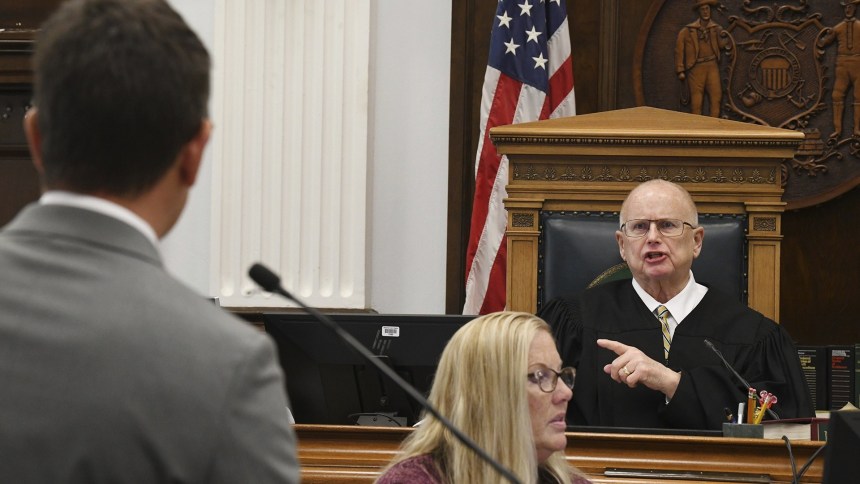
In another line of questioning, the prosecution asked about a matter the judge had already ruled would not be allowed to be mentioned before the jury: Rittenhouse’s apparent statement on a video that he would “shoot shoplifters.” A good way to get any judge in America to yell at you is to bring up topics that she or he has already ruled will not be discussed in front of the jury.
Speaking of excluding evidence, Schroeder was also criticized for excluding evidence that Rittenhouse posed for photos with members of the Proud Boys, the far right nationalist group. Schroeder, however, also excluded evidence that could have prejudiced the jury against Huber and Rosenbaum and could have therefore been helpful to Rittenhouse. Rosenbaum received treatment for a suicide attempt days before the protests and was previously convicted of sexual conduct with a minor. Huber served time in prison almost a decade ago for choking his sibling.
At one point, when talking about a lunch break, Schroeder quipped, “I hope the Asian food isn’t coming … isn’t on one of those boats along Long Beach Harbor.” Schroeder was referring to the backlog of container ships waiting at the Port of Long Beach in California. There is simply no reason to make this comment. It is in bad taste. But the question in a criminal trial isn’t whether the judge makes indefensibly bad or even at times ignorant or insensitive jokes. The question should be whether his rulings affect the fairness of the trial. And to the extent that people worried that Schroeder looked like he was sympathetic toward Rittenhouse, if Schroeder managed to turn off the jury with his weirdly off-base jokes, that would have been no help to Rittenhouse. Still, there’s no reason to have made this “joke.”
Then, of course, there was Schroeder’s request that everyone applaud an expert witness for the defense. On Veterans Day, Schroeder asked if anyone in the courtroom was a veteran. The only person to respond that he had served our country was the next witness, who was a witness for the defense. Schroeder asked what branch the expert served in and then asked that everyone applaud his service. This is a misstep that could make it look like Schroeder is trying to bolster a defense witness before the jury. It is laudable and important to thank people for their service to our country. But a better option would have been to acknowledge that it was Veterans Day and ask that everyone applaud, without singling anyone out, particularly as they were about to take the stand.
There are so many parts of the criminal justice system that need our attention.
Lastly, Schroeder also sparked outrage by allowing Rittenhouse to be the one to reach his hand in the tumbler and randomly pick which people would serve as jurors and which served as alternates. Let’s start with the most important fact first: There is no allegation that Rittenhouse, or anyone else, was able to rig the system and actually choose who sat on his jury. Again, this is apparently Schroeder’s regular practice. The worry is that this looks bad, and when it comes to questions of whether or not the judge is biasing the jury, that is a real concern. But it is not clear that allowing Rittenhouse, as opposed to a court clerk, to be the one to reach his hand in the tumbler made the jury think he is any more or less guilty of the crimes he was charged with.
And that, of course, is the ultimate question. We do not even know, for instance, if the jury thought that the defendant doesn’t always pick the jurors and the alternates. More to the point, we do not know if the optics of this raised any questions for the jury.
There are so many parts of the criminal justice system that need our attention. This does not begin or end with the conclusion that Rittenhouse is no hero. Rittenhouse’s case, tried against the backdrop of protests against racial injustice, is understandably being asked to bear a greater significance than most other criminal trials. But hyperfocusing on Schroeder’s cringeworthy actions, insensitive jokes and even his ring tone (“God Bless the U.S.A.,” a patriotic anthem first released in 1984 and later used by former President Donald Trump at his rallies) does us all a disservice. During this trial, Schroder handed down the type of evidentiary rulings that are made in courtrooms throughout the country every day. We agree with some; we don’t agree with others.
While other judges may have come to different conclusions, there’s little to indicate Schroeder subverted the fairness of this trial. Schroeder’s rulings may look questionable in isolation, or when snippets of his statements are amplified through the echo chamber of social media, but it is important to place his rulings in context. Again, our focus should be on the events leading to the protests in Kenosha, the absurdly easy access we have to guns and structural issues in our criminal justice system.