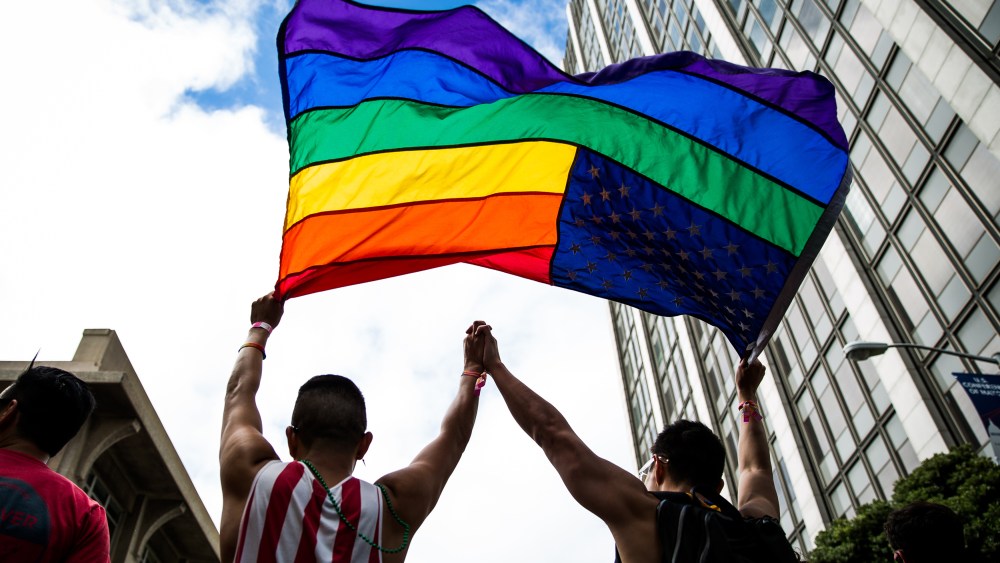
In May, The New York Times editorial board came out against New York City organizers who had banned uniformed police from the annual Pride March — a decision they have since reversed, then re-reversed.
This mission got a bit blurry with pressure from The Times and other media.
When the news broke that New York City would finally join cities like Toronto and Denver, I was incredibly proud of the organizers for finally taking a stand and for continuing the very work on which Pride Month is founded: protesting police brutality.
the NYT decision here to come out against queer organizers who have had to deal with the yearly police violence around Pride events is just stunning
— Zach Stafford (@ZachStafford) May 19, 2021
AND it’s ahistorical.
Pride began as a protest against police.
This mission got a bit blurry with pressure from The Times and other media. In the course of flip-flopping from banning uniformed police officers to re-allowing them to banning them once again, we’re now seeing a growing conversation about discrimination against law enforcement. That is concerning, to say the least.
Personally, I refuse to prioritize the feelings of police — who, for the record, aren’t actually banned but not allowed to wear their uniforms — whose profession continues to not prioritize my life while in that uniform.
In 2015, Pride changed for me forever. It was the year we got marriage equality after the Supreme Court finally struck down all state bans on same-sex marriage. This landmark decision arrived on June 26 that year, when many major cities like New York and San Francisco honor the Stonewall riots of 1969. But in a year when Pride had all the ingredients for being the biggest celebration of Pride yet, it became the opposite.
At the time, I was covering the parade as a reporter. I remember standing on a rooftop in Chicago watching as the floats and marchers made their way down Halsted Street, when suddenly the parade stopped. I looked down at my phone to see that a source had texted me that Black Lives Matter demonstrators were blocking the parade. I grabbed my bag, descended from the roof and began sprinting down alleys to get close to the scene.

What I found when I got there has since become the norm in the wake of Michael Brown’s death, the Ferguson protests, the marches for Breonna Taylor and George Floyd and the many protests that continue today where we’ve seen police officers descending on peaceful protesters to throw them in jail.
As I learned, these protesters were there to remind the millions watching the parade that the parade they had shown up to had actually begun as a protest against law enforcement — against the very police who were dragging them through the very gay streets we had fought so hard to make an allegedly safe space.
Onlookers began shouting at the demonstrators, saying they were “ruining” Pride for them. “How dare you do this here?” I remember one woman screaming.
It is now painfully clear that many of the parades that began as protests have no interest in finishing the job that Marsha P. Johnson began.
I remember feeling my body go numb that day in both rage and sadness. It was a similar feeling I felt when I read that New York Times editorial. Because it is now painfully clear that many of the parades that began as protests have no interest in finishing the job Marsha P. Johnson began: ensuring that all LGBTQ people are protected and have full equality.
With the rise of Black Lives Matter as a successful civil rights movement in America — successful in that it has made all of us more aware of how police brutality is one of the biggest threats in our country today — the LGBTQ community has found itself in the crosshairs. And rightfully so.
Our history in America, even beyond Stonewall, is defined by how our bodies have been brutalized by police officers and the state at large, whether it’s bar raids similar to Stonewall — like the Black Cat riot in Los Angeles in 1967 or the Compton Cafeteria riot in San Francisco in 1966 — or how it wasn’t until 2003 that the Supreme Court ruled that police could no longer arrest folks for having consensual sex with a person of the same sex or gender identity after John G. Lawrence was arrested for allegedly doing so in his own bedroom.
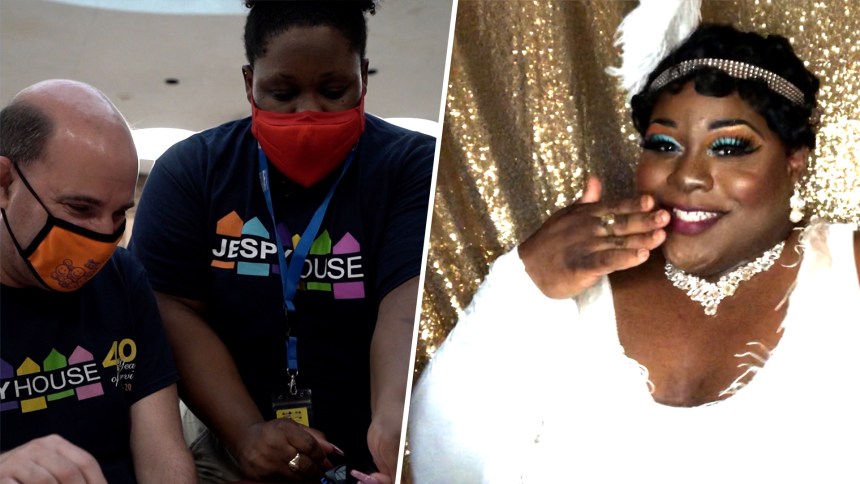
Or how it is only two years since the death of Layleen Xtravaganza Cubilette-Polanco, a young trans woman who was arrested in New York and taken to Rikers Island because she couldn’t make her $500 bail, where correctional officers laughed while Polanco lay unresponsive in solitary confinement.
I could go on for a while with many more examples, because LGBTQ folks, specifically us of color, have consistently been the recipient of decades and decades of police brutality.
This brings me back to 2015 and marriage equality and the lie many of us fell for that needs to be corrected today.
Our still newly won legal right to get married and become more equal, in a legal sense, to the heterosexual communities that have historically rarely been on our side was not permission or an excuse to stop fighting for all of us. And it was not permission or an excuse to ignore a very real history of police brutality against queer people that continues to plague much of our community today.
Our history in America, even beyond Stonewall, is defined by how our bodies have been brutalized by police officers and the state at large.
In June 2020, as the pandemic forced New York City to a lockdown, local organizers took to the streets for the Queer Liberation March, a procession that retraced the original Pride March in 1970 against police brutality. And, of course, the police brutalized many people who marched, leaving them bloody and pepper-sprayed in the streets where just the year before we saw police showing solidarity for the 2019 WorldPride parade.
We have so much work to do. The Equality Act is tied up with no signs of passing even after President Joe Biden said it would be his priority in the first 100 days. We have so much work to do to defend trans kids around the country who are facing an onslaught of legislation squarely focused on telling them they do not matter. And we have so much work to do in the battle to stop HIV/AIDS from continuing to kill our community 40 years after the epidemic.
But what we do not need to do today is fight for uniformed cops to march in a parade that began because those uniformed officers couldn’t help themselves from trying to erase our bodies every single day.
Meanwhile, Stonewall Inn, the bar that sparked our movement, is currently at risk of being evicted and turned into a bank. And we still see cops — Black or white, gay or straight — continue to act with unchecked police brutality that runs rampant in this country.
For any of my fellow LGBTQ folks who find themselves uncertain about what side to take, just look back at history this Pride Month to find your answer. It should be pretty clear.