Today, American society is in constant need of more compassion, and more justice. There is a battle going on between the forces of unity and division, self-interest and community, “us” versus “me.” We see this battle playing out in our contradictory Covid-19 response, in which many seem more interested in personal freedom than protecting one another, as well as in our seeming inability to effectively combat climate change, enact universal suffrage and protect voting rights.
Now we have a story which pointedly underlines the way this battle is also playing out in the Catholic Church.
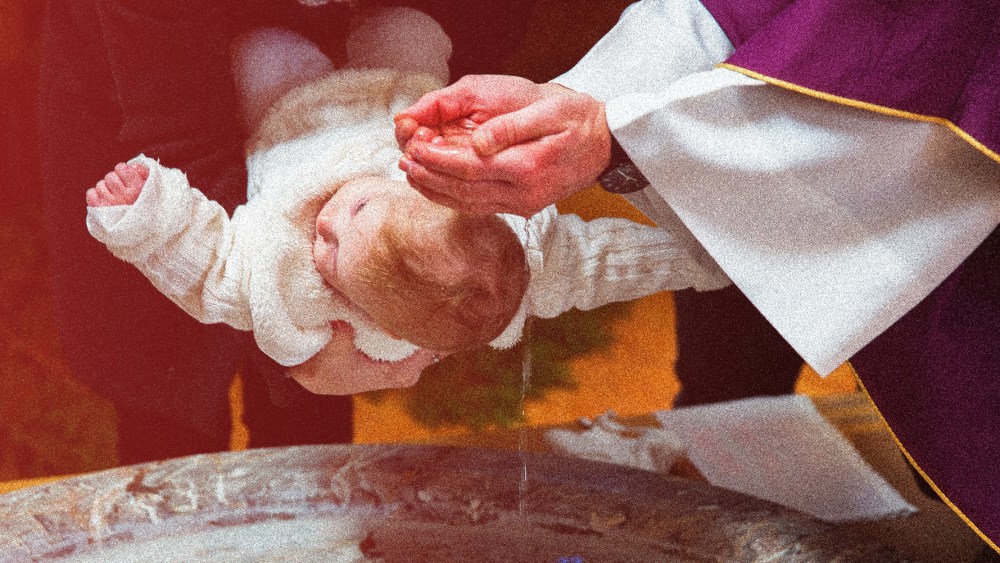
And now we have a story which pointedly underlines the way this battle is also playing out in the Catholic Church. Over nearly 20 years, an Arizona Catholic priest baptized literally thousands of babies with the words “we baptize you” instead of the prescribed words of the Catholic Church: “I baptize you.” Those baptisms were all declared invalid by the Catholic hierarchy and the pastor has resigned. He used the word “we” instead of “I,” and the church punished the flock.
As someone who was baptized (I think), served as an altar boy, and at one point in my teens considered entering the Catholic priesthood, this story strikes a particularly deep chord with me. About four years ago, I stopped attending Catholic services and now go to a wonderful Christ-centered interdenominational church in my community. As the Catholic Church sexual predator scandal continued (and indeed continues) to unfold, and with abortion continuing to take center stage at nearly every mass — with much less time, if any, devoted to urgent issues such as poverty, war and capital punishment — I had enough.

I still consider myself Catholic, but this latest incident in Arizona re-emphasizes for me why the Catholic Church is in desperate need of fundamental institutional reform. Pope Francis has proven himself to be an empathetic and important leader; but one isn’t enough. The fact baptisms were declared invalid because of, essentially, a grammar dispute suggests a faith out of sync with the spirit and teachings of Jesus.
Just like our political system is out of step with the spirit of our founders. Merely celebrating our democracy doesn’t mean we have leaders and institutions that protect it. Our founding document, the Constitution, starts out with the words “We the people of the United States in order to form a more perfect union…” We, united. That union is the key, a fact too many in politics, most especially in the GOP, now completely ignore.
What do invalid baptisms and our political environment have in common? The leaders in both the Catholic Church and the GOP are guided by the need to preserve power, and protect hierarchy, no matter the cost. Even if the communities of faithful and our democracy or public health suffers, and the bonds which link us together as human beings are broken.
And both institutions employ an ends-justify-the-means approach. Ironically, at least from a faith perspective, Jesus preached a means-justify-the-ends message. He said don’t worry about the afterlife; love and take care of each other now, especially the most vulnerable, and the ends will take care of themselves. Apparently not so today with the Catholic Church. It has now branded itself a faith of “I” over “we.” Literally.
So has the Republican Party, whose leaders no longer care about integrity or common good, seeking instead polarization, whether on racial issues, geography, sexuality or personal faith. If you fight for integrity or the spirit and call of our Constitution, you are persona non grata. Just ask Reps. Liz Cheney and Adam Kinzinger.
As a lifelong, now-lapsed Catholic, and as a proud American, I am both saddened and angered by the selfishness and power-seeking of our gatekeeping institutions. And yet, the solution is deceptively simple — as simple as the lessons taught to so many children in Little League. How do we restore our democracy? Put “we” before “I.” How do we more effectively deal with a crisis like a global pandemic? Put “we” before “I.” How do we solve our climate crisis? Put “we” before “I.” And how does the Catholic Church meet the needs of its faithful? Follow the lead of a now resigned priest, and put “we” before “I.”