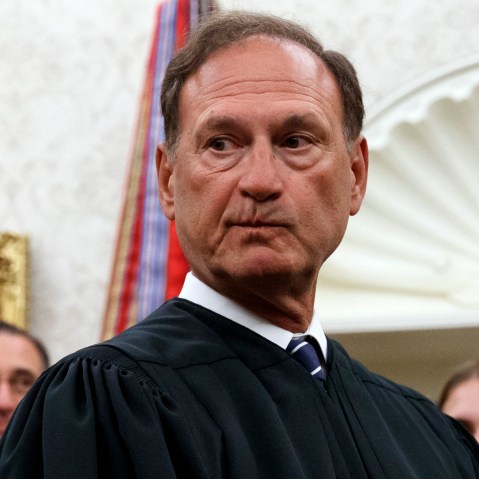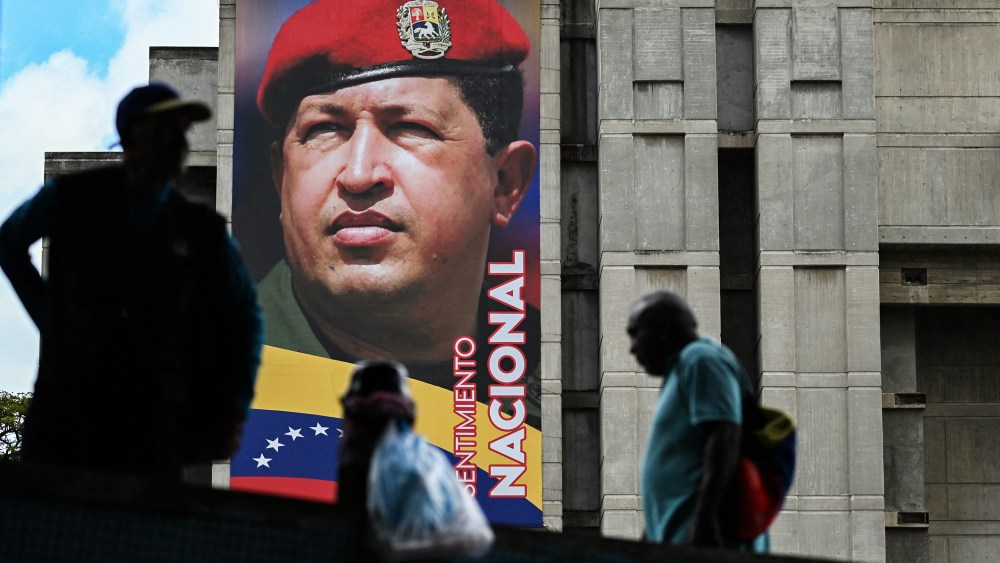
President Donald Trump is a harsh critic of Venezuela’s authoritarian regime. But his own actions at home often echo the South American country’s recent past.
The latest recent parallel came when Trump seemingly called for late-night talk show host Jimmy Kimmel to be fired in a social media post in late July. Then, after Kimmel made a comment about the assassination of Charlie Kirk in a monologue, Federal Communications Commission Chairman Brandon Carr seemed to imply that ABC’s broadcasting license might be at risk if it didn’t respond appropriately.
Carr later walked back the supposed threat and Disney, ABC’s corporate parent, reinstated Kimmel after a brief suspension.
Though Trump did not get his wishes this time, the Kimmel episode was revealing for what it showed about the president’s thinking, and how closely it mirrors authoritarian leaders of countries that he often disparages, like Venezuela.

Before the reinstatement, Trump suggested that the FCC could stop major broadcast networks if their news coverage gives him only “bad publicity.”
“I would think maybe their license should be taken away,” he said in an informal gaggle on Air Force One.
It was Trump’s Hugo Chávez moment, an offhand comment that could have just as easily come from the former leader of Venezuela, who ruled from 1999 until his death in 2013.
Chávez did not start out as a strongman. After becoming president through a democratic election in 1998, he began consolidating authority, especially after a failed 2002 U.S.-backed coup. Powered by the country’s ample oil and gas revenue, he showered Venezuela’s poorest citizens with new government benefits and punished the “oligarchs” who stood in his way.
The roster of Chávez’s perceived enemies included the country’s main TV and radio stations.
Similar to Trump, the roster of his perceived enemies included the country’s main TV and radio stations. During a two-month general strike that started in late 2002, he was irate at broadcasters, accusing them of siding with opposition leaders seeking to remove him from office. With the oil revenue he needed to stay popular plunging, he needed a new target, and broadcasters made an easy one.
“They are worse than an atomic bomb,” Chávez said in January 2003, per The Wall Street Journal. “If they continue to use their licenses to try to break the country or oust the government, I would be obligated to revoke it.”
Chávez didn’t carry out his threat. Not then, at least.
Four years later, though, he banished Radio Caracas Television, the largest privately owned broadcast network, from public airwaves by allowing its license to expire. Some Venezuelans were alarmed at the erosion of free speech. More seemed upset at losing their favorite TV programs and soap operas. The network hung on as a cable channel.
Under similar threats of retaliation, other private broadcasters had already changed their editorial policies to avoid angering Chávez. But it was never enough. Radio Caracas Television was fully taken off the air in 2010 during yet another crackdown on free expression.
Like Trump, Chávez was deft in employing mass media to fortify his populist authority and stir nationalist sentiment. He added showmanship to government functions: Chávez once fired seven oil executives he branded as dissidents on live TV with a whistle, as if he were a coach dismissing soccer players.
In one broadcast, the president ordered 10 military battalions to report to the Colombian border.
The most famous example was his long-running program “Alo Presidente!” It was part propaganda, part talk show, all Chávez in weekly marathon broadcasts. In one broadcast, the president ordered 10 military battalions to report to the Colombian border. In others, he berated journalists or gave away free homes to die-hard supporters.
It’s not hard to imagine Trump running a similar TV show from the Oval Office. He already held a three-hour televised cabinet meeting last month where administration officials jostled to praise him and showcase their progress in tackling his list of grievances.
For Chávez, his presidency, the government and TV were all part of the same machine. And the first step toward the creation of that machine was gaining control over broadcast networks by threatening their licenses.
As Uruguayan author and journalist Eduardo Galeano once said: “History never really says goodbye. History says, see you later.” In this instance, history is checking in to ask if anything seems familiar.