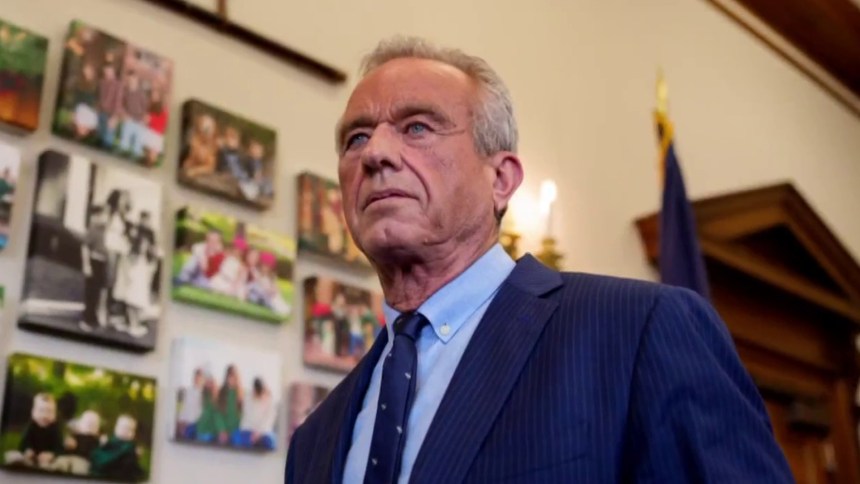
Health Secretary Robert F. Kennedy Jr.’s potential plan to fire the entire United States Preventive Services Task Force (USPSTF) continues the political appointee’s dangerous pattern of systematically eliminating the medical expertise our health care system depends on. When a 42-year-old woman’s routine mammogram catches breast cancer at Stage I, giving her a five-year survival rate of 99%, or when a colonoscopy prevents colorectal cancer entirely by removing precancerous polyps, the importance of USPSTF guidelines grounded in rigorous scientific analysis is made clear. But Kennedy, a lawyer who never attended medical school, never completed a medical residency and has never treated patients, believes he knows better than the 16 volunteer medical experts who dedicate their careers to evidence-based preventive medicine.
Kennedy, a lawyer who has never treated patients, believes he knows better than medical experts who dedicate their careers to evidence-based preventive medicine.
His reported plan to fire the preventive care task force isn’t Kennedy’s first assault on medical expertise; it’s the latest move in what is his calculated campaign to replace scientific knowledge with ideological alignment. In June, Kennedy abruptly fired all 17 members of the CDC’s Advisory Committee on Immunization Practices (ACIP), the expert panel that advises on vaccine policy. These weren’t political appointees but medical and public health experts, including pediatricians, epidemiologists and immunologists with decades of experience in vaccine science. Kennedy replaced them with his handpicked selections, including vaccine skeptics and at least one member who had served on the board of an anti-vaccine advocacy group. The new panel immediately voted to withdraw recommendations for flu vaccines containing thimerosal, thereby contradicting established science.
The pattern extends beyond advisory committees. Kennedy has fired thousands of HHS employees, including his own chief of staff and top policy adviser — people described as “practical and effective government veterans.” When teams dedicated to preventing lead poisoning were mistakenly terminated, Kennedy’s response was tellingly cavalier: “We’ll make mistakes.” These aren’t just bureaucratic reshufflings. They are a systematic elimination of institutional knowledge and expertise.
The audacity is breathtaking: a man with no medical school no clinical experience and no board certifications is firing panels of doctors, epidemiologists and public health experts who have devoted their lives to understanding disease prevention.
Kennedy’s justification for these purges — that expert panels are “too woke” or compromised by conflicts of interest — reveals his fundamental misunderstanding of how medical science works. When the USPSTF considers social determinants of health like race and socioeconomic status in its recommendations, it’s not being ideological — it’s being medically responsible. For example, evidence shows that Black women are 40% more likely to die from breast cancer than white women, and ignoring such disparities would be medical malpractice, not scientific objectivity. Kennedy’s attacks on medical expertise echo dangerous populist movements that prioritize political loyalty over professional competence.

The consequences of replacing medical experts with ideological allies will be measured in unnecessary suffering and preventable deaths. The USPSTF’s recommendations determine which preventive services insurance companies must cover without cost-sharing, which affects more than 150 million Americans with private insurance. If Kennedy succeeds in gutting this panel, cancer screenings, HIV prevention and cardiovascular disease interventions could become financially inaccessible for millions of people.
What makes Kennedy’s assault on expertise particularly galling is that even as he acknowledges that he has no medical qualifications, he clearly doesn’t believe that disqualifies him from doing what he’s doing. Nor is he acting with integrity. During his confirmation hearings, he repeatedly promised senators he would defer to scientific evidence, only to systematically dismantle the very institutions that generate and evaluate that evidence. For example, he assured Sen. Bill Cassidy, R-La., that he would maintain ACIP “without changes.” Then, weeks later, he fired every member. This isn’t just policy disagreement; it’s bad-faith governance that prioritizes personal ideology over public health.
The medical community’s alarm is warranted.
The medical community’s alarm is warranted. Major medical organizations from the American Medical Association to the American Academy of Pediatrics have condemned his dismantling of expert panels. They understand what Kennedy apparently does not: that medical expertise isn’t an abstract concept but the accumulated knowledge that saves lives every day in hospitals, clinics and public health programs nationwide.
Kennedy’s “Make America Healthy Again” slogan might sound appealing, but his actions reveal a profound hostility to the very expertise that helps keep Americans healthy. A lawyer with environmental advocacy experience may be qualified to challenge corporate polluters in court, but he is categorically unqualified to override the medical judgment of trained physicians and epidemiologists whose recommendations are based on rigorous analyses of clinical evidence. The hubris of believing otherwise — and acting on that belief by firing panels of medical experts — represents a dangerous precedent that subordinates science to ideology and expertise to partisanship.