With even a marginally good showing in November, Republicans could find themselves in complete control of the federal government. Former President Donald Trump knows what he wants to do with all that power: Use the executive branch to take revenge on his enemies, then implement a radical plan to remake the federal government in ways that remove accountability and move toward the dictatorship he has always dreamed of. But Republicans in Congress won’t just be sitting on their hands. They have their own agenda, one that deserves more attention. It’s as radical as you might imagine, if not more so.
We saw in his first term that Trump neither understands nor particularly cares about legislation; his attention span is too short, and he can’t bother with working out legislative details or assembling a coalition to pass bills. That’s one reason that he signed only one significant piece of legislation not born of pandemic emergencies: the 2017 Tax Cuts and Jobs Act, which was a boon to corporations and the wealthy.
While on many issues Republicans will retreat when the political risks are too high, they push ahead with tax cuts for the wealthy no matter the political cost.
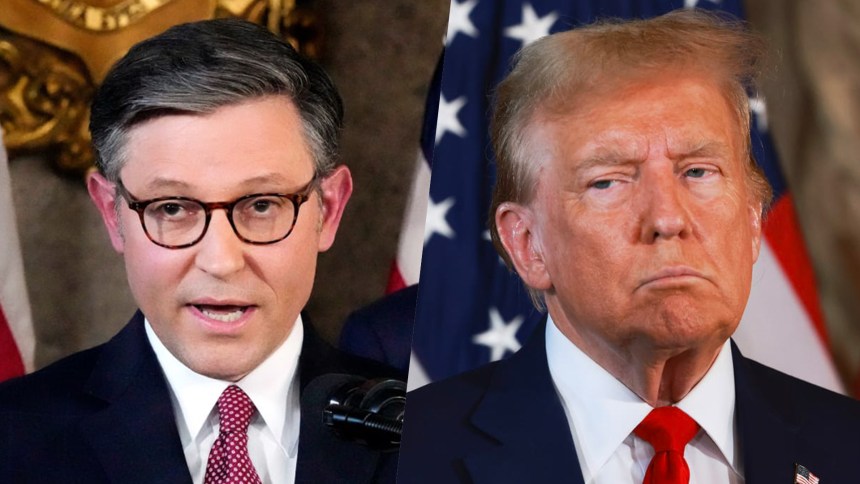
As House Speaker Mike Johnson recently told Semafor, safeguarding and expanding those tax cuts would be the first priority of a Republican Congress in 2025. This is not a surprise: cutting taxes for rich people will always be the first legislative priority for any Republican Congress. They might or might not restrict abortion, increase military spending or cut social programs. But they absolutely, positively will cut taxes for the wealthy.
Like other tax cuts, the TCJA was passed under “reconciliation,” a process that allows one bill per fiscal year to circumvent the Senate filibuster and pass with a simple majority. And since the rules forbid reconciliation bills from expanding the deficit beyond a 10-year budget window, the TCJA was written so that many of its tax-cutting provisions would expire after those 10 years are up, which would be in the middle of a second Trump term.
Extending the tax cuts — and adding new cuts for the wealthy and corporations — will be the first job for Republicans. Their sincerity is evident, because while on many issues Republicans will retreat when the political risks are too high, they push ahead with tax cuts for the wealthy no matter the political cost. The TCJA was spectacularly unpopular — even less popular than previous tax increases — but Republicans passed it anyway. (It helped that the bill contained multiple provisions that personally benefited members of Congress).

Extending the TCJA will, according to current estimates, add $4 trillion to the debt over 10 years. If you thought that would worry Republicans, who constantly claim concern over the national debt, “If you’re extending existing tax policy, that isn’t offset,” explains Minority Whip John Thune, R-S.D., who may be the Senate majority leader next year. He even claims that “if it’s a pro-growth tax policy, it’s going to generate more revenue” — the same claim Republicans consistently make, even though it is consistently wrong.
But that’s only the beginning. If Republicans are not going to do away with the filibuster — which for now Senate Republicans say they won’t — the plan is to pack as many policy priorities as possible into what would amount to a giant reconciliation megabill. “We Republicans kind of took a single-subject approach to reconciliation” in the past, Johnson told Semafor. “We did one round of health care reform, one round of tax reform.” But this time, “we want to have a much larger scope, multiple issues to address in addition to the expiration of the Tax Cuts and Jobs Act.”
Unfortunately, Trump isn’t the only one who finds legislation boring.
Johnson didn’t spell out exactly what this “whole of government” approach entails, but here are some possibilities: building a wall on the southern border; repealing part or all of the Inflation Reduction Act of 2022, the most significant climate legislation in history; opening more federal land to fossil fuel drilling; slashing the Internal Revenue Service’s budget to protect rich tax cheats ; renewing attacks on the Affordable Care Act; cutting other social programs; and eliminating numerous regulations on the environment, worker safety and public health.
They won’t be able to do all of it, since Senate rules state that provisions in a reconciliation bill must have a direct effect on the budget, and the parliamentarian may rule some items out of bounds. But should that happen, the Republican leader could fire the parliamentarian, as then-Sen. Trent Lott did in 2001, and find a more amenable replacement. In any case, the apparent plan is to load up their reconciliation bill with as much as they can, then see what they can get away with.
Unfortunately, Trump isn’t the only one who finds legislation boring; most of the public will probably pay scant attention to congressional Republicans’ policy push if it comes to pass. That will be particularly true if Trump acts as unhinged as he almost certainly will, dominating the news with daily outrages against democracy and common decency. While he gets the attention, his congressional allies will carry out their own assault on the country, one that ought to be almost as disturbing.