In October 2016, FBI Director James Comey threw a bombshell into the presidential election. It was a choice that has been scrutinized ever since as the potential catalyst for Donald Trump’s surprise victory days later. Eight years later, Trump and his allies are now accusing special counsel Jack Smith of doing the same in a massive pretrial filing unsealed Wednesday.
As ever with Trump, his outrage is a case of reflexive reflection. When confronted with his own wrongdoing, he instinctively attempts to claim that he is the victim of an identical transgression. But it’s still worth unpacking the ways Smith’s 167-page filing differs from Comey’s one-page missive and the wildly different circumstances surrounding the two.
As ever with Trump, his outrage is a case of reflexive reflection.
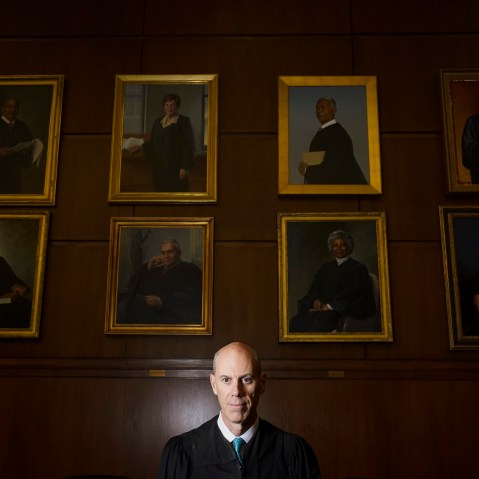
In the wake of the Supreme Court’s decision in Trump v. United States, the long-delayed federal case against Trump’s attempt to overturn the 2020 election’s results has finally begun to move forward again. That decision granted the former president presumed immunity for his “official acts.” Smith’s filing to U.S. District Judge Tanya Chutkan is his argument that Trump was engaged in “unofficial acts,” taken as a candidate for office, not as an officeholder, when he was scheming with his co-conspirators.
“They rigged the election. I didn’t rig the election,” Trump said in an interview with NewsNation on Wednesday evening. “They should have never allowed the information to be, to come before the public. But they did that because they want to hurt you with the election. It’s pure election interference.”
Trump repeated that assertion on Truth Social, pointing to the informal Justice Department “quiet period” within 60 days of an election that frowns upon taking actions that could sway voters. He’d previously claimed that Smith’s superseding indictment, obtained after the Supreme Court’s immunity ruling, violated DOJ’s rules. That claim is especially frivolous, as Smith was narrowing the case against Trump, rather than attempting to expand it.
To repeat, this is projection on Trump’s part, as the case is for election interference. But there are some supporters of the comparison between Smith and Comey, including former federal prosecutor Elie Honig, who, in New York Magazine, asks, “What’s the distinction? Both violated ordinary procedure to take public steps, shortly before an election, that plainly would have an impact on that election.”
But the distinctions are very real on both practical and political levels. Saying the two situations are similar is a matter of comparing apples and oranges —or, if you rather, like comparing a rumor that an elephant might be in the room with being locked in a room with a very real, and very menacing, elephant.
Comey’s letter was, at best, meant to protect him from scrutiny. He’d previously testified that an investigation into Democratic nominee Hillary Clinton’s use of a private email server while she was secretary of state had been closed. When several emails from that server were found during a separate investigation, he informed Congress that the case had been reopened. There was little to say beyond that simple statement, as no information was provided about the contents of the emails — but it reignited the firestorm of criticism that had been Trump’s main line of attack against her.
We must all keep in mind that the timing of this is as we’re only this close to Election Day because of Trump’s motions that delayed things.
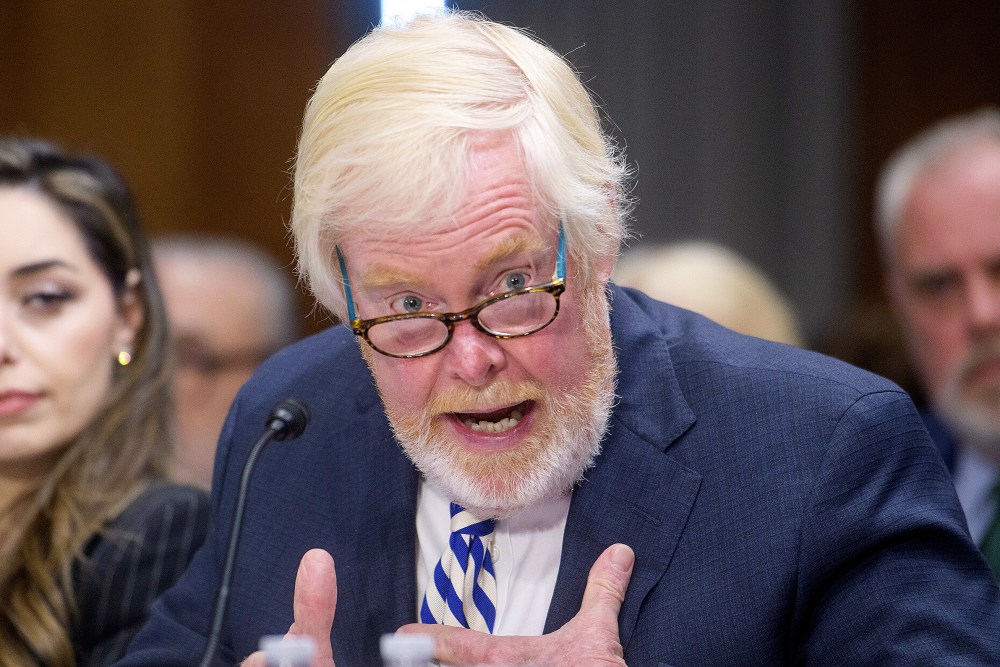
Comey would write in his memoir that he was attempting to protect the election’s integrity: “It is entirely possible that, because I was making decisions in an environment where Hillary Clinton was sure to be the next president, my concern about making her an illegitimate president by concealing the restarted investigation bore greater weight than it would have if the election appeared closer or if Donald Trump were ahead in the polls. But I don’t know.”
Those newly discovered emails did nothing to change the investigation into Clinton, which was closed again on Nov. 6, 2016, two days before the election. The only impact it had was in potentially making Clinton more vulnerable with key voters. Clinton has blamed her narrow loss at least part on Comey’s breathing new life into the “but her emails” narrative.
Smith, whose filing is part of an ongoing criminal case that is making its way to trial, had no control over the timing of the decision to make his document public — that was Chutkan’s choice. And the judge has made it clear that the election is of little concern to her as she attempts to get the case back on track after months of delay.
As MSNBC contributor Glenn Kirschner noted, part of the Supreme Court’s order to Chutkan and other judges was to rule on whether certain acts qualify for presidential immunity. Smith’s filing is his reasoning for why the case should proceed, with most of the evidence itself still under seal.
Finally, we must all keep in mind that the timing of this is as we’re only this close to Election Day because of Trump’s motions that delayed things. If Smith had his druthers, he’d have presented his case to a jury more than six months ago. We’d have had a ruling on the matter, and while Trump would have likely still appealed, the time crunch he’s now whining about would have been a nonfactor. Instead, we’re in a position where Trump’s crimes are still being litigated. It is only because his legal strategy was a success that we’re seeing the evidence against him drop the month before the election.