
If recent events at Indiana University and Texas A&M are any guide, conservatives are winning their yearslong, brazen war on higher education. Their triumphs — in Indiana, Texas and other states with Republican supermajorities — spell disaster for students, scholars and public universities everywhere.
In Bloomington, Indiana, an instructor was suspended last month from teaching her “Diversity, Human Rights and Social Justice” class, The New York Times reported Thursday. The professor, Jessica Adams, had shown her graduate-level course a graphic that included the slogan “Make America Great Again” with other examples of statements or actions that might be considered covert or overt White supremacy. A student complained, citing a 2024 state law that requires “divergent and varied scholarly perspectives.”
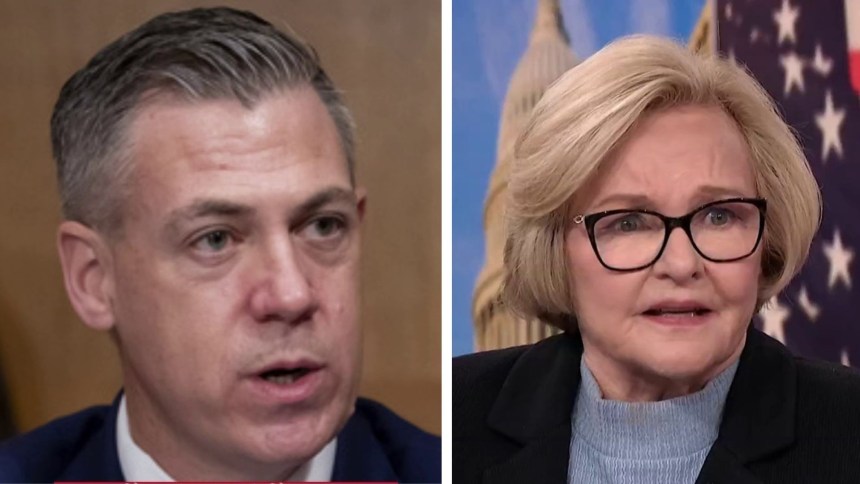
The student who complained voiced their concerns not to a university official, but to U.S. Sen. Jim Banks.
The process leading to Adams’s suspension was unusual — and troubling. Typically, a complaint about an instructor is directed to an official in that instructor’s department or academic unit. If deemed valid, the complaint moves up the institutional ladder. The process is often slow and tedious, but it ensures that established protocols are observed.
That’s not what happened in Indiana. The student who complained about Adams voiced their concerns not to a university official, but to U.S. Sen. Jim Banks. He then contacted Indiana University about the grievance. I assume the senator was not placed on hold when he called.
Although Republicans love to lament the “regulatory state,” and display a gusto for de-regulating all those persnickety liberal rules and statutes, the Indiana example demonstrates what conservative activists really want: to re-regulate settled arrangements in ways that advance their political agenda, including silencing speech. Ideologically outraged students can now skip the tweedy middleman. All they need to do is appeal directly to an ideologically outraged elected official. The latter can cajole the university into punishing the professor. (In another unusual turn of events, Adams continues to teach three courses while the university investigates whether to take further disciplinary action or reinstate her to her fourth class.)

Banks’ intervention is certain to chill academic free speech. As is the Indiana law, which the Times noted was recently denounced by the American Association of University Professors. It would be difficult for me to teach effectively if I were perpetually wondering what MAGA politicians would make of my lectures on secularism. Even more so if I feared that, say, a student beholden to a Christian Nationalist worldview was surreptitiously recording my lectures in order to forward them to the U.S. Attorney for the District of Columbia, Jeanine Pirro.
As for the swelling ranks of scholars who don’t have tenure, the pressure to self-censor is even greater. An adjunct political scientist might reasonably ask herself: “If Senator Banks gets wind of my slide deck about American socialist parties, am I going to have to double up my shifts at the coffee shop?”
Meanwhile, over in College Station, Texas, the Board of Regents of Texas A&M deemed that no course “will advocate race or gender ideology, or topics related to sexual orientation or gender identity” without the campus president’s approval of the course and related materials. The key term is “advocate.” Is teaching about race or gender or sexual orientation the same as advocacy?
Is teaching about race or gender or sexual orientation the same as advocacy?
As scholars pointed out to The New York Times, teaching about controversial ideologies such as communism or socialism involves helping students understand the rationale that motivates people to embrace them. That’s not advocacy, obviously. But the Texas policy offers great interpretive leeway to those who insist that a professor is advocating, as opposed to teaching. And for these activists, all critical race theory, postcolonial theory, gender theory, etc., is advocacy anyway. It will be up to a college president, not faculty experts, to distinguish teaching from advocacy. What could possibly go wrong?
Bloomington and College Station are geographically distant, but their ordeals reflect the fallout of a decadeslong Republican assault on American universities that has radically intensified since Donald Trump returned to office. Regulations are built to pulverize professorial independence and university autonomy. Students are empowered to complain about professors (Texas A&M’s system now features a “24/7 option for students ‘to report what they consider inaccurate or misleading course content’”).
The ensuing disputes are no longer to be resolved by scholars but by administrators — often craven officials mindful of politicians looking over their shoulders. Nontenured faculty, such as Indiana’s Jessica Adams, are especially vulnerable since they lack the stronger academic freedom protections of tenured professors — a community whose ranks are thinning and a status that many red states have have tried to eliminate altogether.
Perhaps most important, statehouses are replacing faculty senates as the authoritative body that crafts policies about strictly academic concerns. These powerful legislatures oversee vast sprawling university systems. The 2024 Indiana law applies to Ball State, Purdue University, Ivy Tech Community College and more. As befits the Trump era, power has been de-diffused and consolidated in one place — in the hands of ideologues hell-bent on imposing an extreme worldview on all and sundry.
To that end, all the better to foment mistrust in the classroom and scare professors into censoring themselves. All the better to turn universities into places where no criticism of conservative perspectives is tolerated or even attempted.
Ultimately, the effect of the Texas and Indiana initiatives is to silence critical dissent — a principle that stable democracies entrust their universities to defend.





Become a member to join the discussion