This article is the second in a six-part MSNBC Daily series, “Meet the Freshmen,” featuring six of Congress’ newest faces — three Republicans and three Democrats — in a series of diverse columns that explore the new members’ backstories, policies, home districts and where they fit in this historic political moment. You can read the rest of the series here.
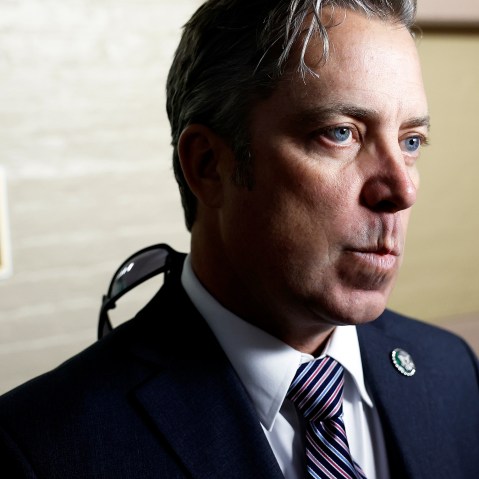
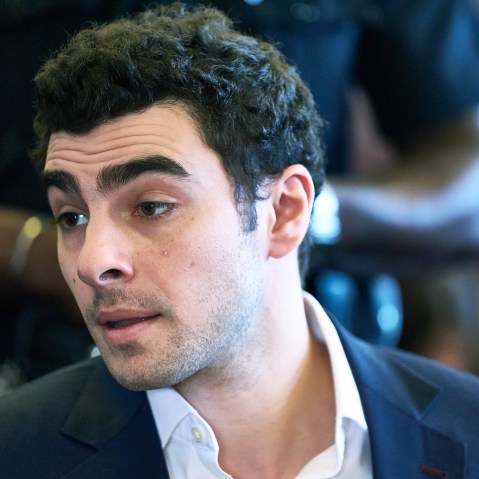
St. Louis County, Missouri, Prosecutor Wesley Bell made news in August when he defeated Rep. Cori Bush, a “squad” member, in a Democratic primary that many saw as a referendum on the party’s position on the Israel-Hamas war. Now he arrives in Washington to represent Missouri’s 1st Congressional District. And though he arrives with promise, Bell is trailed by questions about what he truly stands for, questions that more broadly plague his party.
Bell, 50, is a native of the relentlessly segregated St. Louis suburbs. He won a seat on the Ferguson City Council after a police officer killed teenager Michael Brown and the city convulsed with protests.
The New York Times took notice and profiled Bell — who had been a professor of criminal justice at a local community college — in a short documentary. “I actually think he’s going to be like President Obama,” one voter says in the film, predicting a congressional career “at the very least.”
Wesley Bell defeated Rep. Cori Bush in a Democratic primary that many saw as a referendum on the party’s position on the Israel-Hamas war.
Bell kept rising. In 2018, he unseated St. Louis County Prosecutor Robert McCulloch, who had earned the ire of the Black community, which charged him with not doing enough to hold Darren Wilson, the Ferguson police officer, accountable for Brown’s killing. (A grand jury declined to bring charges.) The national media again took note of Bell, who seemed to be in line with the burgeoning criminal justice reform movement. “People are awake to the need to address issues like mass incarceration, to address issues like profiling and to address criminal justice reform in general,” he told the Times.
In fact, Bell stayed in the center lane. Though his office reviewed the Wilson case, it never brought charges against the former officer, a huge disappointment to Bell’s supporters. (Bell said his office couldn’t prove Wilson had committed a crime in killing the unarmed teen.)
The decision not to prosecute Wilson wasn’t the only disappointment. As a report compiled by activists near the end of Bell’s tenure noted, the prison population of St. Louis continued to grow on his watch, despite the fact that, as a candidate, he seemed like he might favor decarceration. Nor had Bell made the sweeping reforms — in police accountability and sentencing, among other issues — his statements about criminal justice issues seemed to portend.
“We have seen the office fail to implement meaningful change on a number of important fronts,” the report said. “Many people were excited for new leadership in 2019 and remained hopeful after early change, only to see a return to the policies of mass incarceration.”
Politically, staying within the prosecutorial mainstream was a savvy move by Bell. He entirely avoided the backlash against progressive prosecutors that led voters in San Francisco to recall Chesa Boudin and, more recently, led voters in Los Angeles County to vote out George Gascón.
Meanwhile, in Washington, Bush, who also entered the political arena after Wilson killed Brown and in 2020 unseated 10-term incumbent William Lacy Clay, was on her way to becoming a progressive star. But as the “squad” grew larger, it also became more marginalized, turning into more of a media sensation than a political force. A 2021 vote against President Joe Biden’s $1.2 trillion bipartisan infrastructure bill may have been seen as principled by some on the left. But to the centrist Democrats who lead the party, it was a pointless show of defiance.
The Oct. 7, 2023, attacks caused a rift between centrists who supported Israel and pro-Palestinian progressives. Bush was firmly in the latter camp, calling for a ceasefire just days after the Hamas-led slaughter.
Jewish leaders in St. Louis — men and women she purportedly represented — asked Bush to temper her rhetoric, such as when she claimed that Israel was committing “ethnic cleansing,” charging in an open letter that she was “intentionally fueling antisemitism and hatred.” The congresswoman denied the accusation, declining to temper her criticism of the campaign in Gaza.
Politically, staying within the prosecutorial mainstream was a savvy move by Bell. He entirely avoided the backlash against progressive prosecutors.
In June, a fellow “squad” member, Rep. Jamaal Bowman of New York, was felled in a Democratic primary by a lackluster Democratic candidate, George Latimer, who had developed strong local alliances — and was boosted by millions in spending by the American Israel Public Affairs Committee. AIPAC unapologetically sought to fund challengers to some of Israel’s biggest critics in Congress. And having unseated Bowman, it turned to Bush.
Tel Aviv and Gaza City are very far away from St. Louis. To be sure, people in the Gateway City and across the United States have strong, deeply held views on the Middle East. But for the most part, voters care about local issues. And by ignoring those issues, Bush gave Bell the opening he needed in those crucial summer weeks when the race was inevitably going to be decided.
Yes, AIPAC spent millions ($8 million to be exact), but Bell’s views on Israel are about as mainstream as they come: “I believe Israel has the right to defend itself and go after those who perpetrated those attacks.” Not an incredibly original line. Which was the whole point. Bell was signaling that he would keep to the centrist line. There would be no headaches for House Minority Leader Hakeem Jeffries, D-N.Y., as reporters chased him down the hallways of the U.S. Capitol to ask whether he agreed with Rep. Bell’s latest musings on the Middle East.
More to the point, Bell could credibly cast Bush as being too concerned with national and international affairs to care about her own district. “When she ran four years ago, one of the main things that she had talked about was serving St. Louis, and I heard from a lot of voters that there wasn’t great outreach,” Democratic strategist Braxton Payne told Jewish Insider. Israel was the opening. It was her legislative record, or lack thereof during two terms, that truly doomed Bush.

Bell’s run for Congress was the first time he faced true national scrutiny? Not all of it was flattering. It turns out, for example, that he managed a Republican congressional campaign in 2006 (for an anti-abortion candidate, no less). That revelation contributed to the suspicion that Bell, who ran to unseat Republican Sen. Josh Hawley before abandoning that campaign and challenging Bush instead, was fueled by ambition, not conviction. Washington is full of such people, which is why normal people hate Washington. I hope Bell rediscovers his convictions and doesn’t join their ranks.
More serious were allegations that he’d created a hostile workplace for women and misused funds for expensive dinners and travel — the kinds of accusations that, if proved true, could easily spell the end of a promising career on the bigger and more scrutinized stage that is Washington.
We should hope Bell arrives in Washington with both his ethical and political compasses properly calibrated. Defeating Bush was a big deal, but it shouldn’t be the most significant thing Wesley Bell has ever done. He has far too much promise for that.