

James Cameron’s 1997 melodrama “Titanic” generated some of the most imitated and parodied scenes from cinematic history. In arguably the most memorable, Leonardo DiCaprio wraps his arms around Kate Winslet’s waist at the bow of the doomed cruise liner, as an instrumental version of Céline Dion’s romantic ballad “My Heart Will Go On” plays in the background. This definitive song from the film’s soundtrack was one Dion’s many chart-toppers in the 1990s, alongside other hits like “Because You Loved Me,” “It’s All Coming Back to Me Now” and “The Power of Love.” While these songs ranked at the top of the Billboard Hot 100 charts, they were also often critically dismissed as saccharine and excessive. In 1994, The New York Times described her songs as having a “soap-operatic grandiosity;” in 2002, Slant Magazine described her work as a “collection of drippy, gooey pop fluffer-nutter;” and in 2005, Maxim named “My Heart Will Go On” as the third “Most Annoying Song Ever.” Dion was, for many, the kind of star people loved to hate.
Dion was, for many, the kind of star people loved to hate. Two decades later, Dion has arguably never been more beloved.
Two decades later, Dion has arguably never been more beloved. Amazon’s new documentary “I Am: Celine Dion” premiered Tuesday after enjoying weeks of positive press. Dion, who was forced to stop performing due to her battle with stiff-person syndrome, was embraced by cheering crowds after a surprise appearance at the Grammys in 2024.
What then can account for changing attitudes toward Dion? So polarizing was Dion’s music that, in 2014, author Carl Wilson wrote a book about his yearlong efforts to understand her appeal, citing Dion’s lack of coolness as central to the love/hate responses her music has tended to inspire. The cause of such alleged uncoolness could be found in the intensity and earnestness of Dion’s ballads — to say nothing of her quirky and often over-the-top mannerisms and dance moves.
As early as 1997, however, Jonathan Bernstein predicted that, while Dion was decidedly not cool then, by 2012 she would be. Bernstein’s math might not have been entirely accurate, but his prognostication was spot on. The world’s evolving reception of Dion was on full display at the 2017 Billboard Music Awards, where a range of celebrities — from Drake to Katy Perry to Vanessa Hudgens — gushed over having met the pop star after she performed “My Heart Will Go On” on its 20th anniversary. The Atlantic even declared, “Celine Dion Saved the Billboard Music Awards.”
In part, Dion’s transformation illustrates the extent to which “cool” as a concept is always contextually specific and, therefore, subject to change. Things can become so cool that they are uncool and so uncool that they are cool. By the late 2010s, the 1990s could be imagined as a distant enough past that their artifacts could take on new “vintage” or “retro” appeal and, as such, take on a new life.
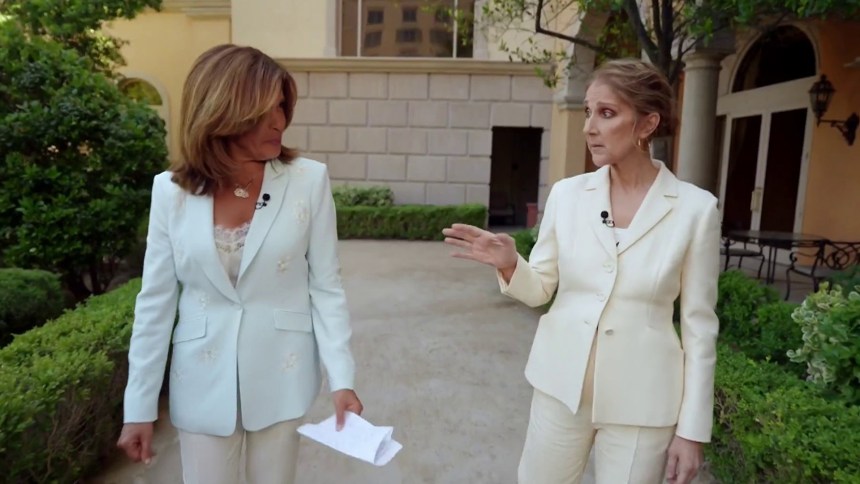
But this wellspring of love for Dion can also be traced back to the genre with which Dion has been derisively associated: melodrama. Whether in theater, cinema or television soap operas, melodrama frequently depicts stories of love and loss, sacrifice and betrayal, crisis and redemption. Melodrama has therefore become the primary framework through which celebrity culture has developed, fixating on the rise and fall of stars, including both professional and personal triumphs and upsets.
In the case of Dion, increased love for the star cannot be separated from public knowledge about her personal life. Famously, or perhaps infamously, Dion was married to her music manager, René Angélil, who discovered Dion when she was 12. They married 14 years later, when Dion was 26 and Angélil was 52. In 2016, Angélil passed away after a public battle with cancer. This tragic loss set the stage for audiences to find new connections to and affection for the incomparable Céline.
Over the next few years, her life often felt like it was conforming to the emotional arcs tracked by her songs and played out in tragic love stories like that in “Titanic.” Dion’s announcement, just four years later, that she was suffering from a rare autoimmune disorder only amplified this pathos. Dion went on to star in the incredibly melodramatic 2023 film “Love Again,” in which she and her music help two heartbroken people — one dumped a week before his wedding, the other grieving the death of her partner — find, well, love again. And it is in this context that Dion has transcended from the role of ’90s pop diva to a cultural icon whom fans interpret as a symbol of persistence and resilience.
In short, she has transformed from a relic of the 1990s to the kind of star audiences love to love.



Become a member to join the discussion