Michelle Obama speaks her mind. Who the former first lady is in public is who she is in private. I know this not only after reading all of her books but also after a number of social gatherings over the years.
And having pored over her latest book, “The Look,” a glossy coffee-table-size extravaganza of her fabulous fashion before, during and after the White House, I was primed to interview her about matters sartorial and more substantive.
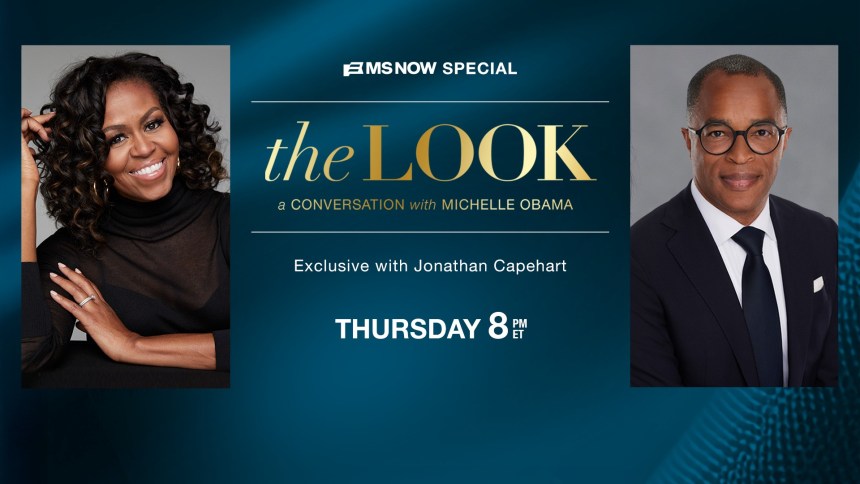
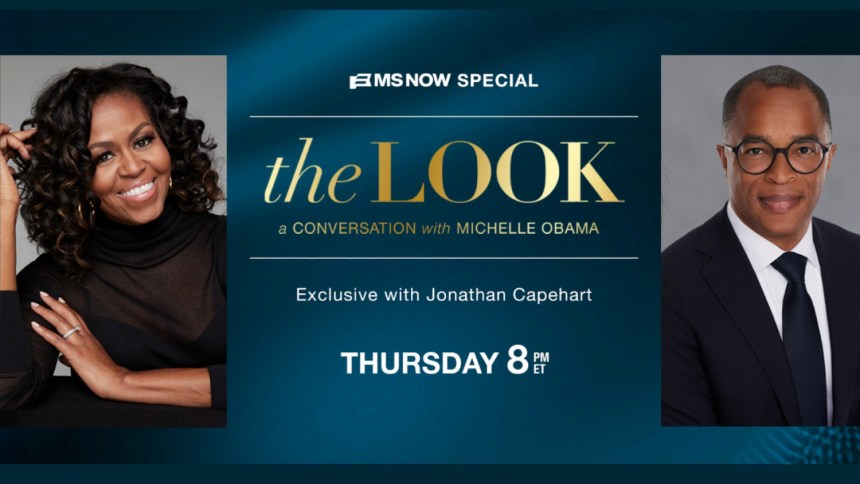
What I didn’t know on Monday as I stood waiting for Obama at Blackbird House in Los Angeles, where I was to interview her for an MS NOW special airing Thursday, was that the former first lady was headed our way immediately after sitting down with Jimmy Kimmel.
The spouse of former President Barack Obama was willing to go there on topics that many seem to be running away from today.
My initial panic — oh hell, what if she makes news before our planned special airs on Thursday?! — almost immediately subsided, because I knew that the discussion I was about to have with her was going to be entirely different.
Over more than an hour of conversation with me, the spouse of former president Barack Obama was willing to go there on topics that many seem to be running away from today.
In her new book, Obama writes that she used the fascination of both the public and the press with her appearance to turn attention toward issues she cared about. She does the same with “The Look,” drawing you in with the pretty pictures, then engaging in a serious, unflinching conversation about race and representation, beauty standards, and freedom.
Seated across from me in a stunning navy blue Alexander McQueen dress with a pleated skirt (arms and shoulders covered, FYI) and in black pointy-toed heels, Obama talked about her fits (as the kids say) and how her fashion philosophy was shaped by her experience on the campaign trail. Much of that was negative, such as the infamous New Yorker magazine cover that depicted her and the future president of the United States as fist-bumping terrorists. It all made her determined to define herself before others did.
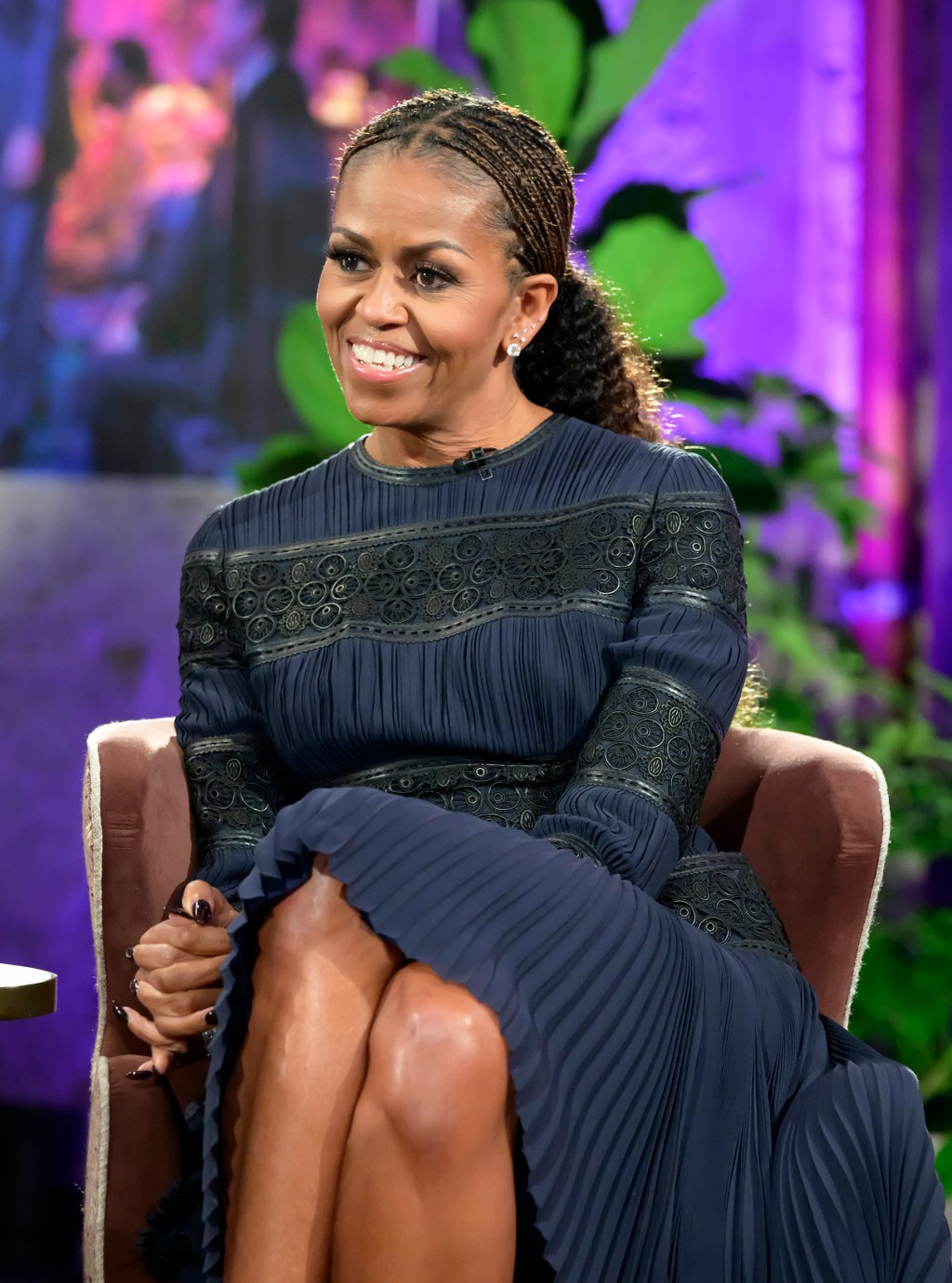
“I had to control my narrative,” she told me on-set before an audience of about 40 members of Blackbird House, a collective for women of color and their allies in Los Angeles.
That included making the conscious decision not to wear her hair natural and straightening it throughout her eight years as first lady. Obama writes extensively in “The Look” about Black women’s hair and the white beauty standards that exert control over how they style it.
I asked Obama why so many people view Black women’s hair as a political statement or a threat. “Because they don’t understand it. They don’t know us. They’re not around us. We don’t set the standard,” she said. “What we do with our hair is not a statement of anything other than what we want to do with our hair. That is it.”
Obama is not afraid to talk about race and gender and how both affect Americans, African Americans in particular.
As with that comment, Obama is not afraid to talk about race and gender and how both affect Americans, African Americans in particular. I asked her, “At a time when everyone, every institution, seems to be running away from the D, the E and the I, you are running unafraid, headlong into it. Why?”
“Because I can. I’ve earned the leverage,” she said. “I’m not trying to get a vote. I have a job. I control my own life. I am 60-something years old. I’m wiser. I’m more centered in who I am. What better person at this time to have these conversations, honestly?”
Watch our conversation, and you will notice that Obama never mentions President Donald Trump by name. But at several points she is clearly talking about him. She notes in “The Look” that when someone wants to belittle a woman in the public eye, they will go after her appearance. When I not-so-slyly mentioned that this was happening to female reporters, Obama responded, “Surprise, surprise.”
And when I asked what it would take to stop these kinds of attacks, she replied:
We have to pick leaders that don’t do that. I can’t get into the minds of people who are cruel and mean. My empathy in me says that comes from a place of brokenness and insecurity. And at a certain stage in life, it is not fixable. It is, you know, planted in there.
You know, the question that we have to ask ourselves is, well, why are we OK with it?
Obama had a quick answer when I asked what she would say to the Black girls who didn’t grow up when she and her daughters were in the White House but are now living in a time when their very identities are under attack and their history is being erased.
“Vote!” she said to applause. “It’s always my message.”
She went on: “Where we are isn’t a statement of the failure of our democracy. You know, it is the failure of people to engage in the democracy that’s here.”
“Our democracy isn’t broken. It’s just not utilized. And we have to be vigilant and engage,” she added. “We can’t take anything for granted, ever.”

Our discussion was rich and varied, but the most powerful moment of the interview came near its conclusion. With so much being so awful for millions of Americans, I noted, hope is hard to have or hard to hold on to. I asked Obama what gives her hope.
“That little girl right there,” she said, pointing to a grade-schooler sitting in the crowd behind me. “There’s no way that you can look at that beautiful little girl and not understand that we do not have the right or the luxury to become hopeless.”
In her book, and watching “The Look: A Conversation with Michelle Obama,” you’ll see the former first lady free of the bonds of politics. Her speaking her mind is itself reason for hope.