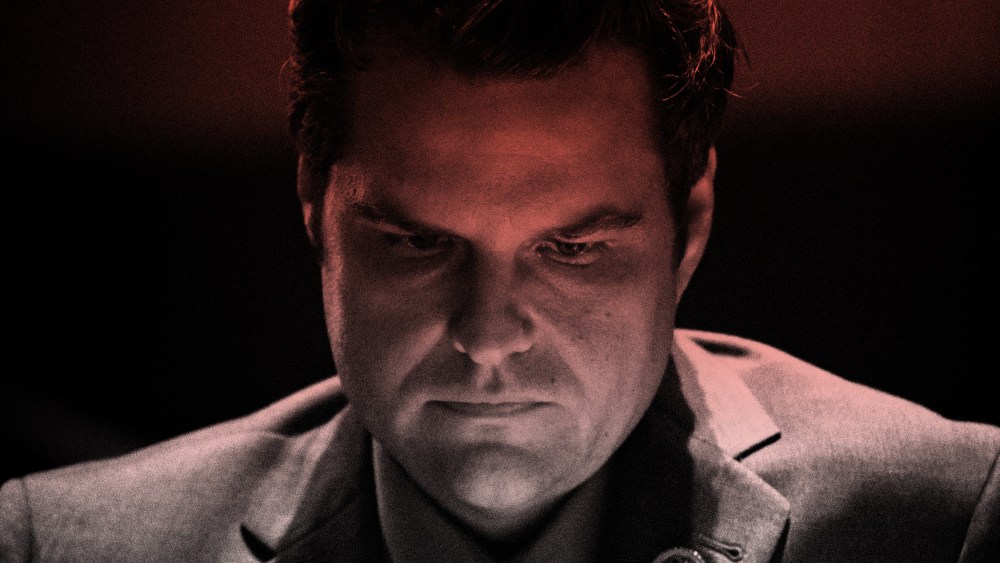
Elected officials don’t have the right to break the laws the rest of us have to follow. And they also shouldn’t be able to obstruct justice when they’re under investigation. If anything, the bar should be higher for our elected officials. Congress, after all, writes the laws that form the architecture of our criminal justice system and should be responsible for obeying them.
Elected officials don’t have the right to break the laws the rest of us have to follow.
When news that the Justice Department was investigating Rep. Matt Gaetz, R-Fla., for obstruction of justice in connection with alleged sexual misconduct broke on Wednesday, his office issued this statement: “Congressman Gaetz pursues justice, he doesn’t obstruct it.”
Gaetz may live to regret those comments. If he is ultimately indicted, a federal prosecutor may read that statement to a jury in closing argument and remind them that obstruction of justice is not, as some of the former president’s allies suggested, an insignificant “process crime” (whatever that means).
Juries understand, and so do we, that obstruction of justice is significant. It’s about whether our system can deliver justice.
The crime of obstruction of justice is committed when one person intimidates, threatens or “corruptly persuades” a witness, intending to “influence, delay, or prevent” their testimony in connection with an official proceeding. The statute sweeps broadly to include a wide variety of conduct intended to prevent investigators from getting to the truth about the commission of a crime. At its core are concerns about criminals who try to tamper with witnesses to conceal the facts. This is the heartland of the conduct Congress intended to prohibit.

Prosecutors, following Congress’s lead, take obstruction seriously because it threatens the integrity of our criminal justice system and cuts at the heart of justice. Obstruction cannot be tolerated or ignored. And, as a practical matter, people tend to obstruct when they have something to hide. An obstruction charge can underscore a defendant’s knowledge that he violated the law and provide additional proof of the underlying charges.
The truth about Gaetz will come out in the course of the federal investigation that is reportedly ongoing. We don’t know the details of the conversation he allegedly had when an ex-girlfriend conferenced him in on a phone call with a key witness in the investigation, but the ex-girlfriend is reportedly seeking an immunity deal in exchange for her cooperation — because she herself fears obstruction charges. The DOJ has also not charged Gaetz with any crimes at this point (and Gaetz has denied all wrongdoing). However, if prosecutors develop sufficient evidence to sustain charges against him, including a charge of obstruction of justice, he should anticipate that he will be indicted.
Beyond Gaetz’s individual alleged crimes, which include the trafficking of a minor and possibly extend to public corruption, we are waiting to see whether the allegations of obstruction prove true and whether they signal a broader trend among former President Donald Trump’s self-styled political successors.
Trump unabashedly criticized judges he disagreed with and publicly encouraged his attorneys general to prosecute his enemies and protect his friends. In this, his conduct was unique among our political leaders. His envisioned a criminal justice system he could manipulate for his personal benefit.
Unlike President Richard Nixon, who turned over his tapes when a court told him to and President Bill Clinton, who submitted to prosecutor’s questioning, Trump consistently held himself above the law. He declined to submit to an in-person interview in connection with the Mueller investigation and withheld witnesses and evidence. Mueller, in his report submitted to the attorney general, laid out ten potential allegations of obstruction against the former president. He stopped short of accusing him of committing a crime but also refused to exonerate him. So far, Trump has escaped legal consequences for his contempt — but we should be concerned if his allies (Gaetz, for instance) try to adopt his approach.
Our system of justice is fragile at the moment, stretched thin because it only works if people believe in it. Trump’s White House tenure diminished American’s confidence in our institutions. If his utter disregard for the law becomes the new norm for political figures, we are at great risk.

It doesn’t take a career at the Justice Department to understand why obstruction of justice is a serious crime. In authoritarian systems and banana republics, powerful people who set themselves above the law obstruct justice to avoid its consequences. If select people can prevent investigations into their misconduct, our entire criminal justice system would crumble. That’s why a person can be prosecuted for obstruction of justice, even if their attempt fails or if prosecutors are unable to prove the underlying crime a defendant is accused of trying to conceal.
We care about accountability for people who try to thwart justice, whether they are the least or the most successful at it. Congress, too, has made it clear that obstruction of justice is a serious crime, imposing penalties of up to 20 years in cases of witness interference. As former special counsel Bob Mueller once said, obstruction “strikes at the core of the government’s effort to find the truth and hold wrongdoers accountable.” And that’s why it’s an extraordinarily serious charge, particularly against a sitting member of Congress.
Gaetz is an avowed disciple of Donald Trump. He told a crowd at the Villages, a Florida retirement community, last month, that the Republican party “is Donald Trump’s party, and I’m a Donald Trump Republican.” While others in public life might have resigned over allegations of sexual misconduct — even conduct that doesn’t rise to the level of a crime, like Al Franken who resigned from the Senate over misconduct allegations or Katie Hill who resigned from the House after acknowledging that her affair with a staffer was inappropriate — Gaetz has doubled down, saying he did nothing wrong.
We care about accountability for people who try to thwart justice, whether they are the least or the most successful at it.
In the statement his spokesman released, he criticized, presumably DOJ prosecutors, for not making “a single on-record accusation of misconduct.” (Of course, those prosecutors wouldn’t make public accusations before an indictment is returned.) It’s legitimate to defend oneself against criminal charges, but entirely out of bounds to, as the statute says, “corruptly persuade” a witness to withhold the truth from investigators, hoping to derail an investigation.
If investigators do prove that Gaetz tried to prevent a witness from testifying against him or alter their testimony, he should be pursued with the full force of the law. This must happen so that justice is done in this specific case. But on a much broader level, this case is a test of a criminal justice system dramatically undermined by our last president. Interfering with justice cannot become the new norm. And we cannot tolerate any more efforts by our politicians to hold themselves above the law.