When New York City Mayor Zohran Mamdani met President Donald Trump for the first time in the Oval Office in November, he pulled off such an effective charm offensive that the president lavished him with praise, touched him affectionately in front of reporters, and backed down on previous threats to block federal funds to the city. On Thursday, Mamdani returned to the White House for a visit — and somehow extracted two additional victories.
During the meeting, which Mamdani traveled to in secret, he expressed concern about the detainment of Ellie Aghayeva, a Columbia University student from Azerbaijan, whom federal immigration agents had arrested at her campus apartment earlier that day. Shortly after the meeting, Trump called Mamdani and said Aghayeva would be released. Mamdani also gave Trump and his chief of staff, Susie Wiles, a list of four other detained students and asked for their release.
Trump reserves more bile for establishment Democrats who are more conservative than Mamdani.
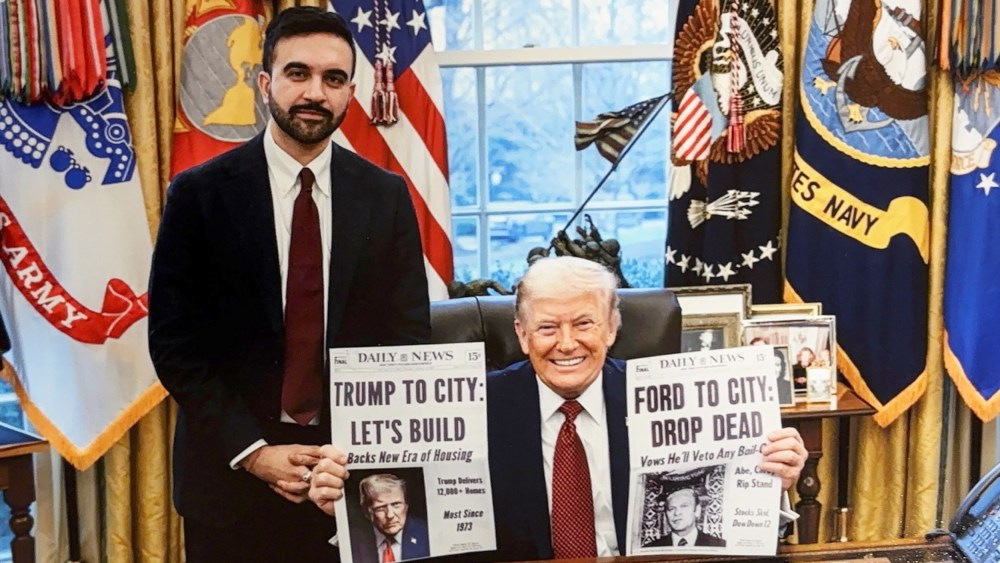
The mayor also pitched Trump on getting more than $20 billion in federal funds to build 12,000 units of affordable housing in Queens. We don’t yet have details on how amenable Trump was to offering up the money, but we do have at least one clear sign that Trump may be entertaining the idea. Late in the meeting, Mamdani presented two printouts to Trump: One was a copy of a famous 1975 edition of a New York Daily News front page on which the leading headline reads “Ford to City: Drop Dead,” a reference to Gerald Ford’s pledge to veto federal assistance to New York. The other one was a mock-up of a fictional edition of the newspaper with a headline reading “Trump to City: Let’s Build.” In a photograph that the White House provided to Mamdani’s team and which the mayor posted on social media, Trump holds up both printouts, grinning from ear to ear, as Mamdani stands by his side. It doesn’t mean Trump will follow through, but it does signal that it’s a possibility; at the very least, Mamdani made an impression on Trump through his playful attempt at diplomacy.
These are small, mostly symbolic wins for Mamdani. But they’re still remarkable, given who Mamdani is: a prominent democratic socialist, an immigrant, and a man who has called Trump a fascist and continues to publicly object to Trump policies, including his immigration agenda.
Mamdani is almost custom-tailored for Trump to exploit as a supervillain in his grand narratives about America’s unraveling. And yet Trump has, for now, dropped his threats to cut off funding to New York and send National Guard troops into the city if Mamdani took office. Now he reserves more bile for establishment Democrats who are more conservative than Mamdani. Consider how, in his State of the Union address this week, Trump called Democrats “crazy” and “sick people” who are “destroying our country.” Yet in that same address, Trump shouted out Mamdani as a “nice guy” whom he speaks to “a lot.” (He also said Mamdani stands for “bad policy.”)
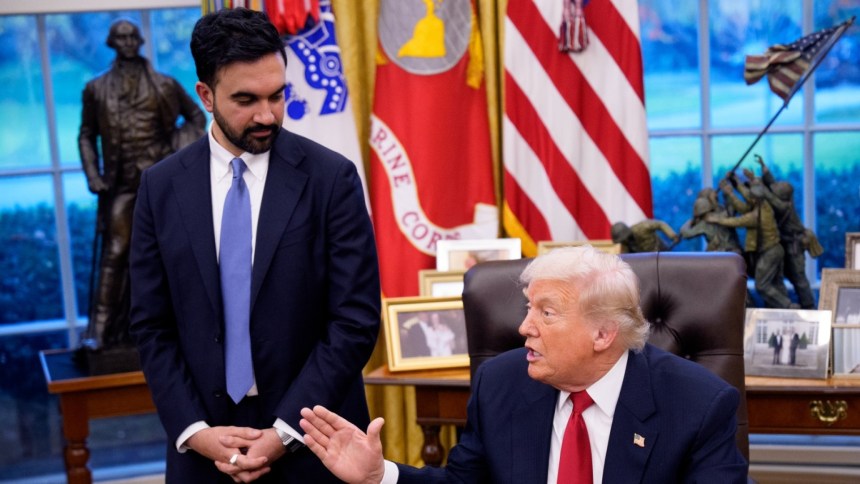
Part of what explains Mamdani’s success at buttering up Trump at both of his meetings — without visibly compromising his own office or ideology — is his charisma. Mamdani is a slick speaker and exudes a magnetic energy that Trump seems drawn to. But there are a couple of more specific aspects of his maneuvering to consider.
One is that Mamdani has focused on finding common ground between the two to keep their in-person interactions centered on advancing his own goals. Mamdani and Trump have different positions on housing policy, but Mamdani knows that Trump, a former real estate developer obsessed with plastering his name on buildings, is probably more receptive to the idea of collaborating on housing than any other policy space. The idea for the housing site Mamdani specifically pitched was first raised during former New York Mayor Bill de Blasio’s administration (the effort stalled), but surely Mamdani knew that a Queens development might be particularly appealing when speaking to Trump, a Queens native.
Second, the idea of creating a faux Daily News cover of Trump helping New York was clever — and illustrates Trump-specific savvy. It’s hard to imagine tapping into Trump’s nostalgia more perfectly than mocking up a tabloid newspaper in a city he operated in as a socialite and developer. It flatters Trump by suggesting he has the opportunity to be a stand-out leader who leaves a legacy in a city that matters to him. And the photo op, which Trump embraced excitedly, has at least planted the seed of an idea that could grow over time.
While some politicians might risk whitewashing Trump by engaging in these tactics, Mamdani is mostly insulated from it because of his track record as a democratic socialist and his full-throated condemnations of Trump. There are no signs he’s moderated on any policies to placate the president. But there are signs that he’s getting Trump to bend in his direction.
Given the president’s mercurial temperament, it’s far from certain that their chummy rapport will last. In fact, it’s unlikely. But even getting this far speaks to Mamdani’s unique skill at getting things done by using charisma to pierce the usual constraints of opposing ideology and interests.