The most shocking thing Homeland Security Secretary Kristi Noem said Tuesday wasn’t about the border. It was about your front door.
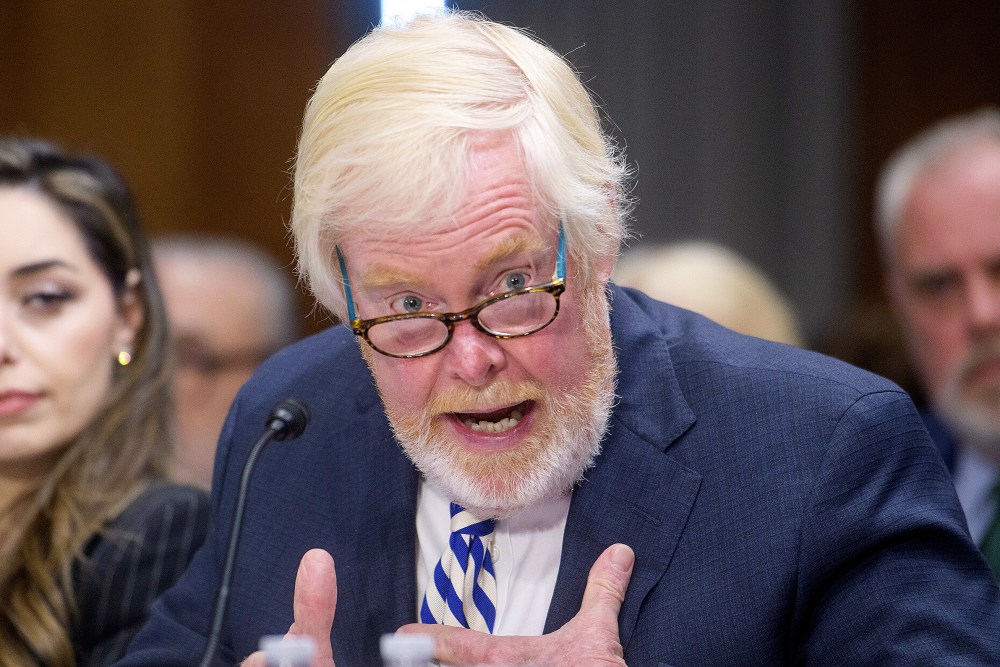
In a Senate hearing that spanned fatal shootings, enforcement tactics, department spending and oversight disputes, Noem defended the department’s authority to enter private homes using “administrative immigration warrants” — documents issued within the executive branch and not signed by a judge — and made clear that the Department of Homeland Security considers that authority lawful.
That assertion goes to the heart of the Fourth Amendment.
The Fourth Amendment was designed to require the executive branch to convince an independent judge before crossing the threshold of a home.
American law has long treated the home as different. The principle predates the Constitution. English common law described a person’s house as his “castle.” The American colonies saw what happened when that protection weakened: British officials used broad search authorizations to enter homes without individualized judicial approval. Those practices were so deeply resented that they became part of the grievance that fueled the Revolution.
The Fourth Amendment was written to prevent that kind of unchecked entry from happening again. It protects “persons, houses, papers and effects” and requires warrants issued by a neutral magistrate. In Payton v. New York, the Supreme Court held that the Constitution draws a “firm line at the entrance to the house.” Absent true emergency circumstances, that threshold “may not reasonably be crossed without a warrant” signed by a judge. The court called physical entry into the home “the chief evil against which the wording of the Fourth Amendment is directed.”
An administrative immigration warrant is not that. It is signed by an immigration official. It reflects executive authorization of executive action. It does not represent independent judicial review.
The difference is not academic.
In Minneapolis earlier this year, a U.S. citizen reported that federal immigration agents forced open his door and removed him from his home during an operation later described as a mistake. He was released after authorities determined he was not the intended target. Reporting on the incident showed him being led away in his underwear, a vivid reminder that when errors occur at the threshold of a home, they are not theoretical.

Internal Immigration and Customs Enforcement guidance has taken that position a step further, asserting that an administrative immigration warrant alone can justify entry into a private residence — even forcible entry — without prior judicial approval. That is not simply a procedural shortcut. It shifts the constitutional balance. The Fourth Amendment was designed to require the executive branch to convince an independent judge before crossing the threshold of a home. When the same branch that investigates also authorizes its own entry, that structural safeguard disappears. That is why Noem’s testimony was so consequential: it did not treat judicial review as the default rule, but as an optional layer.
During Tuesday’cs hearing, senators referenced additional cases in which U.S. citizens were detained during immigration operations and later released. Noem said she would “look into” those incidents.
That exchange underscored the stakes: mistakes happen. But when they happen at the doorway of a home, the consequences are immediate and personal.
Most Americans assume that if federal agents enter a residence, a judge approved that entry. That assumption is not naïve; it reflects the structure the Constitution created. A neutral magistrate stands between executive power and private space. The requirement to persuade that magistrate is the safeguard.
The framers understood that unchecked authority to enter homes was not a technical issue.
Immigration enforcement does not operate outside the Constitution. The Fourth Amendment does not shrink because the underlying violation is civil rather than criminal. The protection of the home does not depend on immigration status.
The framers understood that unchecked authority to enter homes was not a technical issue. It was a defining abuse of centralized power. That understanding is embedded in the text of the Fourth Amendment and reinforced by centuries of precedent.
When the executive branch asserts that its internally issued warrants justify entry into homes, it collapses the structural distinction the Constitution was designed to preserve: the distinction between the branch that investigates and the branch that authorizes intrusion.
That safeguard exists to slow the government at the moment intrusion is greatest.
The Senate hearing addressed many serious issues. But few are more consequential than who controls the front door to your home. The Constitution’s answer has long been clear: absent emergency, the government must persuade a judge before crossing that line.