The president has spent the past few weeks fuming over Americans’ concerns about price increases stemming from his tariff war, calling the issue of affordability a Democratic “hoax,” a “con job” and a “scam.” But even as many of his own followers are rejecting that spin and blame the president for ongoing affordability issues, some people on Fox Business are blaming everyday Americans for the pain in their pocketbook. To these experts, the problem is a supposed inability to manage money properly.
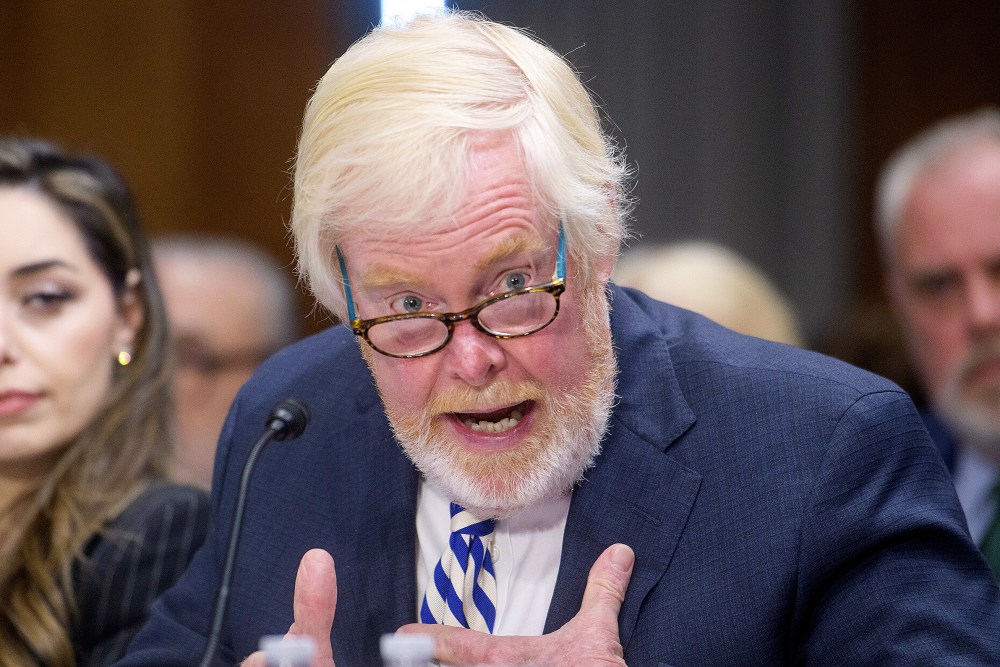
“Look at what’s happening with the amount of money people are spending. Look what happened on Black Friday,” pro-Trump economist Stephen Moore said during an appearance on “Making Money” last week.
“If people don’t have the money, how can they go out and be spending this kind of money on Christmas presents?” he asked, speaking of what he called an “exaggerated affordability crisis.”
“Now, look, I understand: People want to buy a steak, or you want to buy coffee, or you want to buy a home — those prices are high. But how about the price of gasoline, Lauren? We don’t talk a lot about that.”
Quit your kvetching, Americans! Sure, you might not be able to afford meat, or coffee, or … a home to live in. But look at the gas prices! Let’s have a look at the gas prices! Which actually have hit the lowest prices in five years — but no thanks to Trump, according to Patrick De Haan, an analyst at GasBuddy. De Haan told Newsweek, “The president has limited control and in my view is not the primary reason if it happens.”

Elsewhere, in an interview with host Maria Bartiromo, former Chrysler CEO Bob Nardelli wanted to blame American workers’ wages for inflation.
“Some of the high prices we’re seeing there are the result of not what President Trump has caused, but what’s happened with the Biden administration when we saw 40% wage increases in the auto industry, with UPS, etc.,” he said.
Nardelli is trying here to pin the high cost of cars on wage increases that Joe Biden’s administration helped secure for autoworkers, but just as many executives at some of the top auto companies in the U.S. warned earlier this year, Trump’s tariffs have raised vehicle prices, according to recent data.
During a conversation on “The Big Money Show” about data showing the development of a “k-shaped” economy — in which wealthy Americans get ahead while less-wealthy Americans suffer — host Jackie DeAngelis suggested that Americans are at fault for not learning to live with less. “I’m surprised that people aren’t adjusting,” she said, going on to say, “I don’t understand where the system has failed people in understanding that you’re not entitled to having things and that when times are tough — whether it’s because the economic conditions around you or maybe in your personal household as a result of something that’s happened — why you can’t pull back.”
DeAngelis framed Americans’ racking up credit card debt as making irresponsible choices, although data from this year has shown an increase in people using credit cards to buy essentials, like food.
During another conversation on “The Big Money Show,” panelists downplayed data that showed mom-and-pop businesses have filed for bankruptcy at a record rate this year. Panelist Marcus Lemonis and host Dagen McDowell both claimed the data was misleading because the kind of bankruptcy they were discussing — subchapter 5 bankruptcy, which allows small businesses to file without relinquishing all of their assets — was only established in 2019.
“It’s not bad. It’s not — this is not evidence of anything,” McDowell said, without offering an alternative explanation for why bankruptcy claims have spiked while Trump’s policies have been in effect. Lemonis went on to lament that people filing for subchapter 5 bankruptcy are allowed to keep ownership of their business, saying it allows them to “flush the toilet and move on” from their financial problems too easily.
If you’re watching Fox Business, you’d think that what Americans need to recover from a tightening economy is not a change of course by the president, but to buckle down, act responsibly and stop squandering their incomes on irresponsible luxuries, like food and housing.