Donald Trump and his administration’s disdain for the free press — and the president’s abhorrent behavior toward Black journalists, in particular — has been well-documented.
The nonpartisan National Association of Black Journalists has publicly rebuked Trump’s repeated attacks on Black journalists, such as NBC News’ Yamiche Alcindor. And I recently explained how the administration’s arrests of independent journalists Don Lemon and Georgia Fort were indicative of the president’s war on the Black press as well.
When you broaden the scope to include right-wing attacks on Black writers, rather than being confined to journalists, a clear picture emerges: one that reflects the MAGA movement’s angst over their fact-based writings about the president or the history of racism in America.
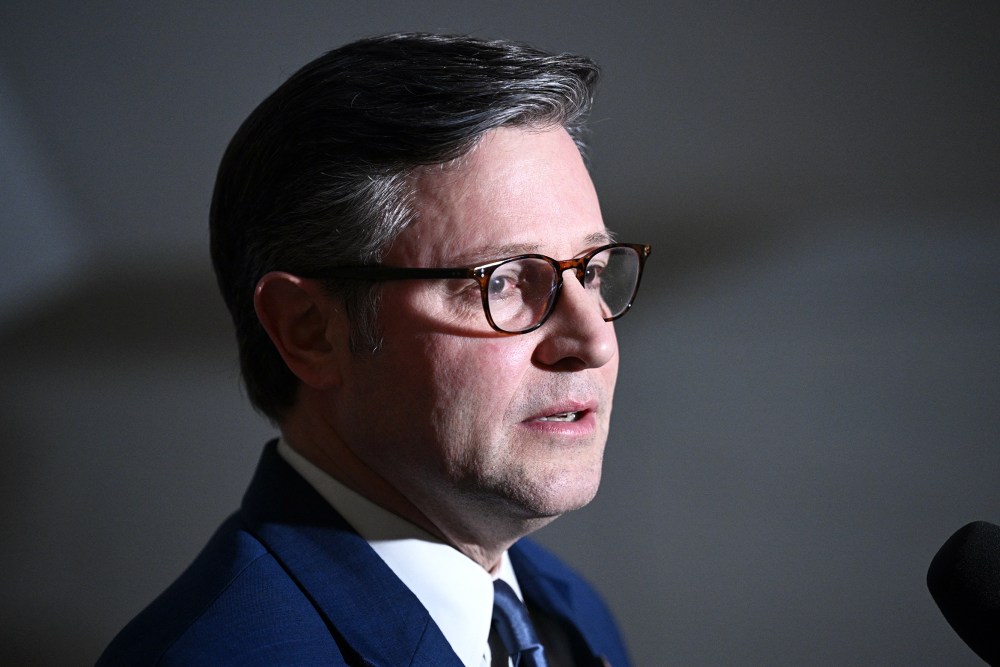
With that in mind, I found it more than a little bizarre seeing Rep. Byron Donalds, R-Fla., and House Speaker Mike Johnson attempt to lionize Frederick Douglass, supposedly for doing the very things that conservatives are deriding Black journalists and others for doing today.
Last week, Donalds keynoted a dedication ceremony for the congressional press gallery at the Capitol after he and a bipartisan group of lawmakers pressed for it to be renamed after Douglass. It was, dare I say, a rather performative gesture.
One probably could have guessed that this ceremony was going to feature a whitewashed rendition of Douglass’ legacy as a renowned journalist and abolitionist. And that was abundantly clear almost immediately, as Johnson deemed Douglass “an orator of almost unparalleled stature in American history — almost as good as Byron Donalds.”
When Donalds spoke, he thanked Interior Secretary Doug Burgum, a key player in the Trump administration’s attempts to erase the history of slavery and racism from several national landmarks, for bringing artifacts from the National Park Service to the event. And he followed that up with what I can best describe as an effective recitation of PragerU’s whitewashed portrayal of Douglass in its right-wing educational video for children.
This, in my view, obscured the more accurate description of Douglass: a man who said one of his formative experiences in life was physically fighting back against a plantation owner and who spent many years after slavery’s formal abolition speaking about its lingering effects and white supremacy more broadly.
“Slavery is indeed gone, but its long, black shadow yet falls broad and large over the face of the whole country,” Douglass said during an 1881 speech in West Virginia.
At last week’s ceremony at the Capitol, Donalds suggested that this kind of truth-telling is to be admired:
By putting his name here, we are setting a standard for every journalist which occupies those seats. We are telling them: “Be like Frederick Douglass. Be bold, be factual, be fiercely independent — and above all, love this country enough to tell the truth about it.”
But that rhetoric doesn’t square with a MAGA movement that counts Donalds among its most dedicated members — a movement led by Trump, someone who has complained that museums focus too much on “how bad” slavery was and targeted the free press with abandon.
And the insistence upon being “factual” and loving enough of the country to tell its harsh truths doesn’t square with remarks made by Donalds in 2024, when he said: “You see, during Jim Crow, the Black family was together.”