A multilevel-marketing sales pitch is kind of like porn: You know it when you see it. On Instagram, there’s a formula. A bright-eyed woman — maybe she’s blonde, maybe she’s smiling widely, maybe she has her product laid out on the table in front of her or on a rack behind her. But the focus is still on her, because she’s not just trying to sell you a thing, she’s trying to sell you a feeling.
Women’s faux-powerment was part of LulaRoe’s lore from nearly the beginning.
There’s probably a long, meandering caption below. There might be some seemingly RANDOM CAPITALIZATIONS for extra EMPHASIS. And then, of course, there will be hashtags: #beyourownboss #womenempoweringwomen #hustle #followyourpassion #girlboss
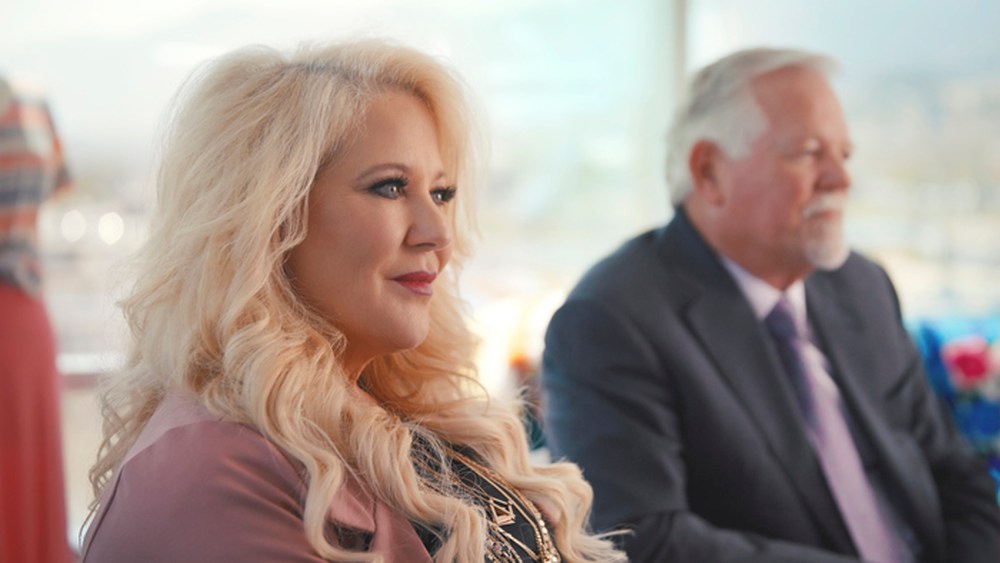
The specter of girl-bossery is front and center in “LulaRich,” the four-part Amazon docu-series about now-infamous multilevel marketing (MLM) company LulaRoe. The series explores the rise and (partial) fall of the clothing MLM, which saw a meteoric rise between 2013 and 2016, and ultimately became a mainstream news story because of its predatory recruitment practices, which left many of its retailers, mostly women, in debt, and left LulaRoe facing a mountain of litigation. (The company recently settled a suit brought against it by Washington State.)
In some ways, it feels like the girl boss was always destined to start recruiting for an MLM; the logical conclusion of an era dominated by #getyours corporate white feminism. Nothing exposes the emptiness of such an ethos than witnessing it be so easily co-opted by an exploitative, conservative, anti-feminist enterprise like LulaRoe.

Women’s faux-powerment was part of LulaRoe’s lore from nearly the beginning. “I watched my wife shatter glass ceilings,” Mark Stidham tells the camera in “LulaRich,” about his wife and co-founder DeAnne. As the story goes, the company came to be after DeAnne began selling maxi skirts she made at home out of the back of her car. As demand grew, DeAnne and her husband Mark, both devout Mormons, began selling merchandise to independent distributors who would buy merchandise, resell it, and recruit more distributors.
But LulaRoe didn’t just sell skirts and “buttery soft” leggings in an assortment of tacky, limited-edition patterns. They sold the dream of unfettered financial success — “full-time pay for part-time work.” With LulaRoe, the company told its would-be consultants, women could have it all: the money, the perfect marriage, the beautiful children and the ability to stay home with them.
In “LulaRich,” former retailers discuss how “women’s empowerment” was a core part of the recruitment pitch — and a way to encourage distributors to work more, work harder, and sometime bring their entire families into the enterprise. It was a bait and switch: entice struggling white women with the fantasy of opportunity for endless financial gain (that was the “empowerment”), and then reinforce traditional gender roles once they were ensnared.
In some ways, it feels like the girl boss was always destined to start recruiting for an MLM.
“LulaRoe hid behind the guise of uplifting and empowering women,” said former retailer Courtney Harwood in “LulaRich.” “We were supposed to be empowered at first and then the husband was supposed to take over.”
It had the potential to be a perfect storm. The rise of LulaRoe coincided with the mainstreaming — and ultimately, political dilution — of feminist messaging. In 2012, Sheryl Sandberg published “Lean In,” which essentially argued that the path toward women’s advancement and equality, specifically within the context of the workforce, rested on individual women. “We hold ourselves back in ways both big and small by lacking self-confidence, by not raising our hands, and by pulling back when we should be leaning in,” she wrote.
“Lean In”became a massive bestseller. The messaging was seductive precisely because of its individuality. As Leigh Stein put it in an essay for Medium, “by presenting gender disparities in the workplace as a war to be fought on a personal level, Sandberg allowed women to feel like they were activists whenever they advocated for themselves.”
Fighting to change a sexist system to benefit the collective is overwhelming; it requires years of political organizing without the promise of personal benefit. “Lean In” offered another way forward: Ask for more. Raise your hand. Rise through the ranks. Demand power. Make the system work for you. Rather than positioning capitalism as in conflict with feminist political goals, girl boss feminism offered up the idea that capitalism might actually be the path toward salvation.
It was a comforting message, especially for a generation that was set up to fail by entering the workforce during and in the immediate aftermath of the financial crisis of 2008. (As a member of that generation who became a journalist covering women’s issues around the time “Lean In” came out, I can attest to the overwhelming power of its worldview.)
The Golden Age of the Girl Boss (circa 2012 to 2020), dominated by beautiful, white, rich women founders, quickly followed. Sophia Amoruso, Leandra Medine, Miki Agrawal, Audrey Gelman, Tyler Heaney, Steph Korey. These women’s lives were coded as aspirational; their wealth a feminist achievement in and of itself. You’ve probably heard their names and seen their glossy photos. You might have also read about their inevitable falls from grace.
Amoruso, who created clothing company Nasty Gal, published her memoir, #GirlBoss, in 2014. It offered a politics-free version of feminism, one that again suggested that the monetary success and ascension to power of one woman might inevitably be considered a win for us all. It is a convenient and self-serving idea. As Jia Tolentino wrote in her 2019 book of essays, “Trick Mirror,” “A politics built around getting and spending money is sexier than a politics built around politics.”
It’s this message that LulaRoe seized upon and capitalized on in order to bolster its astronomical growth. When asked by the “LulaRich” filmmakers how they came to a message of women’s empowerment, Mark Stidham points to DeAnne’s individual financial success: “She was able to make the money she was willing to go out and make,” he says. “She made hundreds of thousands of dollars of profit in a very short time. The empowering women came from me being married to a powerful wife.”
DeAnne’s story was then held up as a model of what other women could achieve if they just paid the $5,000(minimum) cost to join LulaRoe. When the retailers that got in on the ground level began seeing their own monetary successes, their stories were also used as recruitment tools. DeAnne and the other powerful LulaRoe retailers were girl bosses in their own right, selling the glossy dream to other women who would inevitably be set up to fail.
They used “cheap language of feminism,” as journalist Jill Filipovic outlines in “LulaRich,” “to latch onto this pop feminist message that doesn’t actually tangibly change anything.”
Girl boss feminism offered up the idea that capitalism might actually be the path toward salvation.
Of course, the scam of a pyramid scheme is that only the people who get in early and stay at the top are able to make money. Everyone else, inevitably, has to lose. But the pitch was highly effective. At its height in 2017, LulaRoe had about 80,000 retailers and brought in $2.3 billion.
By 2020, amidst a global pandemic and a national reckoning about racism in the workplace, the seductive pull of girl boss feminism had largely faded. It was harder — if not impossible — to buy into the fantasy of the inherent goodness of a single powerful woman, when so many less powerful women were screaming about their mistreatment, sometimes at the hands of other women. The prevailing narrative shifted back toward the more grueling, less glossy, work of undoing toxic structures.
But even as girl bosses have gone out of vogue in elite feminist circles, LulaRoe has hung on tightly to its #bossbabes.
I scanned Instagram for the hashtag #LulaRoe as I was writing this piece. The hashtag has been used 4.2 million times, more than 100 times in the last 24 hours. Only a smattering of the most recent photos are highlighting “LulaRich.” Most of them are just white women, out here #hustling. Out here trying to be good moms and good wives and good women.
One retailer posted a photo on Saturday from Oregon. She smiles statically at the ground, as she models some new LulaRoe styles. In the caption, she poses a question: “Who is going to join my rebellious girl gang?”