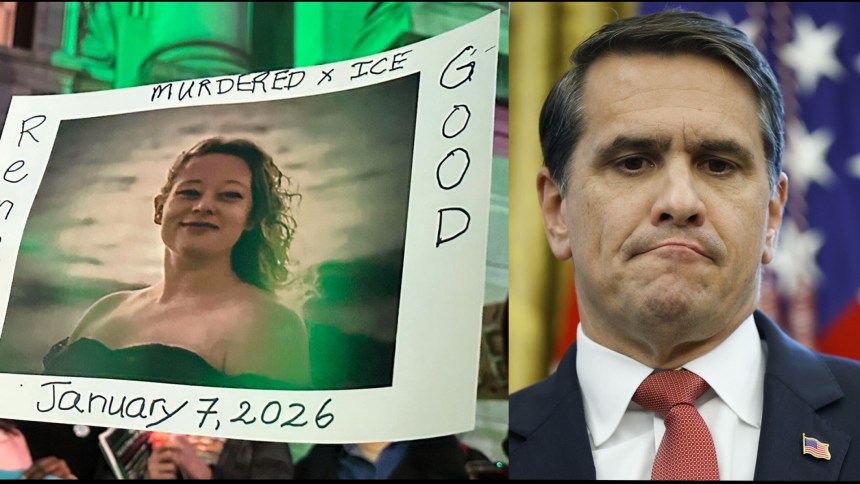
Aides to Deputy Attorney General Todd Blanche directed the U.S. Attorney’s office and FBI agents based in Minnesota to shut down a civil rights investigation into an officer’s fatal shooting of Renee Good and instead alter it to probe Good for possible criminal liability, according to three people briefed on the discussions.
After Good was killed on Jan. 7, FBI agents drafted a search warrant to obtain her car to reconstruct the path of bullets that an ICE officer shot into the vehicle. But they were instructed to redraft their warrant and change the subject of the investigation from a civil rights probe to an investigation into a suspected assault on an officer, the people said. A federal magistrate judge rejected that warrant, noting that Good was already dead and could not be considered a suspect for a warrant.
It was widely reported that the Justice Department chose not to investigate the ICE officer who shot and killed Good, but the details about how top Justice officials directed the altering of the investigation and search warrant — and how it was rejected as weak by a federal judge — have not been previously reported.
It’s extremely rare for judges to reject federal prosecutors’ requests for search warrants, as the standard for evidence needed to grant one is low. Prosecutors and investigators need to only show probable cause that they will find evidence of a crime in the location they wish to search.
Meanwhile, Tracee Mergen, an FBI supervisor in the Minneapolis field office who oversees fraud and public corruption cases, resigned in frustration over the handling by Justice Department leadership of the Good shooting investigation and the pivot of the original search warrant subject, according to two of the sources. Mergen is said to be frustrated as well with the Trump administration’s decision to treat protesters in Minnesota as possible domestic terrorists and conduct mass arrests of people peaceably protesting, according to two people familiar with her decision. The New York Times reported her departure earlier Friday evening.
FBI spokesman Ben Williamson told MS NOW, “The FBI doesn’t comment on personnel matters. The facts on the ground do not support a civil rights investigation. FBI continues to investigate the incident as well as the violent criminal actors and those perpetrating illegal activity.”
An FBI spokesperson for the Minneapolis office declined to comment on Mergen or her status.
The DOJ did not respond to a request for comment.
The Justice Department’s handling of an ICE officer who shot and killed the Minnesota mother has detonated in a series of damaging waves in the state, and particularly for federal law enforcement. Six prosecutors in the U.S. attorney’s office there resigned in frustration over the decision to investigate Good and her partner, rather than the shooting, MS NOW has reported. More resignations are expected in coming days, sources familiar with their plans have said.
The acting U.S. attorney who Trump chose for the office, Dan Rosen, has never worked as a prosecutor and has little credibility with the lawyers in the office, according to two former prosecutors who have spoken confidentially with their colleagues. In the wake of the No. 2 career prosecutor in the office resigning, along with several senior staff, Rosen has struggled to persuade anyone in the office to serve as his top assistant, those two former prosecutors said.
Last weekend, Attorney General Pam Bondi urged other U.S. attorneys in Midwestern states to loan prosecutors to the depleted Minnesota office. The office normally has 80 prosecutors but is down to nearly half that number since Trump took office a year ago, a situation aggravated by the newest departures.
According to Renee Good’s family, the day she was killed, she had dropped her child off at school and parked her car a few blocks from an ICE immigration raid going on near her neighborhood to help protest them with her partner, mostly using chants and whistles.
In the days after Good’s death, both Blanche and Harmeet Dhillon, the Assistant Attorney General for Civil Rights, decided the Justice Department would not conduct a civil rights investigation of the shooting, standard practice whenever a federal officer fatally shoots a member of the public. Six senior leaders in the Civil Rights Division unit that would normally investigate such a shooting accelerated their plans to resign and retire, partially to protest that decision.
As the Trump administration has surged more ICE officers to the state in the wake of Good’s death, clashes with protesters have only grown more tense. And a federal push to move aggressively to arrest more protesters appears to be failing.
The U.S. Attorney’s office in Minneapolis has suffered a string of embarrassing blows from the federal bench, where magistrate judges have rejected arrest warrants and criminal complaints the office has submitted against protesters. That is also exceptionally rare, because the standard for an arrest warrant is also probable cause to believe the suspect committed a crime. As MSNOW reported Friday morning, magistrate judges have ruled in several cases that the the federal prosecutors and officers who provide accounts of their interactions with protesters have not provided sufficient evidence to meet that low bar.