The Justice Department has now produced FBI memos from three 2019 interviews of a woman who accused both Jeffrey Epstein and Donald Trump of sexually assaulting her when she was a teenager in the 1980s, after reports that the DOJ may have purposely withheld them from public release as required.
The memos were released on the heels of news reports that more than 40,000 files had been either withheld or or taken down from the DOJ’s Epstein documents site.
The DOJ acknowledged that an unknown number of images had been “temporarily pulled down for review due to some flagged for nudity,” and that they have been republished on a rolling basis, including 25,000 [on March 5].”
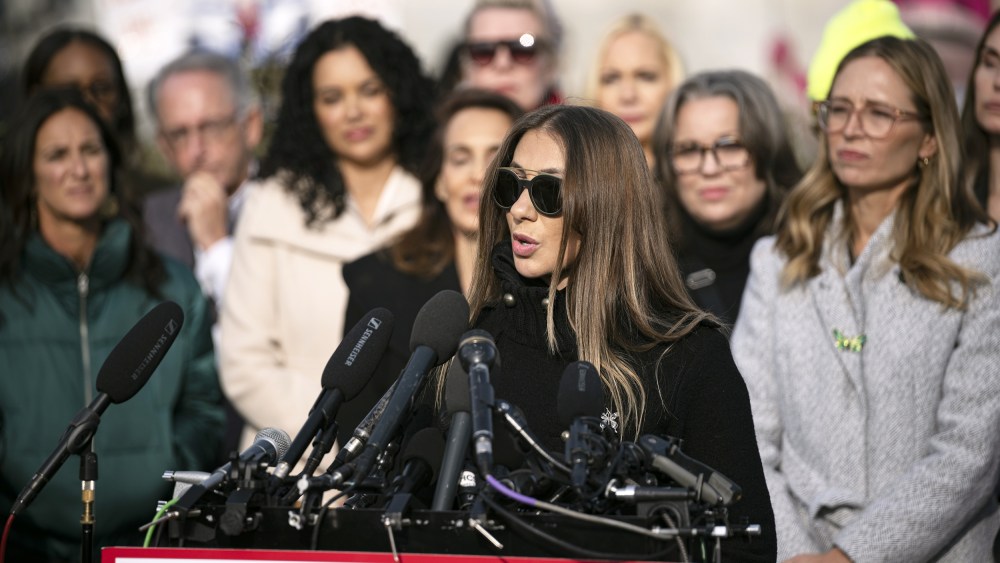
Epstein survivors are now bracing themselves for whatever else could be added to DOJ’s online library — and warning the Justice Department that further exposure of survivors’ personal information will be seen not as an inadvertent error but as a willful act.
Marina Lacerda, who appeared as Minor Victim #1 in the DOJ’s 2019 indictment of Epstein, told MS NOW that a “beyond incompetent” DOJ has made her skeptical that this newest release will protect survivors like her.
“Every time files are released, it’s like survivors are just left holding on, waiting. It feels almost deliberate. Why can’t we just have one comprehensive release of all the files, so we don’t have to go through this piecemeal? Haven’t they put us through enough?” Lacerda said.
By Thursday night, the DOJ also said the three FBI interview memos from 2019 had been “incorrectly coded as duplicative,” that 12 other documents from the same “batch” were also incorrectly withheld from production, and that five memos prepared by Florida federal prosecutors originally withheld because of privilege concerns could now be produced without compromising the privileged material.
According to the Justice Department, all 20 documents – none of which was published to the public previously – are available through its online library of Epstein-related files.
NPR reported last week that more than 50 pages of notes and memos reflecting FBI interviews with the woman who accused Trump were missing from the site. MS NOW found that of at least four interviews the FBI conducted with the woman related to the Epstein investigations, only one memo — and no handwritten notes — reflecting such an interview was included on the DOJ site.
In response last week to NPR’s reporting, White House spokesperson Abigail Jackson told the outlet, “just as President Trump has said, he’s been totally exonerated on anything relating to Epstein … and by releasing thousands of pages of documents, cooperating with the House Oversight Committee’s subpoena request, signing the Epstein Files Transparency Act, and calling for more investigations into Epstein’s Democrat friends, President Trump has done more for Epstein’s victims than anyone before him.
With this latest announcement of more documents to come, it is not clear whether the Justice Department has completed its intended production, leaving survivors and their allies anxious once again.
A lawyer for a survivor, who requested anonymity for their client and themself due to ongoing safety and privacy concerns, told MS NOW, “The way this has been handled under the pretense of helping survivors has caused irreparable harm to the same human beings it purported to protect.”
“The survivors continue to be non-consensually exposed many years after their abuser’s death.”
Lauren Hersh, national director for World Without Exploitation, an advocacy organization for sexual assault survivors, told MS NOW her organization is also expecting a new release imminently and encouraged DOJ to do what survivors have consistently requested: “Release all of the files, protect victims identifying information and hold accountable those who have committed harm.”
“Survivors everywhere are watching this critical moment. It’s time to get it right and end the decades of impunity,” Hersh added.
Brittany Henderson, who, with her partner Brad Edwards, represents hundreds of Epstein survivors, was especially critical of DOJ’s past document releases, calling their past violations of survivor privacy “entirely preventable.” She also detailed for MS NOW how “well over 100 survivors” had reported “thousands of redaction failures” to the DOJ since its first document release on December 19, 2025.
“After repeated and explicit notice, any future release that exposes the identity of even one single victim will not be a mistake — it will be a choice,” Henderson said.
Still, DOJ’s history of sloppy redactions could prompt at least one survivor to step out of the shadows. Her lawyer, Jack Scarola, told MS NOW that this unnamed survivor has been fiercely protective of her privacy yet has been repeatedly identified in DOJ document releases.
He told MS NOW his client is considering abandoning her anonymity and speaking out publicly for the first time due to her exposure “as a result of these multiple errors.”
Jennifer Freeman, who represents Epstein survivors including Annie and Maria Farmer, the release of additional documents carries the potential for “harassment, intimidation and renewed trauma” for the women.
But she also sees a window of opportunity for DOJ to “un-redact what was improperly redacted, contrary to the express terms of the Epstein Files Transparency Act, whether names or identifying information of perpetrators or others who stood by and knew or should have known what was going on right in front of them.”