
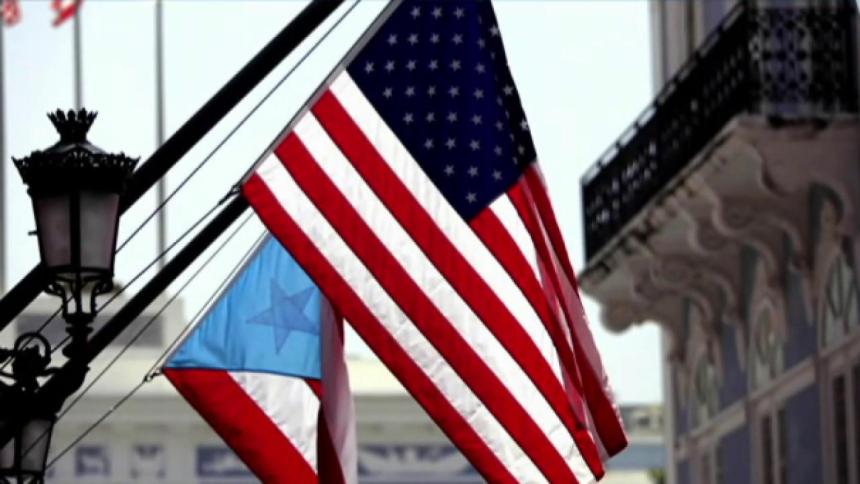
Puerto Rico is renewing its efforts to push Congress to act on the commonwealth’s financial crisis.
After failing to gain support for HR-870 in the House, Pedro Pierluisi, Puerto Rico’s representative in the House, has turned his efforts to the Senate–where Senators Richard Blumenthal of Connecticut and Charles Schumer of New York have said they intend to file a companion bill.
HR-870, which Pierluisi introduced in the House back in February would have allowed Puerto Rico’s public corporations to file bankruptcy under Chapter 9.
Puerto Rico’s in-debt public utilities make up most of the commonwealth’s $73 billion debt, and Governor Alejandro García Padilla has said this debt can’t be paid as it is. The Puerto Rico Chapter 9 proposal would allow the island’s government to negotiate with creditors and come up with a payment plan that adjusts to Puerto Rico’s current economic reality. All of this would be done under federal court supervision.
HR-870 would also allow Puerto Rico to declare bankruptcy in the first place, which under current law is not allowed because Puerto Rico’s territorial relationship with the United States prevents them from doing so.
While the bill has bipartisan support from the Puerto Rican government, there has been some push back over the belief that HR-870 would serve as a bailout for Puerto Rico.
Governor García Padilla, who has called for the passage of this bill since its introduction in February, renewed his efforts in June when speaking to journalists at a conference in Manhattan at the CUNY Graduate School of Journalism.
”This is an urgent message for Washington D.C.,” García Padilla said. “Puerto Rico needs HR-870 to be passed in order to negotiate with creditors within a legal framework which provides up certain processes and service continuity.”
García Padilla reiterated the urgency of the bill in an interview with the New York Times last week ahead of an address to the people of Puerto Rico.
RELATED: In Puerto Rico, Residents Want Congress to Focus On Island’s Crisis
Where did the debt come from?
Although it’s been said the recession started in 2006, Puerto Rico’s current debt has been accumulating since 1996 when Congress, and the local government at the time, decided to eliminate the one economic incentive (Section 936) that brought many U.S. manufacturers into the island to do business. Ever since, Puerto Rico has had a clear recession.
With incentives gone, less revenues, and increasing welfare payments and unemployment program expenditures, two things happened: people began to leave the country because they couldn’t find productive work, and Puerto Rican governors took loans to pay for the implementation of programs to fix the holes left in the economy with the disappearance of the economic incentives, resulting in a public debt worth more than $70 billion.
As a U.S. commonwealth and not a state, there are no federal or local laws that allow Puerto Rico to declare bankruptcy and restructure its debt like Detroit did, nor can the island set its own rules since it’s not independent. A federal judge recently ruled unconstitutional a local law that attempted to restructure several of the government agencies’ debt. HR-870 is a way to appeal that decision.
“Puerto Rico needs the same legal tools that jurisdictions in the U.S. have, in order to reestablish the order,” García Padilla told journalists at the CUNY conference.
Why was Puerto Rico excluded from Chapter 9 in the first place?
Under the current federal bankruptcy code, U.S. municipalities can declare bankruptcy only if they have the state’s permission to do so. As a U.S. territory, Puerto Rico’s local governments and public corporations are part of the United States, but Chapter 9’s language only addresses municipalities within states not territories.
“Some people think it was just a mistake. Others think it was for historical reasons of the time, but really no one has an answer as to why Puerto Rico was excluded from Chapter 9,” García Padilla said.
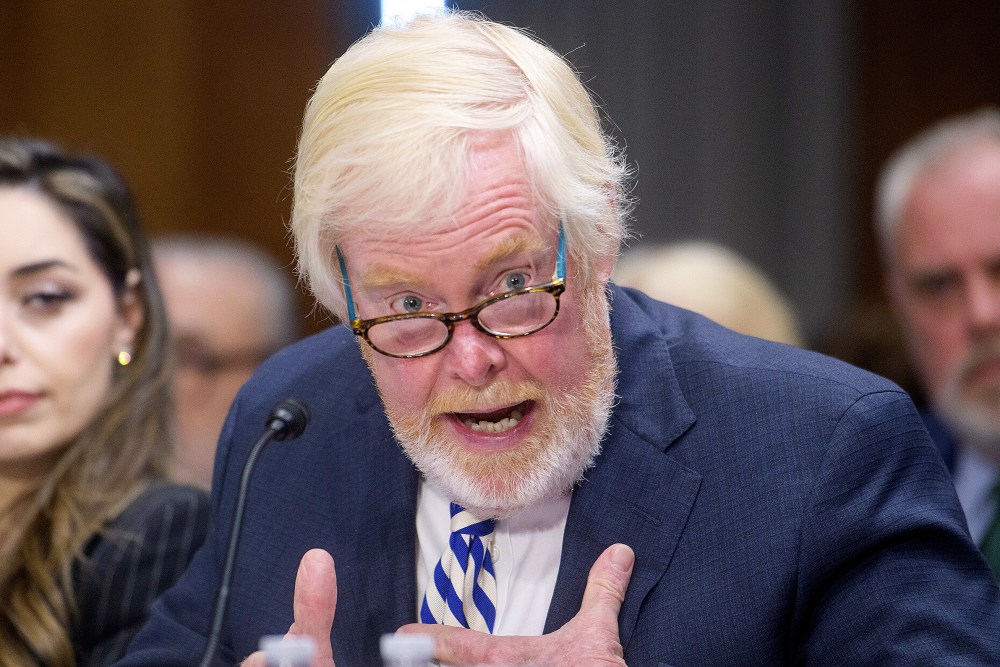
Frank Shafroth from the Center for State and Local Leadership at George Mason University told journalists at the CUNY conference that Congress’ lack of understanding of the territorial relationship between Puerto Rico and the United States is to blame, and added that nobody realized that the state language on the federal bankruptcy code excluded U.S. territories like Puerto Rico. Congressmen don’t really understand the implications behind being a territory and how they are different from states, he said.
All of the above factors have contributed to Puerto Rico’s current crisis. With a bill like HR-870, the Puerto Rican government is hoping to give Puerto Rico the legal tools necessary to restructure the debt and pay off creditors, since there’s currently no law that addresses such need.






Become a member to join the discussion