A Minnesota judge ruled that immigration authorities with the Trump administration “likely maintained unconstitutional policies” during “Operation Metro Surge” in the state. Yet the judge declined to halt those policies in a 100-plus page opinion highlighting both the administration’s lawlessness and the law’s limits.
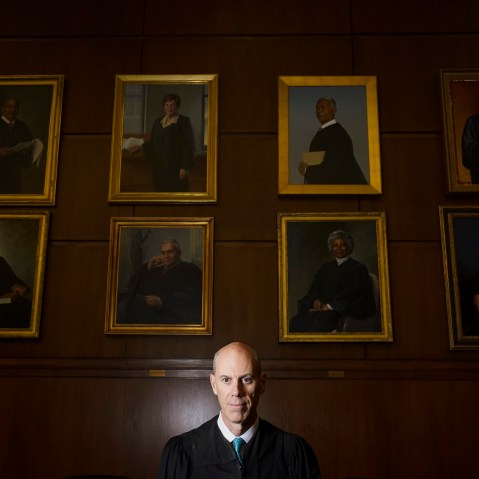
U.S. District Judge Eric Tostrud’s ruling came Monday in a case brought by three American citizens — Mubashir Hussen, Mahamed Eydarus and Jonathan Aguilar Garcia — who were stopped or arrested as part of the operation. Hussen and Eydarus are Somali, and Aguilar Garcia is Hispanic.
They alleged that officers who stopped or arrested them acted unlawfully by racial profiling, detaining them without reasonable suspicion of immigration violations and arresting them without probable cause of such violations. They said officers took those actions due to government policy, and they sued to halt those unlawful practices being used against them or anyone else who has been, or will be, stopped for immigration purposes in the state.
Tostrud, a Trump appointee, found that the plaintiffs “made a clear showing that [government] Defendants have adopted a policy authorizing federal immigration officers to conduct investigatory stops based on ethnicity or race without reasonable suspicion that the individuals were violating immigration laws.”
The judge called the evidence “compelling and troubling,” noting that about “two dozen people were stopped without reasonable suspicion in Minnesota from mid-December 2025 to mid-January 2026.” He wrote that officers “stopped Somali and Hispanic individuals without reasonable suspicion while they did not stop similarly situated nearby white individuals.”
Tostrud found evidence put forth by the plaintiffs to be credible while deeming government explanations to be incredible and pretextual. He also cited remarks by Gregory Bovino, the former Border Patrol “commander-at-large” whose lying was documented in a prior ruling in Chicago, as further proof that the government authorized arrests without probable cause.
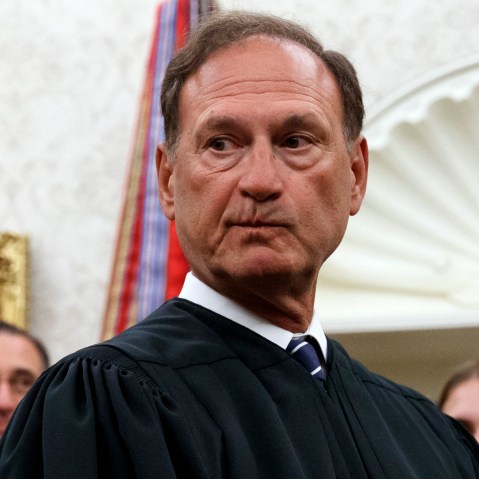
Justice Brett Kavanaugh, whose opinion in a California case led to the infamous “Kavanaugh stops” label, was cited several times in Tostrud’s ruling to support points both for and against the government.
Ultimately, although the government in his opinion “likely maintained unconstitutional policies,” the judge found the plaintiffs failed to show they’re likely to be irreparably harmed by those policies in the immediate future.
“This is largely owing to a significant reduction in the scope of Defendants’ Minnesota-based operations,” the judge wrote in refusing to grant a preliminary injunction.
So the administration’s win here, odd as it is to call such a damning decision a win, is based at least partly on the operation having pulled back from the state, leaving death and other destruction in its wake. Among that destruction, Tostrud’s ruling shows, is the government’s disrespect for the law it’s tasked with enforcing and the people it’s tasked with serving.