
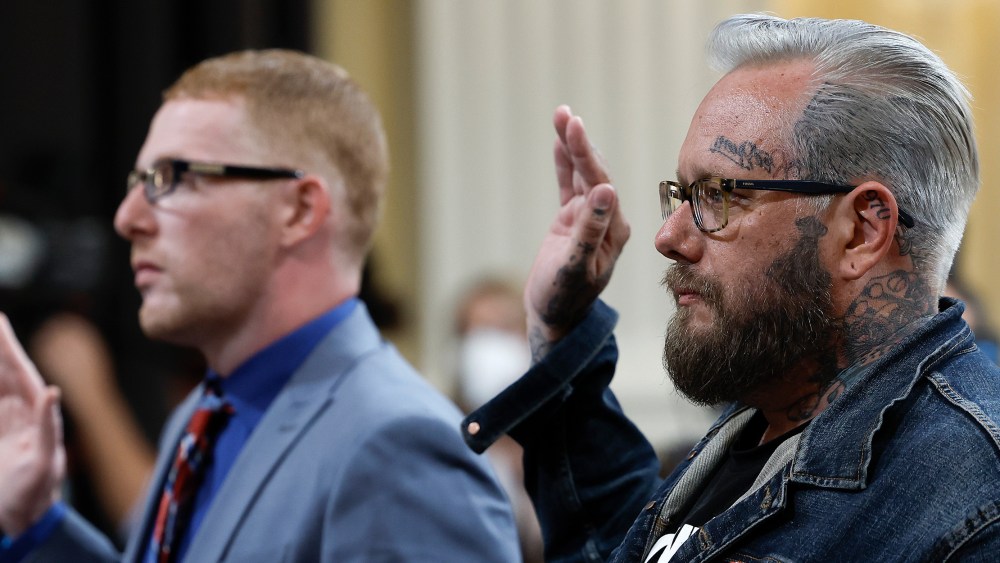
The House Jan. 6 committee held its seventh public hearing Tuesday afternoon, this time focusing on how former President Donald Trump was the driving force behind the mobilization and violence of extremist groups and diehard supporters at the U.S. Capitol on Jan. 6, 2021, right up through the moment they actually breached the premises.
The beginning of the hearing homed in on a familiar theme: Trump knew that there was no evidence of fraud sufficient to overturn the election results, but he wanted to contest the election anyway. In a tense December meeting that White House aide Cassidy Hutchinson described as “UNHINGED” in a text message, Trump and a number of advisers, from both within and outside the White House, argued over whether Trump had standing to continue to try to overturn the election results and, if so, how he might do it. Witnesses say Trump said at the end of the meeting that he’d appoint Sidney Powell — who had suggested seizing voting machines — as a special counsel. That didn’t pan out. But hours later Trump did send out the infamous tweet that set the insurrection officially in motion: “Big protest in D.C. on January 6th. Be there, will be wild!”
The committee sought to drive home the point that Trump realized he’d hit a wall — and that the way he dealt with it was by signaling to his hard-core base that it should try to help him stay in the White House anyway.

The committee carefully documented how extremist groups and diehard supporters online clearly took Trump’s tweet as a serious invitation not only to coalesce in Washington, but also to do so in a militant spirit. Extremist groups like the Proud Boys and the Oath Keepers took Trump’s tweet as a cue to organize and prepare for a violent confrontation on Jan. 6. A former member of the Oath Keepers, Jason Van Tatenhove, testified that America was “exceedingly lucky” that there wasn’t even more violence on Jan. 6 given the paramilitary group’s fierce commitment to violence and interest in using Trump’s rhetoric as a springboard to realize its violent political vision.
The committee also showed how Trump planned in advance to march from the Ellipse to the Capitol that day and quietly signaled this to rally organizers but declined to notify the public of this plan. The decision suggested awareness by Trump that he might be violating regulations for marching routes or that he was cognizant that making the plan public could change how security prepared to protect the Capitol. As I noted in our live blog during the hearing, it’s also “possible that Trump and allies felt that organizers could downplay culpability for a march that got out of hand by falsely claiming it was an entirely spontaneous enterprise.” And in yet another data point illustrating how Trump was desperate to fire up his followers on Jan. 6, the committee showed that Trump’s improvised additions to his speech at the Ellipse that day included violence-encouraging rhetoric about “strength” and many, many extra references to scapegoat Mike Pence.
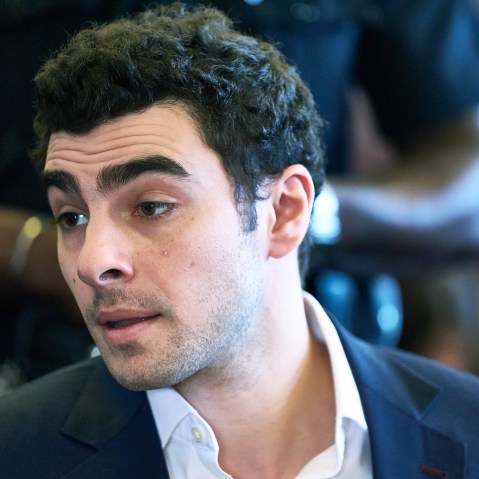
One of the more powerful pieces of testimony Tuesday came from someone who wasn’t a professional activist or a politico, but a protestor from Ohio who described himself as a “family man” who said he regretted getting caught up in Trump’s disinformation campaign. The protester, who has pleaded guilty to disorderly conduct for his activities related to breaching the Capitol on Jan. 6, said he felt as if he had “horse blinders on” when he was following Trump. “It definitely changed my life, not for the good,” he testified.




Become a member to join the discussion