

As a Black woman who chooses to wear her hair natural and closely shaved, I am no stranger to the discrimination that often rears its ugly head. A mentor once told me I should think about “growing some hair” and getting rid of “the nails” so I would be taken seriously. Then there was that agent from a prominent talent agency who told me I was not palatable enough for a cable television audience. Did the agent mean I was too big and too Black for TV? Or too bald?
A mentor told me I should think about “growing some hair” and getting rid of “the nails” so I would be taken seriously.
My experience isn’t unique, so I was elated when a movement in support of creating a respectful and open world for natural hair — known as the Crown Act — began to sweep the country, where it has won approval in more than a dozen states. I was even more elated when the U.S. House of Representatives passed such legislation Friday. The act would prohibit discrimination based on natural and protective hairstyles associated with people of African descent, including hair that is tightly coiled or tightly curled or worn as locs, cornrows, twists, braids, Bantu knots and Afros.
On Feb. 28, when Democrats attempted to pass the Crown Act using a fast-track process that required the support of two-thirds of the chamber, Rep. Jim Jordan, R-Ohio, said he was opposed to the bill based on his belief that hair-based discrimination is already unlawful and because, he said, there were more important things Congress should be doing.
Jordan made a similar point during Friday morning’s debate when he said, “I hope we can actually focus on the things that matter to the American people,” which led Rep. Al Green, D-Texas, to remind him that “Black people are American people, too.”

Then there’s Rep. Loren Boebert, R-Col., the QAnon-supporting House Freedom Caucus communications chair, who, during last month’s debate on the bill, disrespectfully called it ”the bad hair bill.”
Sigh.
“Bad hair” is a loaded term, one that Black people experiencing internalized racism have often used to describe hair that is more characteristic of Africa than Europe. In 2009, the comedian Chris Rock made a documentary called “Good Hair,” which was inspired, he said, by his then 6-year-old daughter’s tearful question: “Daddy, how come I don’t have good hair?” Considering the bill being discussed and the history of the term, Boebert’s remark about “bad hair” was an egregious insult.
There is nothing bad about a Black person’s natural hair. Women such as acclaimed director Ava DuVernay, former Xerox CEO Ursula Burns and President Joe Biden’s nominee to the Supreme Court, Judge Ketanji Brown Jackson (who’s confirmation hearings begin next week) are prominent Black women wearing natural hairstyles.
You may say: See, this proves hair doesn’t matter and that no one is judging Black women or anyone else in America based on how they wear their hair!
Chris Rock made a documentary called “Good Hair,” which was inspired by his daughter’s tearful question: “Daddy, how come I don’t have good hair?”
Well, allow me to break the news to you and Jim Jordan that, according to a 2019 Dove Crown Act study, Black women’s hair is 3.4 times more likely to be perceived as unprofessional. That same study also found that “when looking at images of hairstyles on Black women and non-Black women, Black women’s hairstyles were consistently rated lower or less ready for job performance.”
Chastity Jones knows this all too well.
In 2010 she was offered a job with Catastrophe Management Solutions as a customer service representative after an in-person panel interview. Along with salary and other things, the job offer also detailed that she had to cut off her locs, as they were “against company policy.” In 2013, the Equal Employment Opportunity Commission filed a lawsuit on behalf of Jones — and lost.
It is not just Black women who face such discrimination. So do Black men and Black schoolchildren:
- In 2017, school officials in Massachusetts sentenced twin Black girls to detention after saying their braids violated school policy.
- In 2018, A Black New Jersey teenager was forced to cut his locs by a white referee in order to continue participating in his school’s wrestling match.
- In 2020, a student at Barbers Hill High School was suspended for the length of his dreadlocks.
- In 2021, a Black San Diego man sued an event planning company after reportedly being told he needed to first trim his locs if he wanted to be hired.
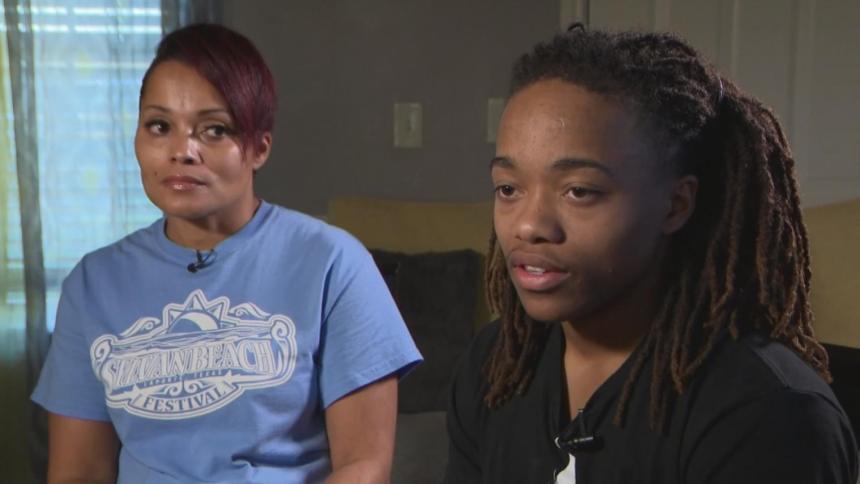
Despite ample evidence of the problem, during Friday’s vote, only 15 Republicans supported the Crown Act.
Wearing one’s hair in its natural state shouldn’t be a punishable offense, but in 2022 if you are Black in America it can be. The House has done its part to address this. It’s now up to an evenly divided Senate to follow suit.
We need the Senate to send the message that there is no “good hair” or “bad hair”
We need the Senate to send the message that a woman who wears her hair as I wear mine shouldn’t be presumed to be unskilled or unprofessional and that, contrary to Representative Jordan’s dismissive remarks, this is an issue that Americans face and that Americans want addressed.
CORRECTION (MARCH 21,2022 12:06 p.m. E.T.) A previous version of this article misstated that no Republicans supported the Crown Act. While none voted to allow its consideration, 15 supported its final passage.




Become a member to join the discussion