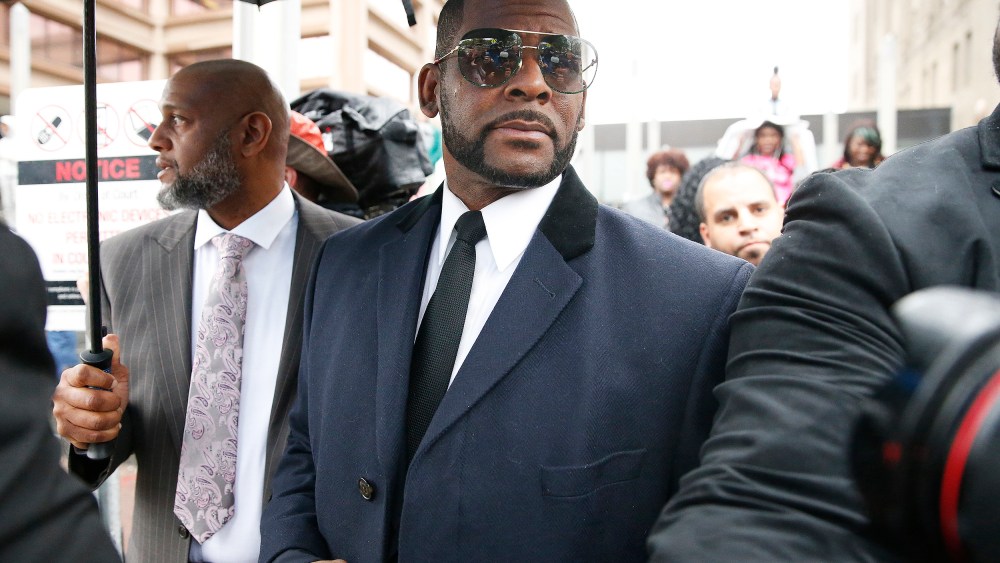
UPDATE (June 29, 2022, 3:40 p.m. EST): R. Kelly was sentenced Wednesday to 30 years in prison for his nine convictions in federal the sex-trafficking case.
Justice has finally come for the Pied Piper of R&B, R. Kelly. We can now expect that the musician who had a No. 1 R&B hit in 2003 with “Step In the Name of Love” will now step into a prison cell in the name of justice and two-step into obscurity.
Not even nine convictions get at the depth of Kelly’s depravity during his more than 25 years of preying on Black underage girls and women.
Accused of being a serial abuser of girls and young women, Kelly was convicted by a federal jury in Brooklyn, New York, on Monday of one count of racketeering and eight counts of violating the Mann Act, which prohibits transporting people across state lines “for any immoral purpose.”
However, not even nine convictions get at the depth of Kelly’s depravity during his more than 25 years of preying on underage Black girls and women. So why was he was able to avoid censure by so many in the Black community, particularly Black religious groups? How was he able to use singing about God and spirituality to deflect attention from his crimes against Black girls and women?
Because there’s a way patriarchy and Christianity combine to make illicit male sexuality — and even rape —redeemable even as it casts women as Jezebels who cause men to sin. Kelly was able to play to this trope with precision. By cultivating a bad-boy persona who also sang powerfully and wistfully about redemption and God, he was able to float above the rumors that had been written about him for years, most notably by Jim DeRogatis of the Chicago Sun-Times.
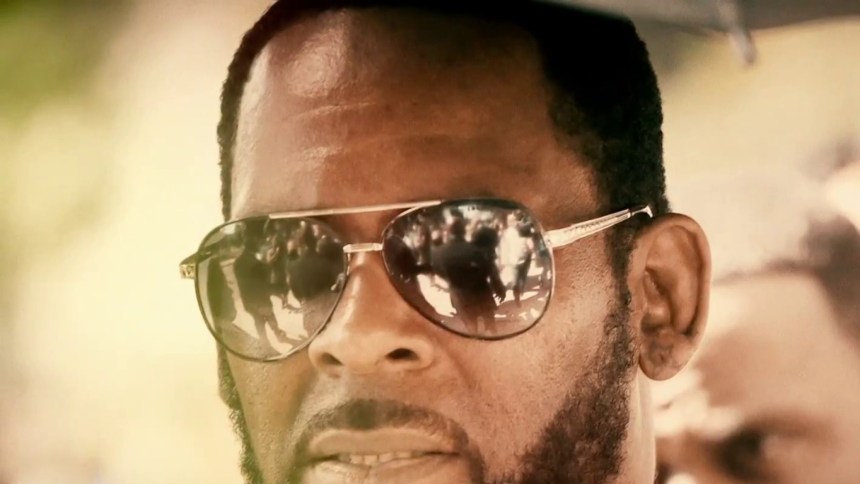
“I Believe I Can Fly,” his biggest hit, has been sung ad nauseam by gospel choirs and (at least before he was sent to jail to await trial) was played incessantly at high school graduation ceremonies. His album “Happy People/U Saved Me” was a combination of danceable feel-good tracks designed to make the two–steppers happy and gospel tracks that appealed to the church folks. That religious crowd relished the sinner-turned-saint narrative in “U Saved Me,” a song about a drunk driver saved from alcohol addiction.
Kelly’s upbringing as a Baptist choir boy helped him figure out early on how to use the evangelical language of sin and forgiveness to obfuscate his abuses and pretend to seek redemption from God.
Despite the reports that he married 15-year-old R&B singer Aaliyah because he feared he had impregnated her and wanted to escape prosecution, despite the many sordid stories of Kelly’s picking up teenage girls at a McDonald’s in Chicago, despite the videotape that prosecutors in his 2008 pornography trial said showed him with a young girl, Kelly not only avoided conviction in that case; he also largely avoided criticism from Black churches. That began to change in 2019 when dream hampton released a six-part series called “Surviving R. Kelly” on Lifetime TV.
Kelly’s upbringing as a Baptist choir boy helped him figure out early on how to use the evangelical language of sin and forgiveness.
Candice Benbow, a Black female theologian who was interviewed about Kelly after that series, told NPR that the Black church “told us to pray for Robert, to understand that no sin is greater than the other, and that all of us have fallen short of the glory of God.”
It was this ostensibly repentant bad boy of R&B — torn between God and illicit sexual desires — whom the Black religious community embraced and made excuses for. That community elided the seriousness of the accusations, and Kelly exploited it, as predators do. Accused of victimizing others, he made himself the victim. During their closing arguments Thursday, Kelly’s defense attorneys stooped so low as to compare Kelly to Martin Luther King Jr.
It’s bad enough that Black church leaders didn’t pay attention to the young Black girls who said they were imprisoned, raped and trafficked by Kelly, but it’s an even greater tragedy that voices from that community labeled those girls “fast,” meaning eager for male attention. In the Black community, especially in the church, young girls and women who physically mature earlier than their counterparts have often been called fast. Rather than be protected, they often get accused of wanting the sexual attention and, as mentioned above, playing the Jezebel.

It’s one thing for Black girls to go unprotected on the streets. It’s another thing for them to see that their church seems uninterested in protecting them. In 2002, Kelly was booked on pornography allegations in the case that led to the 2008 acquittal. Hours after he posted bail, he was at Chicago’s Salem Baptist Church, attending a ceremony led by his spiritual adviser at the time, the Rev. James Meeks.
Kelly now faces up to life in prison, but what about those who enabled him? What about the Black religious community that for so long embraced him and sang and played his music? For some pastors, this case is the end of R. Kelly. The Rev. Anthony Evans, president and founder of the Black Church Initiative, declared this month that the Black community shouldn’t listen to Kelly’s music while the trial was going on. That’s notable because, in 2017, pastor and gospel singer Marvin Sapp, who partnered with Kelly in 2017 on a song called “Listen,” despite allegations about Kelly that were already well known, decided not to take Kelly off the song and defended working with him.
Kelly’s conviction, then, is also a conviction of Black religious life and popular culture. For years, radio stations played his music and steppers enjoyed many nights of happiness on the dance floor, and over the last 30 years, many of us bumped his music in our cars. I used to listen to his music, too, but I stopped in 2002 when he was first indicted on child pornography charges. Since then, as a jury decided Monday, more young girls and young women were abused by him. It isn’t enough that he’s convicted, frankly. Those who assisted him in this life of perfidy and perversion should be prosecuted, as well.