
When YouGov pollsters asked Republicans in April whether someone convicted of a felony should be allowed to be president, 17% said yes. When they asked Republicans the same question between May 31 and June 2, 58% answered affirmatively. That remarkable 41-point uptick can most readily be explained by one event in between the two polls: former President Donald Trump’s felony conviction for falsifying business records on May 30.
This shift can be summarized as Republicans expediently brushing aside their beliefs on the disqualifying nature of felony convictions to hold on to their preference for Trump in the White House. (The share of Democrats saying “yes” barely shifted, by contrast, from 10% to 12%.) But these two polls can also be understood as a proxy for something deeper: Republicans’ increasing mistrust of the criminal justice system itself.
Republican views on the meaning of a felony conviction are changing as part of a broader rejection of the systems that produced it.
Trump and his political and media allies have pushed the argument that his Manhattan trial was a political exercise, part of a liberal agenda to block him from entering the White House. In their telling, the very decision to take him to trial over charges that could result in his imprisonment was a Democratic conspiracy. The big-picture message: The criminal justice system is rigged against the right.
That narrative is only the latest right-wing broadside against institutions associated with law enforcement, which are selectively framed as protecting Democratic interests. Trump has attacked the Justice Department and the FBI as agents of political repression. A number of prominent Republican lawmakers, including Reps. Matt Gaetz of Florida and Andy Biggs of Arizona, have called for the FBI or the whole DOJ to be defunded or abolished. Rep. Chip Roy of Texas has called for defunding the Department of Homeland Security. And since last month’s verdict, some Republicans are calling for cutting federal funding for prosecutors’ offices.
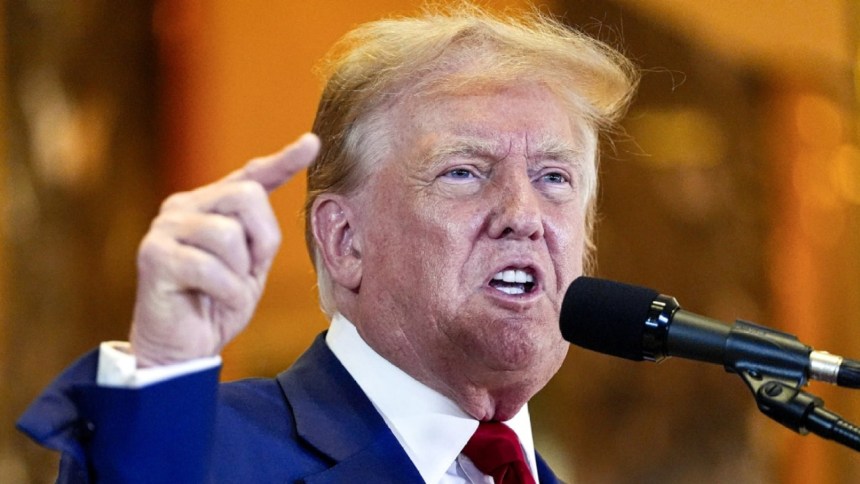
Put it all together, and it’s hard not to see how Republican views on the meaning of a felony conviction are changing as part of a broader rejection of the systems that produced it.
A paradox is emerging. The right-wing skepticism of prosecutors and federal law enforcement agencies is in tension with the Republican Party’s emphasis on draconian law and order. Republicans favor expanding and emboldening police forces and largely oppose reforms designed to reduce abuses of power or excessive violence (which disproportionately affect people of color). Republicans happily cheered on the harsh police crackdowns on pro-Palestinian demonstrators this spring. And Trump’s vision for a second term includes state-backed repression of progressive protests, including using the military as a domestic police force to quash dissent.
The way to reconcile these seemingly contradictory views is depressingly simple. Republicans favor aggressive and powerful law enforcement apparatuses as long as they’re operating under the control of conservatives or according to conservatives’ worldview. The status quo at local police departments — as exemplified by conservative police unions — sits fine with the GOP. But Republicans have decided that the parts of the criminal justice system that can make their lives harder by targeting powerful members of their own political tribe must be purged and seized by their partisans. This is why Trump doesn’t just criticize the DOJ as teeming with enemies — he openly talks about wanting to stack it with allies and use it against his own opponents.
For decades, Republicans have claimed to be champions of law and order. Yet they’re waging a yearslong assault on the basic legitimacy of American legal institutions. This contradiction can be resolved by remembering that the MAGA movement does not conceive of rule of law as a basis for creating universally enforced rules. Instead it wants to maintain a reactionary social order — and for the law to serve as a weapon to enforce it.










Become a member to join the discussion