

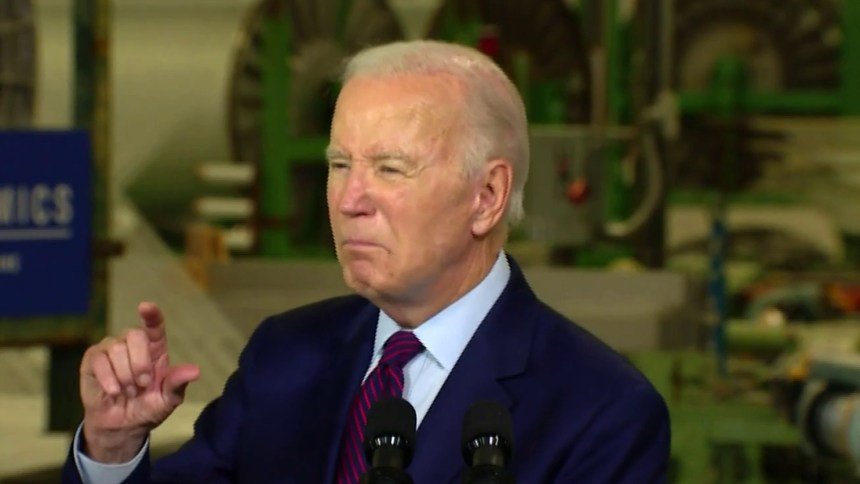
Earlier this week, President Joe Biden embarked on a tour of rural areas to tout what his administration is doing to help those communities. In a speech in rural Minnesota, Biden announced the distribution of $5 billion from the Inflation Reduction Act and the bipartisan infrastructure law, aimed at “climate-smart agriculture,” infrastructure and rural economic development. “My plan is about investing in rural America,” he said, but it is also about “restoring pride … to rural communities that have been left behind for far too long.” Biden’s campaign is also airing an ad featuring a farmer talking about the administration’s help for rural areas.
As Democrats’ vote share in rural areas has declined, the usual advice to the party is just to show up. Democrats, the argument goes, have to be humble and gentle, approaching rural voters — especially white rural voters — with open ears and closed mouths, so rural folks know they appreciate the concerns of the heartland.
Biden’s case is still missing half of the answer to what ails Democrats in rural areas.
But attendance is just the first step; It only goes so far when you arrive empty-handed. So it is good to see the president taking his achievements to these voters. Yet Biden’s case is still missing half of the answer to what ails Democrats in rural areas. The other half is a vigorous attack on how Republicans have betrayed rural voters, even as more and more vote GOP.
This isn’t something unusual for Democrats. They regularly put out plans and ideas focused specifically on rural America, something Republicans seldom bother with. Yet it’s the GOP that dominates in rural areas; in 2022, Republican candidates got 69% of rural voters, even better than Donald Trump did in 2020, which in turn was even better than he did in 2016.
There are long-term trends driving the country’s urban-rural polarization, but on the ground, the reality is that both parties have abandoned rural America: Democrats because they often give up on winning there and Republicans because they can win without any effort.
Which is why Democrats not only have to go back to the countryside; they have to do it with a message that isn’t just about how much they care about rural folks. They also have to hammer the GOP for its indifference to the fate of areas of the country that have endured terrible struggles in recent decades.
The administration’s efforts to expand broadband offer a good case study. Over the last year I’ve reported from rural areas around the country for an upcoming book. Everywhere I went, people lamented the poor state of their available broadband. It isn’t just because they want to watch YouTube videos; today, broadband is essential for schools and businesses. Without it, local stores can’t expand beyond the limited proximate customer base, residents who want to live outside cities and work remotely have to move elsewhere, and rural schools can’t compete with their urban counterparts’ resources.
A study from the Brookings Institution found three factors that boost upward mobility in rural communities: good schools, strong infrastructure (especially broadband) and the availability of family planning, which reduces teen pregnancy and allows women to delay having children until they’re ready. Yet the party that wins overwhelming majorities of the rural vote undermines all three.
Neglect is about the best rural voters can hope for from the GOP.
Republicans starve public schools of resources by diverting funds to private school voucher schemes — which many rural people can’t take advantage of because there simply are no private schools where they live. They outlaw abortion, undermine access to birth control and require “abstinence only” sex education, which has been shown to increase teen pregnancy. And their approach to broadband can generously be described as neglect. Indeed, neglect is about the best rural voters can hope for from the GOP: During Trump’s presidency, farm bankruptcies jumped thanks to his trade wars, while the party’s attempted overhaul of the Affordable Care Act would have disproportionately increased health care costs in rural areas.
In contrast, after four years of Republicans’ promising “Infrastructure Week” so often it became a joke, a Democratic president and Congress actually passed an infrastructure bill that included billions to expand broadband in rural areas. That doesn’t mean every rural American will be enjoying blazing download speeds by next year’s election; the law unfortunately creates something of a bureaucratic morass that is already slowing implementation, so it will be years before the lines reach every rural home. But Biden can say he is delivering on this promise, while Republican presidents did nothing.
There are a multitude of issues Democrats can use to demonstrate the GOP’s negligence. For instance, health care access in rural America is nothing short of a crisis: not enough doctors, rural hospitals closing by the dozens and abysmal access to maternal health. Rural voters are the linchpin of GOP power, and what has the Republican Party done about this crisis? Not a damn thing. In fact, not only hasn’t it helped; it has made it worse. Its refusal to accept the Affordable Care Act’s expansion of Medicaid has left rural hospitals at financial risk and millions of rural Americans without health insurance. Its abortion bans have led OB-GYNs to flee rural states.

Democrats can’t be afraid to make this aggressive case to rural voters. It’s not enough to say, “I’m here; I’m listening; please don’t be mad at me.” They have to say, “I’m already helping you, and guess what: Republicans have betrayed you.”
It’s true that many rural voters are too invested in the right-wing culture war to ever vote for a Democrat. But there are still persuadable voters in rural areas. If Democrats could improve their performance by even a few points, it could all but guarantee victory in key swing states. In the critical 2023 Wisconsin Supreme Court election, for instance, the liberal Janet Protasiewicz improved on Biden’s 2020 result in the state’s rural areas by 5 points — she got 45% of the rural vote, compared to his 40% — which helped her win a comfortable victory.
The real beneficiaries would be rural Americans themselves, who might finally get something more from the people they elect than another round of anger and resentment. Biden is happy to make the positive pitch to rural voters; now he needs to tell them what’s wrong with his opponents.





Become a member to join the discussion