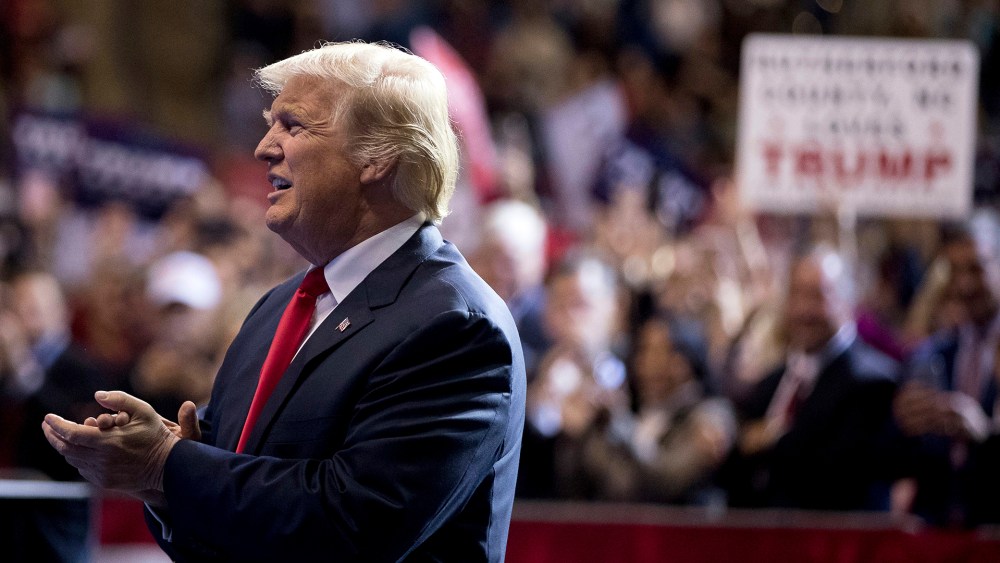
President-elect Donald Trump’s spokesman said on Tuesday that Trump had sold off all his investments in the stock market more than five months ago, but the Trump transition team has yet to offer any evidence to substantiate this claim.The statement came during the team’s daily conference call with reporters. Asked about a tweet that Trump had sent out earlier Tuesday morning accusing Boeing of overcharging for two new Air Force One planes, spokesman Jason Miller said Trump “sold all of his stock back in June.” At the time, Miller seemed to be saying that the president-elect had sold his shares in Boeing. But Miller later told at least two media outlets that Trump had sold his shares in all public companies, not just Boeing.
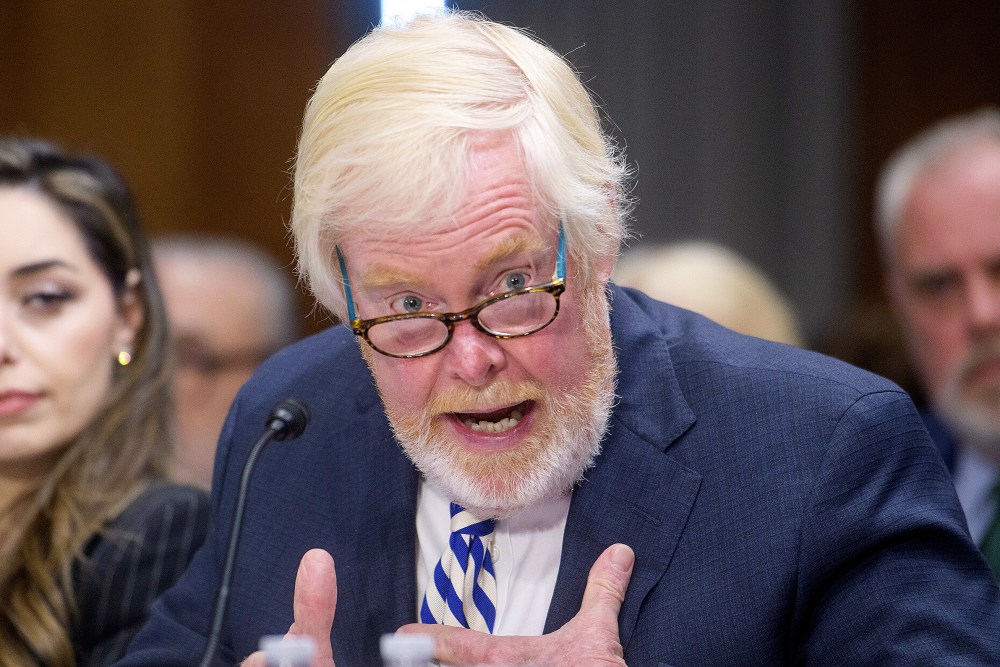
NBC’s Matt Lauer asked Trump this morning why he didn’t make some kind of announcement in June when, according to his spokesperson, the Republican sold his entire stock portfolio, with shares valued at tens of millions of dollars. “Oh, I let everybody know,” Trump said. “I let everybody know.”By all appearances, that’s not at all true — Trump doesn’t appear to have told anyone, at least publicly. And therein lies part of the problem.We don’t know, for example, whether Trump and his team are brazenly lying, referring to stock sales that may have never occurred. If the sales did happen, we don’t know who the stocks were sold to or how much money Trump made. We don’t know why he and his aides kept these transactions under wraps in June — if the transactions happened — or why Trump made up an imaginary announcement on the “Today” show this morning.Norm Eisen, who served as President Obama’s ethics counselor, told the Washington Post that the stock sales — if they occurred — would be “absolutely a step in the right direction,” but it’s not incumbent on Trump to take the next step and fill in the blanks.”We need to know, has [Trump] put them in conflict free assets … or has he bought other stocks or assets that would create new conflicts?” Eisen asked. “It’s all the more reason that we need a prompt and full financial disclosure. If he did liquidate all his stocks, what did he do with the money? What bank is the money in? What did he buy? It’s a lot of money.”Again, we don’t actually know that the money exists, or whether Trump, who’s earned a reputation for jaw-dropping dishonesty, has just made up another tall tale. It’d be easy to substantiate the claims, but without that evidence, there’s no reason to give the president-elect the benefit of the doubt — and every reason not to.But let’s say for the sake of conversation that Trump and his team are telling the truth, and Trump really did sell off his entire stock portfolio over the summer. Let’s also say, just for kicks, that Trump meant to tell the public, but the liquidation of tens of millions of dollars in stocks slipped his mind. The question then becomes, why’d he bother?Trump told Lauer this morning, “I don’t think it’s appropriate for me to be owning stocks when I’m making deals for this country that maybe will affect one company positively and one company negatively. I just felt it was a conflict.” Trump added that he hoped to avoid “a conflict of interest owning all of these different companies.”That’s not a bad answer — or at least, it wouldn’t be if Trump didn’t continue to have all kinds of other conflict-of-interest problems, which to date, he’s chosen to ignore. Indeed, the president-elect boasted a couple of weeks ago, “[T]he president can’t have a conflict of interest…. [I]n theory, I can be president of the United States and run my business 100 percent…. [T]he president of the United States is allowed to have whatever conflicts he wants.”If Trump could explain why he’s so selective about when and why conflicts matter, it’d go a long way towards resolving this ridiculous puzzle.








Become a member to join the discussion