

Right now in Louisiana, children are being subjected to conditions so extreme that if it were anyplace else in the world, we would call it torture. The Louisiana government has refused to do anything about it, though. Because it’s the government that’s perpetrating the abuse.
The Louisiana government has refused to do anything about these suffering children. Because it’s the government that’s perpetrating the abuse.
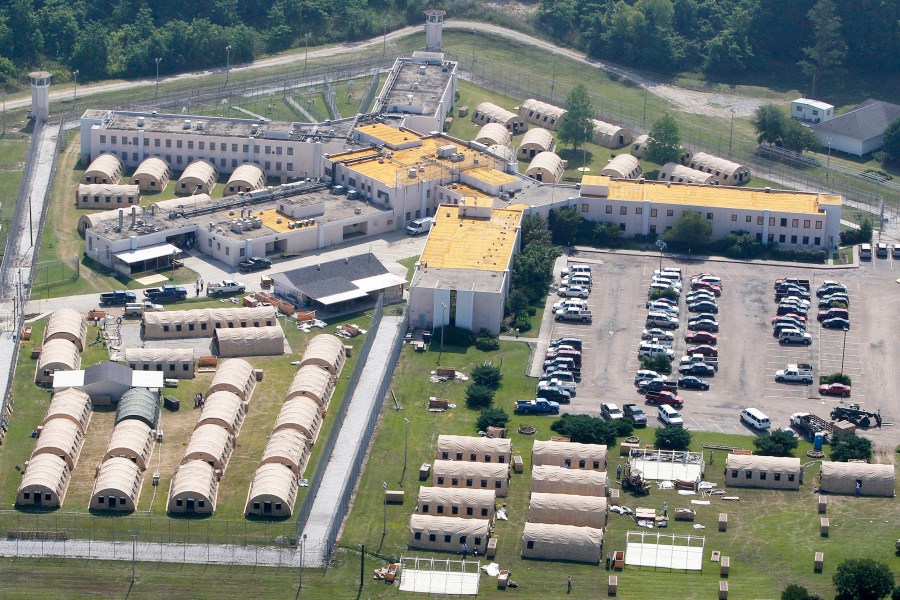
Since October, about 70 to 80 children, almost all of them Black male juveniles, have spent four to eight weeks at a time housed at the notoriously violent adult maximum security Louisiana State Penitentiary, also known as Angola. Some children have been placed there multiple times. The reasons that were cited for transferring juveniles to Angola include multiple escapes from at least one of the state’s juvenile facilities, damage at those facilities and injuries to the staff there.
While at Angola, these children say they have been subjected to physical and emotional abuse. They say they’ve had to drink foul-smelling water; been placed in solitary confinement for 72 hours at a time; been locked in their cells (which were formerly used for people on death row) for 23 hours a day and allowed out only to shower, which they’ve had to do while handcuffed.
As the Louisiana heat has intensifed, the conditions inside the prison have become nigh unlivable. The heat index at Angola has been above 88 degrees every day since May 21, and over 100 degrees Fahrenheit for a good portion of June and July. The young people incarcerated there have no windows and no air-conditioning, only small fans that fail to keep them cool.

A 17-year-old known in court records by the pseudonym Charles C., said in a statement submitted to federal court, “The tier where I sleep and have been on lockdown is not air-conditioned. They have a fan and are supposed to give us ice and water, but only provide it about half the time. I’m often thirsty. It’s hard to sleep because it’s so hot. When the power goes out, we don’t even have the fan.”
Ken Pastorick, a spokesperson for Louisiana’s Department of Public Safety and Corrections, told The Times-Picayune for a July 1 report that Angola had added air-conditioning to four living areas, that living areas without air-conditioning have “high-volume fans and cross ventilation” and that people incarcerated there are offered cold water, ice and cold showers. But Charles C.’s statement suggests that he and others locked up with him weren’t getting the heat mitigation that they were supposed to receive.
These children were not the only incarcerated people suffering in the immense heat. Across Louisiana and the South, other incarcerated people were in the same torturous environments. According to Louisiana prison officials, there was at least one heat-related illness inside the prison system this year.
In Texas, approximately 100,000 people live in prisons with no air- conditioning, where the heat index can reach 120 F. A man incarcerated in Texas told Texas Public Radio, “It’s like you’re standing over a grill all day.” He said, “I put water on my ground and lay in it sometimes. It’s just me pretty much naked in the cell.” According to that report, Texas requires that the temperature in its county jails be kept below 85 degrees, but there are no regulations for its state prisons.
A man incarcerated in Texas told Texas Public Radio, “It’s like you’re standing over a grill all day.”
The Texas Tribune reported in June that at least nine incarcerated people had died in unair-conditioned Texas prisons that month: five of cardiac arrest or heart attack and four of causes that were undetermined. But the state’s prison system has not characterized a prison death as heat-related since 2012.
This summer’s heat wave has kept temperatures at punishing levels, even for people who have freedom of movement. And climate change means the heat will only get worse.
The organization I lead, the American Civil Liberties Union of Louisiana, along with the ACLU National Prison Project, Fair Fight Initiative and the Southern Poverty Law Center, sued the state of Louisiana this week over the horrendous conditions at Angola, calling for the children held there to be transferred to youth facilities. The level of abuse these youths face could create irreparable harm, particularly to their emotional health, with research showing a link between solitary confinement and suicide, and an increased risk of self-harm during extreme heat.
Louisiana Gov. John Bel Edwards, a Democrat, said last year that the children transferred to Angola would be there only temporarily. He said they’d eventually be transferred to a more appropriate setting with the educational resources and rehabilitation services that juvenile centers are required by law to provide. The deadline to move those children came and went in the spring. The new deadline for the transfer is this fall.
(Citing pending litigation, a spokesperson for the governor declined to provide comment Friday.)
The myth of “superpredators” remains strong, especially for Black youths, but these kids at Angola, no matter what they have done, are still children. The Supreme Court has affirmed that “children are constitutionally different from adults in their levels of culpability” and should be treated as such. Juveniles living in prison are guaranteed certain rights, such as the right to education and the right to rehabilitation. As the statements from the young people to the federal court attest, they are being denied these rights.
The myth of “superpredators” remains strong, especially for Black youth, but these kids at Angola, no matter what they have done, are still children.
The conditions at Angola and other prisons amount to “cruel and unusual punishment,” which was outlawed by the Founding Fathers of this country under the Eighth Amendment of the Constitution. It also goes against the U.N.’s Declaration of Human Rights, which states: “No one shall be subjected to torture or to cruel, inhuman or degrading treatment or punishment.”
What is happening in Angola and other sweltering prisons is a human rights abuse, and we must stop it.
A Times-Picayune story about the immense heat inside prisons noted that voters in Jefferson Parish, the second-largest parish in the state, approved a new local jail in 2014 but only after leaders promised the jails wouldn’t be air-conditioned.

In other words, there are people who believe that people convicted of crimes, or merely accused of crimes, are supposed to suffer this way.
The government is subjecting people, even young people, in prison to extreme heat conditions, solitary confinement, violence and other abuses because it apparently doesn’t see such people as human. Adults sentenced to Angola have to do hard labor in the punishing sun. They are seen as the property of the state to be used as needed.
Incarcerated people have rights as Americans and humans just like you or me, much to the dismay of those who wish to keep the prison economy status quo. We need to acknowledge those rights and stand up for them. Especially when those incarcerated are the most vulnerable youth in our communities subjected to life-threatening conditions.






Become a member to join the discussion